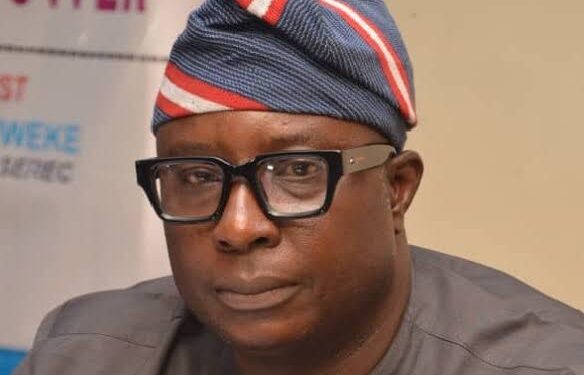
Captain Ladi Olubowale, a foremost ship owner and former Chapter President of the African Shipowners Association (ASA), speaks on the challenges confronting indigenous ship owners, the Cabotage Vessel Financing Fund (CVFF), foreign dominance of Nigeria’s shipping business, the blue economy, seafarer development, maritime security and the need to link ship acquisition to identifiable cargo and trade contracts. He also argues that financing alone cannot solve Nigeria’s ship ownership problem.
“Nigeria Cannot Build A National Fleet Without Linking Ships To Cargo”
“Foreign-owned vessels are taking advantage of cargo opportunities that Nigerian operators could have handled”
“If we want to develop a national fleet, we need experience as well as young people”
— Captain Ladi Olubowale
Indigenous shipowners have complained about the difficult operating environment and the failure of the Cabotage regime. How would you describe the state of ship ownership in Nigeria today?
Globally, we know what it takes to own a ship. It requires significant capital, but the issue goes beyond financing. We need to distinguish between trading vessels and servicing vessels. International companies have ships servicing their operations, while trading vessels are used to move cargo. The major challenge is that nobody buys a ship simply to leave it idle. There must be trade to drive the ship. So, ship ownership and trade have to move together. In today’s shipping industry, finance is tied to trade. Where there is a long-term contract or identifiable cargo, it becomes easier to finance and operate a vessel.
Your firm applied for the CVFF. What is your experience with the current disbursement process?
My company applied for the CVFF and we have gone through the process. The portal was opened and, recently, banks have been approaching companies that applied. We have had about six or seven banks coming to our company regarding the CVFF. We have received term sheets from banks outlining the requirements. From what we have seen, the banks are willing to discuss facilities of up to $25 million, subject to the required equity contribution and other conditions. The process is moving, although there is still a need for stronger and more continuous engagement between the government, banks and shipowners.
Is $25 million enough to acquire a seaworthy vessel?
It depends on the type of vessel and, most importantly, the trade you want to serve. This is where industry knowledge becomes important. For our own trade, $25 million can acquire a sizeable vessel if the vessel is properly matched to a specific cargo opportunity. There are trading vessels and servicing vessels, and their capital requirements are different. The mistake is to simply say that $25 million is not enough to buy a ship. We should first ask: what cargo are we carrying, what vessel do we need, what is the contract period and how will the vessel generate revenue to repay the facility? With the right structure, a relatively modest equity contribution can support vessel acquisition when the trade is strong enough to drive repayment.
What, then, is the real problem – lack of capital or lack of ships?
The problem is that we have not tied everything together. Nigeria has natural resources and cargo, but we must ask whether we have the right vessels to carry those commodities. Not every vessel can load at terminals such as Dangote or oil terminals, because there are specific requirements. The same applies to dry cargoes such as cement and other commodities. Different cargoes require different types of vessels. This is why we need cargo statistics and a strategic fleet analysis. We should know the volume of cargo available, the routes involved and the vessels required. Then we can develop a fleet around those opportunities. For example, if a company has a guaranteed volume of cargo throughout the year, a shipowner can provide the vessel to move that cargo. That is how you give the ship a business case. You cannot simply buy a ship and then start looking for cargo.
You have criticised the dominance of foreigners in Nigeria’s shipping business. Why has this continued?
There are huge economic leakages because foreign-owned vessels are taking advantage of cargo opportunities that Nigerian operators could have handled. We need to define the strategic fleets that Nigeria requires. Are we acquiring vessels individually or are we looking at the national fleet holistically? For instance, we have oil, gas, dry cargo and other commodities that require different categories of vessels. The government has laid some foundations and produced policies, but we must move from policy announcements to measurable economic value. Whenever we celebrate a new agreement or achievement, we should ask: What has been delivered? How many Nigerian ships are benefiting? How many Nigerian-owned vessels are trading internationally? That is the question we should continuously ask.
Do you think the establishment of the Ministry of Marine and Blue Economy is a step in the right direction?
I think taking the marine sector away from the larger transport ministry and giving it a dedicated focus is one of the best things that has happened to the sector. The government has also developed a marine and blue economy policy, which is a good foundation. But we should stop talking only about the potential of the blue economy. We should ask what economic value has actually been delivered. Take the fishing sector. Nigeria has eight coastal states and fishing alone represents a significant economic opportunity. We should be asking whether those opportunities are being fully developed. The same applies to shipping. We have policies, agreements and projects, but we need to connect them to cargo, investment, vessels, jobs and measurable economic output.
What role should the private sector play in developing Nigeria’s maritime industry?
The private sector must be at the front line. Government’s role is primarily regulation, safety, compliance and creating an enabling environment. Government cannot own and operate all the ships needed by the industry. Ships should be owned and operated by shipowners and industry professionals. The regulator should create the environment for them to thrive. Look at aviation. Before an airline buys an aircraft, it studies passenger volumes, routes and networks. We need the same approach in maritime transport. We must understand our cargo volumes and routes before deciding what vessels to acquire. My view is that Nigeria’s maritime sector is like a ship that has been loaded and is sitting at anchorage without knowing where to berth. We have the potential, but we have not properly connected the different components.
How can AfCFTA benefit Nigeria’s maritime sector?
The framework for African trade is strong, but we often neglect the physical drivers of that trade — ships, trucks and connectivity. My research on African fleet development shows that the continent requires a significant number of ships and trucks to support intra-African trade. These requirements should be treated as business opportunities. If investors have capital and approach shipbuilding nations with clear cargo requirements, they can develop an integrated project involving ships, trucks and cargo movement. It is not rocket science. The opportunities are there. What is missing is the holistic approach that brings finance, cargo, infrastructure and private-sector expertise together.
There is concern about the ageing population of Nigerian master mariners and the shortage of younger seafarers. What should be done?
There is a global shortage of seafarers, but Nigeria also has a serious challenge in terms of continuity and skills transfer. The quality of Nigerian seafarers produced in the past was excellent. During the Nigerian National Shipping Line era, Nigerians had the opportunity to work on cargo vessels and develop strong professional competence. We now need to preserve that knowledge. The older master mariners should be brought into structured mentorship programmes where they can train and guide younger professionals. If we want to develop a national fleet, we need experience as well as young people. We also need stronger cadetship programmes and training opportunities. I have advocated for a training ship that can combine commercial trading with practical training. Without developing the next generation, we will continue to have a shortage of skilled maritime professionals.
What is your assessment of maritime security and safety on Nigerian waterways?
We need to distinguish between reportable and recordable incidents when discussing piracy. The piracy situation has improved because of collaboration among the Nigerian Navy, NIMASA and other relevant security agencies. However, security is not the only issue. We must also pay attention to safety on our inland waterways. Lives are still being lost, and we need reliable statistics and stronger preventive measures. The key issue is implementation. We can identify problems and design solutions, but somebody must implement those solutions. Education and implementation are critical to improving safety in the maritime sector.
Finally, what is the single most important thing Nigeria must do to unlock its maritime potential?
We must move from announcements to implementation and economic value. Whenever we sign an agreement, approve a policy or achieve an international milestone, we should ask what it means economically. How many Nigerian ships will benefit? How many jobs will be created? What cargo will be moved? What revenue will remain in Nigeria? The blue economy cannot be solved inside conference rooms. The private sector must be involved, regulators must create the right environment, and the two sides must work together. The two key words for me are education and implementation. If we get those right and connect our policies to real cargo, investment and ship ownership, Nigeria can build a maritime industry that delivers genuine economic value.