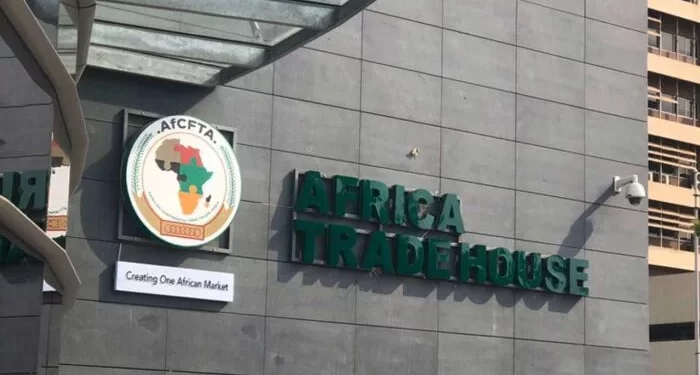
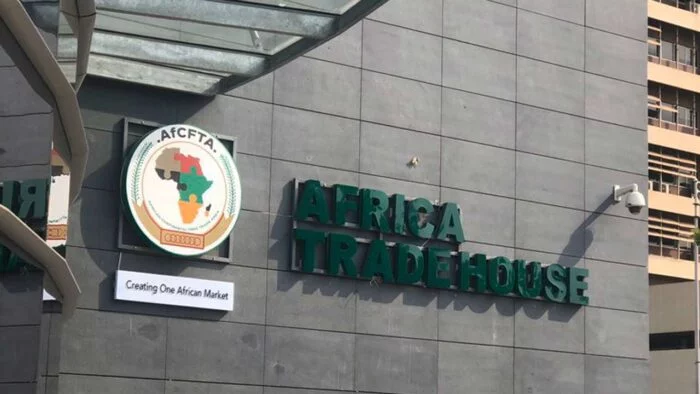
Recently, some experts gave a damning verdict about the rise in Nigeria’s export earmings. They said the rise, which was reported by this newspaper cannot be directly attributed to the African Continental Free Trade Area (AfCFTA),
The experts said that the continental trade arrangement is yet to make any significant impact on the country’s export performance.
Their position followed the latest foreign trade statistics which showed a significant increase in Nigeria’s exports in the second quarter of 2026, with total exports rising to about N27.02 trillion.
While the growth has raised expectations that Nigeria may be benefiting from increased access to the African market under AfCFTA, the stakeholders said the development was largely driven by other factors, including refined petroleum products, gas, urea, agricultural commodities, exchange-rate movements and increased trade with neighbouring West African countries.
Even though years apart, this position tallies with a research by the African Development Bank in 2014, which said that, only 16% of international trade by African countries takes place between African countries. Apparently, this discovery gave birth to the African Continental Free Trade Area (AfCFTA).
According to the General Agreement on Tariffs and Trade (GATT), a free-trade area is an agreement among a group of two or more Customs territories in which the duties and other restrictive regulations of commerce are eliminated on key provisions of the treaty.
From all available empirical data, the AfCFTA is the world’s largest free-trade area by member countries. Uniting 54 of the 55 African Union (AU) nations, it aims to create a single market of 1.3 billion people with a combined GDP of about $3.4 trillion.
Nigeria officially signed the African Continental Free Trade Area (AfCFTA) in July 2019 and became the 34th state party to ratify the agreement in December 2020. Aiming to eliminate intra-African tariffs and non-tariff barriers, AfCFTA seeks to create a single continental market of over 1.2 billion people. The scope of the Agreement covers trade in goods, services, investment, intellectual property rights and competition policy.
For Nigeria, Africa’s most populous country and one of its largest economies, the opportunity is enormous. With a population of more than 200 million people, a large entrepreneurial class, abundant natural resources and one of the continent’s biggest economies, Nigeria should naturally be one of the biggest beneficiaries of AfCFTA.
But several years after commercial trading under the agreement began and after Nigeria signed on, an important question must be asked: Is Nigeria succeeding under AfCFTA, or is the country missing another historic opportunity?
The honest answer is that Nigeria’s experience so far represents neither outright failure nor convincing success. There has been progress, but the country is yet to exploit anything close to the full potential of the continental free trade agreement.
Nigeria signed the AfCFTA Agreement in July 2019, and commercial trading commenced in January 2021. However, Nigeria’s first formal shipments under the Guided Trade Initiative did not take place until July 2024, three clear years after. That delay is significant because it illustrates one of the fundamental challenges confronting the country: Nigeria has often demonstrated considerable enthusiasm for signing economic agreements, but implementation has been much slower.
For Nigeria, AfCFTA presents an opportunity to move beyond its traditional dependence on crude oil and develop a stronger manufacturing and export-oriented economy. It is markets of more than 1.4 billion people.
Nigeria has products and services that are needed across Africa. Cement, fertiliser, food products, pharmaceuticals, chemicals, textiles, financial services, telecommunications, entertainment, professional services and technology are only some of the areas in which Nigerian businesses can compete.
There is also an opportunity for Nigerian agricultural produce. Instead of exporting agricultural commodities with little or no processing, Nigeria can develop value chains around products such as cocoa, cashew, ginger, sesame and other agricultural commodities.
This is where AfCFTA could become a major instrument for economic transformation.
The problem, however, is that access to a market does not automatically translate into competitiveness.
The fact is that, a Nigerian company may theoretically have access to markets stretching from Ghana and Senegal to Kenya, Egypt and South Africa. But if it cannot produce goods at competitive prices; that market access remains is a dream.
The high cost of electricity remains a major challenge for manufacturers. Poor transportation infrastructure, expensive logistics, limited access to affordable credit, multiple taxes and regulatory uncertainty further increase the cost of doing business. Sadly, Nigeria is plagued with all these deficiencies.
The situation at the ports also matters. An exporter who faces delays, high charges or unpredictable procedures is unlikely to become a successful continental trader.
The same applies to Nigeria’s land borders. AfCFTA seeks to make trade across Africa easier, yet traders can still encounter multiple checkpoints, cumbersome documentation and other obstacles that increase the cost and time involved in moving goods.
This is why trade facilitation must be regarded as economic infrastructure. It is a sine qua non for competition in the Africa markets.
A faster customs process can be as valuable to an exporter as a new road. A functioning digital certification system can be as important as a new warehouse. Efficient border procedures can make the difference between a profitable export and an uncompetitive product.
All said, it would be unfair to describe Nigeria’s AfCFTA experience as a complete failure.
The country has taken important institutional steps towards implementation. Nigeria developed a national AfCFTA implementation strategy and participated in the Guided Trade Initiative.
There have also been signs of increased intra-African trade. Nigeria’s intra-African trade reportedly increased from about $7.47 billion in 2024 to approximately $9.02 billion in 2025.
Nigeria’s growing role within AfCFTA’s institutional structure is also significant. The country has an opportunity to influence the direction of continental trade policy and ensure that the interests of Nigerian businesses are adequately represented.
The critical question remains: Are Nigerian businesses taking advantage of the opportunity at the scale expected? The answer is: not sufficiently enough.
Arguably, the real test of Nigeria’s AfCFTA performance should be the country’s non-oil exports.
Nigeria has spent decades earning the bulk of its foreign exchange from petroleum. While oil remains important to the economy, the country’s long-term prosperity depends on diversification.
AfCFTA provides precisely the kind of market that can support this transition. Nigeria is not asking for too much.
The objective should therefore be to see more Nigerian manufactured products on African shelves, more Nigerian agricultural products moving through African markets and more Nigerian service providers competing successfully across the continent.
Nigeria must move from being primarily a consumer market to becoming a major production and export centre for Africa.
This requires a fundamental change in economic thinking.
Government should not merely ask how Nigerian companies can be protected from competition. It should ask how Nigerian companies can become competitive enough to defeat competition.