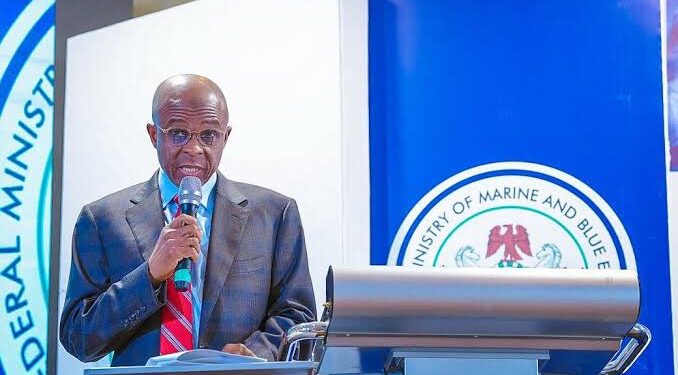
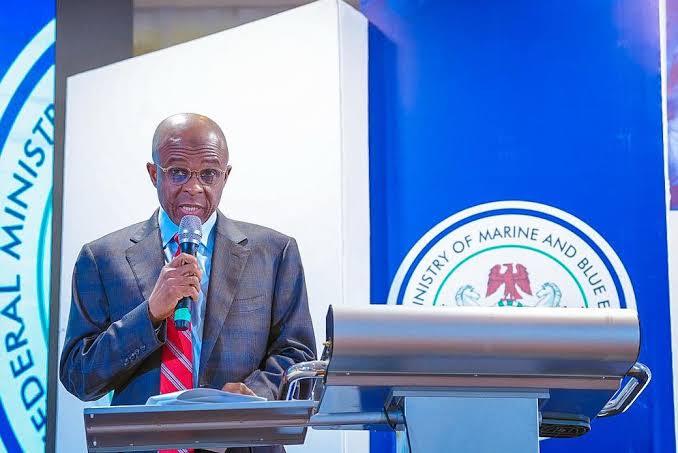
The Managing Director of the Nigerian Ports Authority (NPA), Dr. Abubakar Dantsoho has announced that Nigeria is on course to build a globally competitive and digitally driven port system aimed at strengthening trade facilitation, attracting foreign direct investment (FDI), and boosting investor confidence in the country’s economic future.
Speaking at the ongoing United Nations General Assembly (UNGA) in New York, where he a paper titled “Optimising Nigeria’s Port Infrastructure, Enhancing Trade Facilitation and Global Competitiveness,” Dantsoho unveiled key reforms designed to modernise the nation’s seaport operations and place them on par with global standards.
According to the NPA boss, one of the agency’s flagship projects is the introduction of a Port Community System (PCS), an integrated digital platform that will connect stakeholders, data, and transactions across Nigeria’s port ecosystem. He disclosed that the PCS is scheduled for launch in the first quarter of 2026, adding that it will serve as a collaborative, paperless platform to streamline operations, minimise waste, and enhance efficiency.
“We are building a globally competitive port system that will strengthen trade facilitation, attract foreign direct investment, and boost investor confidence in Nigeria’s economic future,” Dantsoho told the international audience. “The Port Community System is a digital, collaborative platform that will improve the NPA’s digital footprint, and we see it becoming fully viable by the first quarter of 2026.”
Highlighting the progress already recorded, Dantsoho revealed that Nigeria’s ports have achieved significant gains through the deployment of smart digitalisation tools. He noted that the introduction of paperless transactions and other digital platforms has contributed to a 19.6 percent growth in non-oil exports in the first half of 2025,a development he attributed to increased efficiency in cargo handling and trade facilitation.
Among the ongoing initiatives, Dantsoho listed the deployment of a new electronic barrier system across terminals at the Lagos Port Complex to improve traffic management and access control. The system is integrated with the “Eto” electronic call-up platform, which regulates truck entry and helps reduce congestion around the ports. Additional innovations include e-Tag verification, joint boarding applications, and electronic send systems, all designed to cut cargo dwell time and improve vessel turnaround.
He further disclosed that the NPA is infusing sustainability measures into its operations to support long-term growth while reducing environmental impact. These efforts include the automation of barge, truck, and railway applications to improve intermodal connectivity and reduce dependence on road transportation, as well as a shore-to-ship emission reduction programme, which will debut at the Lekki Deep Seaport.
Dantsoho emphasised the strategic importance of the Lekki Deep Seaport, describing it as a multi-purpose port within the Lekki Free Zone capable of handling super post-Panamax vessels, thereby enabling economies of scale and enhancing the competitiveness of Nigerian exports. He added that the NPA has commissioned a state-of-the-art fleet of tugboats and marine crafts to service operations at Lekki Port, the Dangote Refinery—touted as the largest single-train refinery in the world—and the Dangote Fertilizer Plant, the largest granulated urea fertiliser facility in Africa.
“The Nigerian Ports Authority is dedicated to modernising our port infrastructure and streamlining our services,” Dantsoho said. “We look forward to continued collaboration with stakeholders to achieve these goals and secure Nigeria’s place as a competitive maritime hub.”