By Oluyinka Onigbinde
The Chairman of Blue Diamond Logistics China, Festus Uzoma Mbisiogu, has called for urgent reforms in the processing of debit notes at Nigerian ports, saying importers should not have to wait two or three days to complete additional payments required for the release of their cargo.
Mbisiogu, who spoke in Lagos at the 20th anniversary celebration of Blue Diamond Logistics China, argued that the debit-note process should be completed within one or two hours once an importer has been assessed and directed to make additional payment.
His position comes against the backdrop of continuing concerns over cargo clearance timelines, port-related costs and the impact of delays on importers and the wider economy.
According to him, while recent digital reforms by the Nigeria Customs Service have improved cargo tracking and reduced clearance time for some consignments, unnecessary delays still remain in parts of the clearance process.
He said the objective of port reforms should ultimately be to ensure that compliant importers can move their cargo out of the ports as quickly as possible after fulfilling all regulatory and financial obligations.
Mbisiogu said, “Once an importer has been issued a debit note requiring additional payment, the process should not take two or three days. It should ideally be concluded within one or two hours.”
He maintained that reducing such delays would improve the efficiency of Nigeria’s ports, lower the cost of doing business and help prevent avoidable accumulation of storage, demurrage and other charges.
The Blue Diamond chairman also commended the Nigeria Customs Service for introducing digital innovations that have improved the visibility of cargo and made it possible for importers to track consignments online.
According to him, the new digital processes have helped reduce the clearance period for some cargoes from about one week to between two and three days.
He described the ability of importers to monitor cargo movement and release processes online as a significant improvement over the previous system.
Mbisiogu said the development demonstrated that technology could substantially improve Nigeria’s trade environment when properly implemented.
He, however, urged Customs to sustain the reforms by identifying and eliminating the remaining bottlenecks in cargo clearance.
He also backed the Customs Service’s recent compliance actions involving bonded terminals, saying operators must understand that the authorities were increasingly monitoring activities carried out under their licences.
According to him, the enforcement drive would help strengthen confidence in the cargo clearance system and ensure that bonded facilities operated in accordance with regulatory requirements.
Mbisiogu disclosed that his own terminal had successfully passed the verification process.
The logistics executive’s call for faster debit-note processing formed part of broader discussions at the event on the challenges facing Nigerian businesses involved in international trade.
He said one of the major lessons from Blue Diamond’s 20-year experience was that the cost of importing goods was determined not only by the price paid to suppliers abroad but also by what happened to the cargo after it arrived in Nigeria.
For importers sourcing from China, he said, delays arising from documentation, regulatory processes, language barriers and cargo clearance could significantly affect the final cost of goods.
He explained that this was one of the reasons Blue Diamond had developed services beyond conventional cargo movement to include translation, interpretation and other forms of assistance for Nigerian businesses dealing with Chinese suppliers.
Mbisiogu said the company’s biggest achievement over the past two decades was helping Nigerian importers overcome the barriers that previously made it difficult to transact with Chinese businesses.
He recalled that when he began the journey, many Nigerian traders were more familiar with Dubai and Hong Kong, while China was emerging as a major source of goods for Nigerian businesses.
He said he identified an opportunity to build a bridge between Nigerian importers and Chinese suppliers.
“The biggest achievement I know I have achieved is making sure that our importers, Nigerian interpreters that want to import from China, can now do business with ease,” he said.
“I’m there to stand as a middleman between them and the supplier.”
He said Blue Diamond’s translation and interpretation services became particularly important because language differences could expose Nigerian traders to difficulties in negotiations, documentation and other commercial transactions.
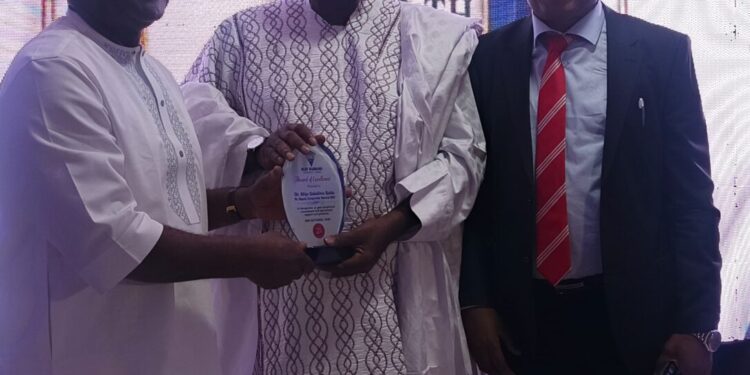
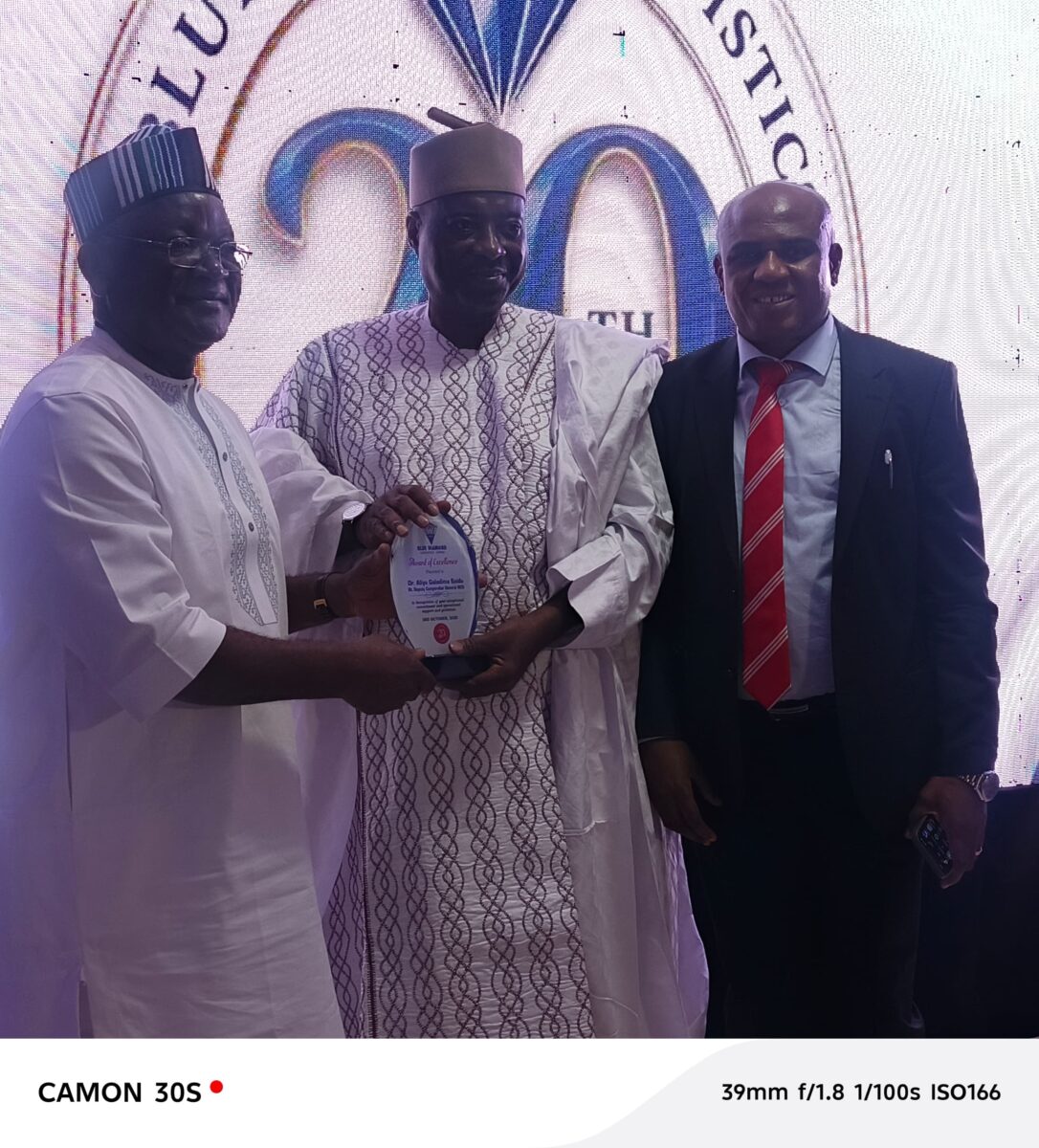
The anniversary celebration also featured the recognition of staff and customers who had contributed to the company’s growth, with cheques and cash gifts presented to outstanding employees and loyal customers.
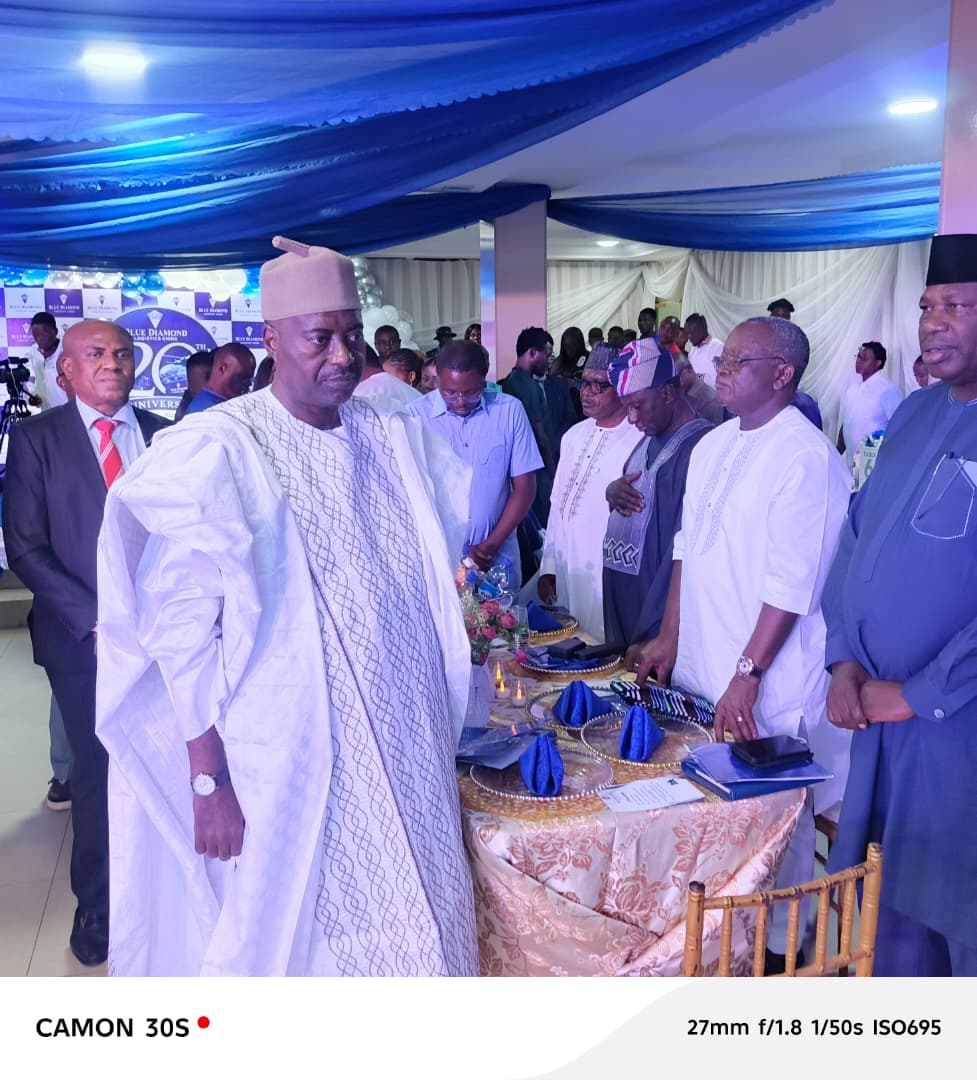
Former Governor of Benue State, Samuel Ortom, who attended the event, commended the company for what he described as resilience, integrity and reliability.
Ortom said the presence of distinguished Nigerians and business stakeholders at the celebration demonstrated the goodwill Blue Diamond had built over the years.
“In the presence of myself and many others who are here, very distinguished Nigerians, it’s a clear testimony that Blue Diamond has a goodwill,” he said.
“Blue Diamond has shown resilience, has shown integrity, and has shown reliability. Those are things that have encouraged us to be here.”
Also speaking, former Permanent Secretary, Federal Ministry of Petroleum Resources, Ambassador Nicholas Agbo, traced Blue Diamond’s growth to Mbisiogu’s decision to build a business around the difficulties Nigerians faced while trading with China.
Agbo, who said he first met Mbisiogu in 2010 while serving at the Nigerian Embassy in Beijing, recalled how the entrepreneur helped Nigerian traders navigate language, sourcing and logistics challenges in China.
He said the company had subsequently expanded its business relationships beyond China to countries including Dubai, South Africa, India, Vietnam and the United States.
Agbo therefore challenged the company to consider dropping “China” from its name and adopting Blue Diamond Logistics Worldwide, arguing that its international footprint had grown beyond the original China-focused identity.
“When you use the Blue Diamond Logistics China, you try to restrict the relationship between us to the Chinese only. But you are far too larger than that,” he said.
He urged Mbisiogu to maintain the values of commitment, dedication, persistence and ethical business practices that had sustained the company through its first 20 years.
Mbisiogu identified the COVID-19 pandemic as one of the most difficult periods in the company’s history, saying the prolonged lockdown in China severely disrupted operations and brought the business close to closure.
He said his commitment to the company’s original vision kept him going despite the crisis.