The Chartered Institute of Logistics and Transport (CILT) Nigeria has urged Nigeria to move beyond port modernisation to an integrated logistics system.
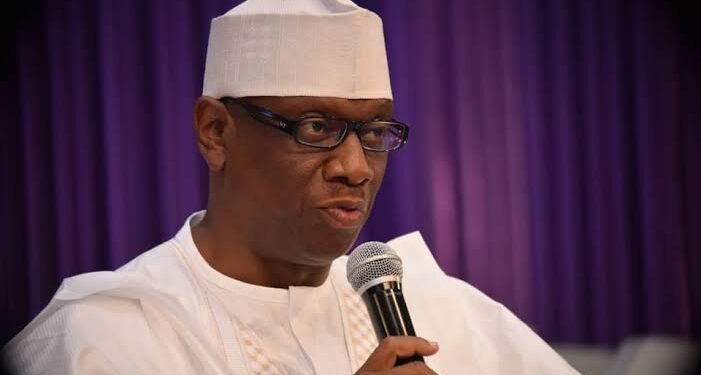
The National President of CILT, Dr Boboye Oyeyemi, made the call at the fourth annual maritime lecture organised by the Maritime Reporters Association of Nigeria (MARAN) on Thursday in Lagos.
Oyeyemi said modernising ports was necessary but insufficient to achieve competitiveness without efficient cargo evacuation and seamless connections to the hinterland.
According to him, the real test of competitiveness begins after vessels berth and containers leave the terminals.
He asked whether cargo could clear customs quickly, leave ports without delays and move efficiently by road, rail or inland waterways.
“Nigeria must begin to view ports as nodes within an integrated national logistics network rather than isolated facilities.
“Ports must connect seamlessly with customs, roads, rail, inland waterways, dry ports, warehouses, industrial clusters and markets,” he said.
The CILT president also called for greater use of digital platforms to create an integrated cargo-flow ecosystem involving government agencies and private-sector operators.
He said the objective should be to give each container a single digital identity and enable stakeholders to track its journey seamlessly.
On port charges, Oyeyemi said competitiveness should be measured by the total cost of moving cargo from origin to destination.
He said such costs included port and terminal charges, customs-related expenses, storage, demurrage, documentation, haulage, security and inventory costs.
Oyeyemi urged stakeholders to focus on transparent and predictable charges, efficient processes and measurable service standards.
He also called for greater adoption of multimodal transportation, stressing that Nigeria could not continue to depend overwhelmingly on roads for cargo movement.
He said rail should be utilised for high-volume and long-distance cargo, while inland waterways, dry ports and logistics parks should complement other modes.
“Nigeria has an opportunity to become a major logistics gateway for West and Central Africa.
“The country’s large population, geographical position, maritime assets and access to the African Continental Free Trade Area are major advantages.
“Stakeholders should shift from port modernisation to logistics transformation, documents to data and import dependence to export competitiveness,” he said.
Oyeyemi commended MARAN for sustaining its maritime lecture and urged the media to deepen public understanding of the relationship between logistics, prices, business competitiveness and economic growth.
“Modern ports do not merely move ships faster; they should help move the Nigerian economy forward,” he said.
Also, Capt. Warredi Enisuoh, Executive Director, Operations and Technical, Tantita Security Services Nigeria Ltd., called for a holistic approach to port modernisation in Nigeria.
He added that investments should extend beyond port terminals to their exit corridors.
Enisuoh said concentrating on port modernisation in Lagos without improving roads, bridges, barging and other logistics infrastructure would continue to create congestion and undermine efficiency.
He cited Togo as an example, noting that the country had deepened its port to more than 20 metres to accommodate larger vessels carrying up to 24,000 TEUs.
“Larger vessels offer significant economies of scale. A 24,000-TEU ship can operate with 19 crew members.
“Nigeria must also streamline port processes. Shipping agents currently deal with several agencies, including the Nigerian Maritime Administration and Safety Agency, the Nigeria Customs Service and the Nigerian Ports Authority,” he said.
He said Nigeria could adopt a one-stop shop system, where operators complete regulatory and payment processes through a single platform, thereby reducing delays.
Earlier, MARAN President, Mr Oluyinka Onigbinde, said Nigeria had renewed efforts to modernise port infrastructure, strengthen regulation and position maritime transport as a driver of economic growth.
Onigbinde said port modernisation should go beyond equipment and technology to improving efficiency, transparency and affordability through reduced delays, predictable procedures, reasonable charges and better services.
He urged stakeholders to ensure port costs deliver value for money, while regulatory frameworks promote efficiency, attract cargo and shipping lines, and strengthen Nigeria’s competitiveness as a maritime hub.