By Oluyinka Onigbinde
The Nigeria Customs Service (NCS) has pledged to sustain the country’s gains in the fight against money laundering and other financial crimes following Nigeria’s removal from the Financial Action Task Force (FATF) grey list.
The Service said it would strengthen efforts to prevent the country from being returned to the list as Nigeria prepares for its next Anti-Money Laundering and Countering the Financing of Terrorism (AML/CFT) mutual evaluation.
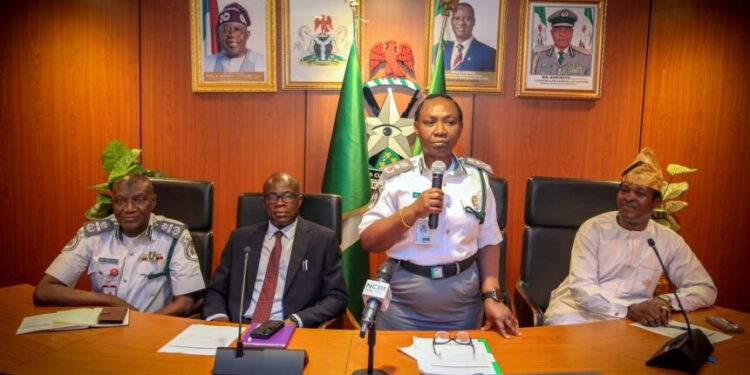
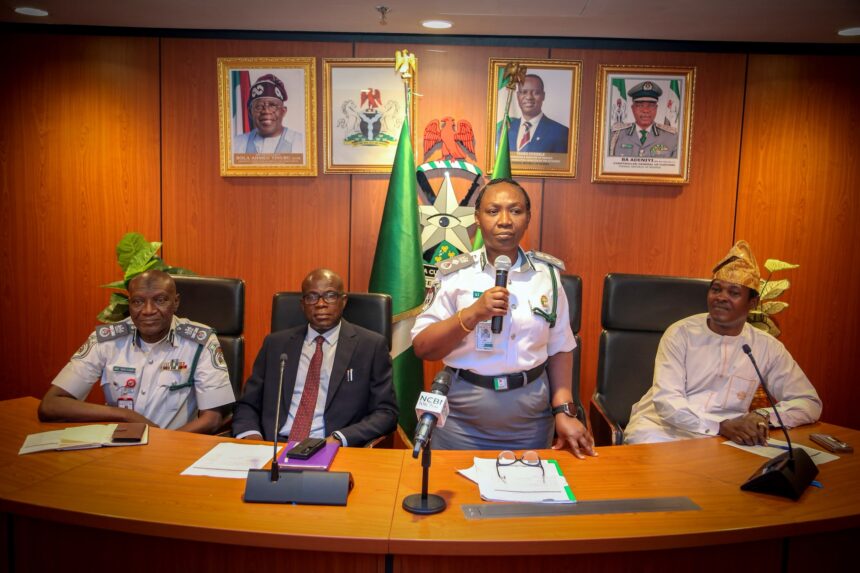
The Comptroller-General of Customs, Adewale Adeniyi, represented by the Deputy Comptroller-General in charge of Finance, Administration and Technical Services, Kikelomo Adeola, gave the assurance on Monday, October 26, 2026, at a stocktaking meeting held at the Customs headquarters in Abuja.
The meeting was organised to review Nigeria’s progress, identify outstanding gaps and prepare relevant institutions for the country’s next mutual evaluation.
Adeola described the exercise as an important opportunity to assess the country’s achievements and determine the measures needed to sustain them.
She warned that Nigeria must avoid losing the progress already recorded, stressing that the country’s success would depend on its ability to address existing weaknesses and maintain effective anti-money laundering measures.
“It is an opportunity to take an honest look at the progress Nigeria has made so far, identify the gaps that presently exist and ensure that Nigeria’s achievements are sustained, because if they are not, it is like one step forward, two steps backwards, and that should not be our portion,” she said.
She commended the Nigerian Financial Intelligence Unit (NFIU) for its initiatives and programmes aimed at preparing the country for a successful third mutual evaluation.
Adeola expressed confidence that Nigeria would not return to the FATF grey list, noting that sustained cooperation among relevant institutions would be essential to protecting the country’s progress.
She also highlighted the strategic role of the Customs Service in the fight against financial crimes, particularly through its responsibilities for border enforcement, cargo monitoring and the facilitation of legitimate international trade.
However, she stressed that no single agency could effectively tackle the challenge without the support of other relevant institutions.
“A tree does not make a forest,” she said, calling for stronger collaboration among agencies involved in combating money laundering and related offences.
Also speaking at the meeting, the Chief Executive Officer of the NFIU, Hafsat Abubakar, represented by the Chief Operations Officer, Law Enforcement Support and Coordination, Emmanuel Sotande, thanked the Customs Service for hosting the delegation and providing an opportunity for discussions on the country’s progress and remaining challenges.
Sotande described the stocktaking exercise as an important step towards strengthening Nigeria’s readiness for the next evaluation, which will examine how effectively relevant institutions implement measures to protect the country’s financial system from abuse.
He said Nigeria’s removal from the FATF grey list in October 2025 was a major achievement made possible through the collective efforts of government agencies and other stakeholders.
“Nigeria’s exit from the FATF grey list in October 2025 was a significant achievement that we all achieved by working together,” he said, adding that the priority now was to sustain the progress and demonstrate lasting effectiveness.
Sotande explained that the Customs Service’s responsibilities in combating money laundering, terrorist financing and the financing of proliferation extended beyond its traditional duties of revenue generation, trade facilitation and border control.
According to him, the Service is strategically positioned to identify suspicious cross-border activities through its access to trade records, import and export documents, cargo information and border intelligence.
He noted that these records could complement the financial intelligence generated by the NFIU, helping relevant agencies to identify suspicious networks, trace illicit proceeds and take appropriate enforcement action.
“When these capabilities are effectively connected through timely information sharing and coordinated action, we are better positioned to identify suspicious networks, trace illicit proceeds and support appropriate enforcement measures,” he said.
The NCS and the NFIU are expected to continue working with other relevant institutions to close existing gaps, improve information sharing and strengthen the country’s capacity to combat financial crimes ahead of the next mutual evaluation.