By Zahra Ahmed
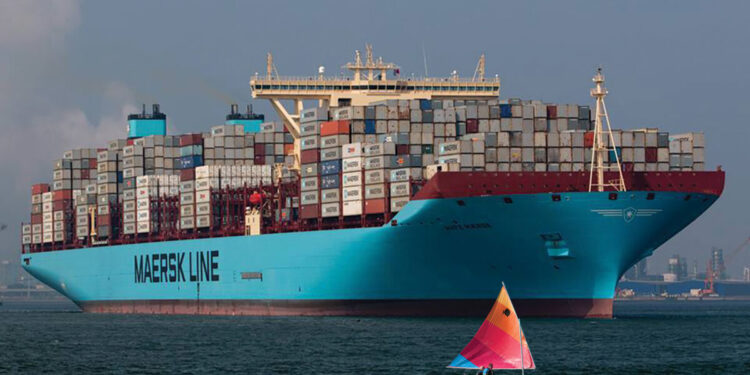
All types of cargo ships, be it container vessels, bulk carriers, oil tankers or Ro-Ro vessels, have 3 main parts: namely the hull, the engine room and the navigation bridge. Understanding their role is important, along with categorising other structures, both visible, including the bow, propeller, stern and rudder, and those which are hidden, such as cargo holds, ballast tanks, bulkheads, etc which will be discussed in this article to offer a clear understanding of a modern ship’s anatomy.
- Primary Structural Parts Of A Ship
Hull
It is a ship’s watertight body which keeps it buoyant or afloat. All other components are connected to it or sit within the hull, which might be open or partially covered with a deck. A hull has several watertight decks and bulkheads. Most hulls are built of steel, which makes them sturdy enough to withstand saltwater, powerful waves and rough weather.
The Keel
Just like a human spine supports the body, the keel supports the entire frame of a ship. It runs from the bottom centreline along the length of the vessel from the front to the back, i.e from the bow to the stern. Builders construct a vessel around the keel, and laying it is the first step in starting construction. The keel helps to distribute load across the ship evenly and lowers its centre of gravity, thereby keeping it balanced even in rough waters.
Bulkheads
These are upright watertight walls inside the hull which act like an internal partition, dividing the ship into different compartments or sections. Bulkheads strengthen the ship and prevent it from twisting under heavy loads at sea. In case of emergencies like flooding, they trap water in one of the compartments, allowing the vessel to remain afloat. They also act as a barrier and prevent fire from spreading to the entire ship. They also separate different kinds of cargo and machinery spaces from each other.
Double Bottom
This is a hull design with two watertight layers of plating at the bottom, which provide strength and create a safety barrier in case of collision or grounding. For example, if the outer layer hits a rock, the inner layer prevents water from gushing into the cargo holds or engine room. International Maritime Organization’s SOLAS Convention states that passenger ships and large cargo vessels must have double bottoms.
Bilge
Bilge is the lowest section of the hull where water, waste liquid and oil naturally collect as a result of routine operations. It lies on each side of the keel at the bottom of the ship, and the water from it is pumped overboard using dedicated equipment.
- The Front & Back, Commonly Called Bow & Stern
Bow
It is the front or forward part of a ship, shaped like a point or wedge to cut through the waves, reducing drag and keeping excessive water from splashing on the deck. It houses equipment such as the anchor, anchor pit and anchoring chain. Many vessels have a bulbous bow, which is a round projection below the waterline which enhances fuel efficiency by 10 to 15%.
Stern
The aft-end structure of a ship is called its stern, which reduces vibrations and maximises propulsion efficiency. It can be flat, tapered or have a sharp profile, and terminates at a surface called the transom, which works as a point to mount equipment. It houses the rudder, propellers, engine, cockpit, engine controls, steering gear systems and stern access points.
- Sides Of Ship
Starboard or Right: If one looks at the vessel from the stern, the part to the right is termed starboard.
Portside or Left: If we look at the ship from the stern, the left side is the port side.
Beam or Centre: It is the hull’s widest part, located in the ship’s middle.
- Navigation & Superstructure Components
The Bridge
This is the commanding station of a vessel, which has deck machinery, the main engine and navigation systems. The crew can control the ship’s speed and direction, monitor the weather and sea conditions and maintain lookout from the bridge. They can also determine or fix the ship’s position using GPS or electronic charts and maintain communication with the engine room or with other ships or shore authorities. Modern vessels have electronic navigation equipment, which is now mandatory under international maritime law to ensure compliance with SOLAS.
Monkey Island
Monkey Island is a sort of deck located at the topmost accessible height of the ship and just above the bridge. This part of a ship is sometimes also referred to as a flying bridge and, in the past, was used by the sailors for solar and stellar observations. In addition, it houses a magnetic compass.
It is an integral part of ship and houses driving units such as VDR capsule, AIS Tx/Rx antennae, Radar scanner(s) attached to the radar mast, Sat C/F77 Tx/Rx antennae, communication equipment gear, various halyards connected to the yardarm to hoist flags, weather vane, and the masts leading up to the ‘Christmas Tree’ (navigation lights) and the ship’s aft whistle.
- Propulsion, Steering and Machinery Components
The Main Engine
Situated in the lower aft section of a ship’s hull below the waterline, the main engine room is the heart of a vessel as it houses the main engine, auxiliary generators which produce electrical power, boilers, fuel purifiers and oil treatment equipment, pumps, heat exchangers, compressors and other vital equipment necessary for operating a ship in open waters.
It is extremely hot in an engine room, usually above 45 degrees Celsius due to all the heavy machinery, and constant maintenance and care are required to ensure the engine and all other machinery work smoothly without any issues.
Given the risks of fire and other accidents in this congested place, its construction and operations are governed by SOLAS Chapter II-1 for structural fire safety and MARPOL Annex VI for Tier III NOx and SOx exhaust emission compliance.
*To be concluded next week