By Oluyinka Onigbinde
The Director-General of the Nigerian Maritime Administration and Safety Agency (NIMASA), Dr Dayo Mobereola, has reaffirmed the Federal Government’s commitment to developing indigenous capacity in the Nigerian maritime sector, stressing that effective implementation of the Cabotage regime remains a priority.
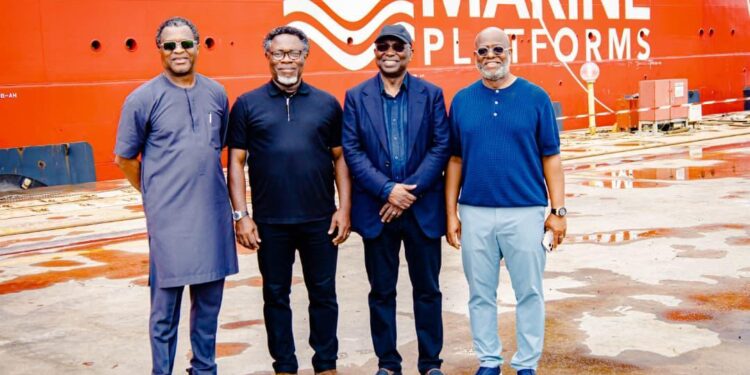
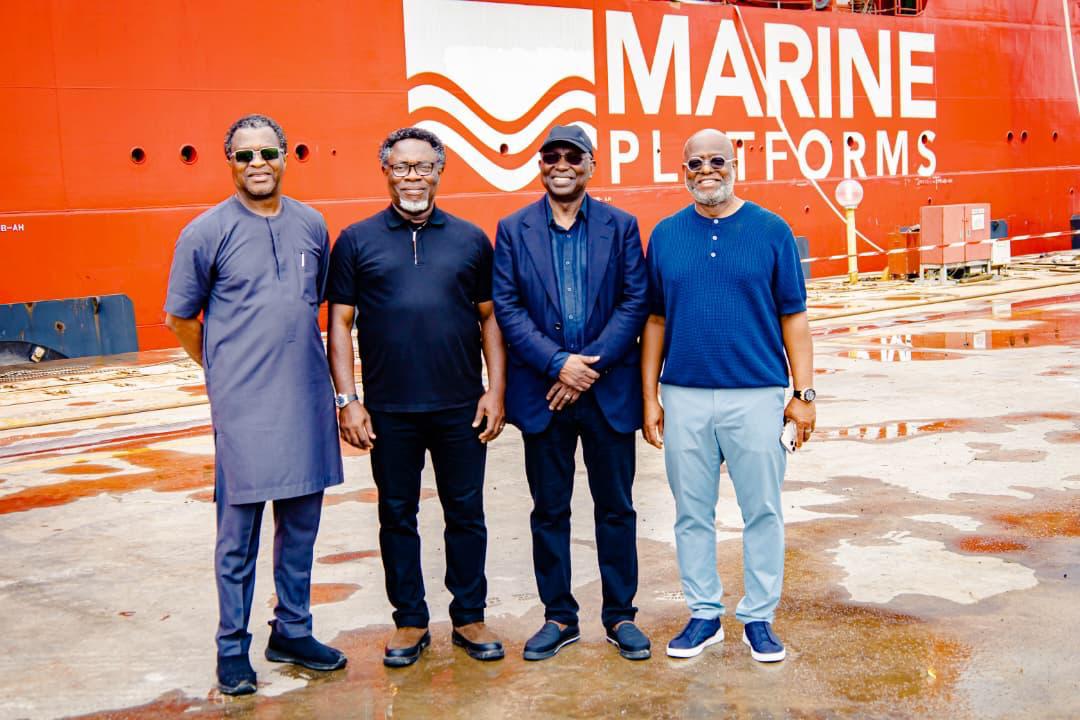
Mobereola stated this during a tour of the African Pioneer Lagos, an offshore Diving Support Vessel (DSV) operated by Marine Platforms Limited in Lagos.
The Nigerian-flagged vessel, with IMO Number 9808613, measures approximately 143 metres in length and has a deadweight of about 8,000 metric tonnes. It is equipped to support specialised deep-water subsea construction, diving, inspection and offshore oil and gas operations.
Expressing satisfaction with the vessel and its operations, Mobereola said Nigerian-flagged vessels of such capacity should be given priority over foreign vessels operating in the country’s maritime space.
“I’m quite happy at what I have seen today after the tour of this 8,000 metric tonnes African Pioneer Specialised Vessel. A vessel such as this flying the Nigerian flag should have priority over any foreign vessel,” he said.
The NIMASA DG disclosed that the Agency was automating the Nigerian Ship Registry as part of efforts to make the registry more attractive to shipowners and encourage more vessels to fly the Nigerian flag.
“We are automating the Nigerian Ship Registry to make it more attractive and to ensure that more vessels like this fly the Nigerian flag,” he added.
On his part, the Chief Executive Officer of Marine Platforms Limited, Mr Taofeek Adegbite, said his company had benefited significantly from the implementation of the Cabotage regime and the Nigerian Content Development and Monitoring Board (NCDMB) Act.
Adegbite said the company remained proud of flying the Nigerian flag on its vessels operating within Nigerian waters, while encouraging more indigenous shipowners to register their vessels with the Nigerian Ship Registry.
“Since 2012, when we got our very first vessel, MT African Vision, we are happy and proud to say NIMASA’s Cabotage regime and the Nigerian Content Development and Monitoring Board Act has played a major role in ensuring that our vessels have contracts on a regular basis,” he said.
“We have no regret flying the Nigerian flag and I will invite more shipowners to register their flags in the Nigerian Ship Registry.”
However, Adegbite called for a review of the classification system for large vessels, particularly in relation to the crew operating such vessels, to encourage the registration of more very large vessels under the Nigerian flag.
“At the moment, we would appreciate a classification in such a way that the crew who are operating very big vessels are given special attention so that more very large vessels can fly the Nigerian flag,” he said.
Adegbite also commended NIMASA for its support, noting that the African Pioneer Lagos demonstrated the capacity of Nigerian companies and professionals to operate sophisticated vessels and deliver services to international standards.
According to him, the continued development of the Nigerian-flagged fleet would also create greater opportunities for the training and development of indigenous maritime manpower.
He said Nigeria could learn from countries that had successfully developed globally recognised areas of maritime expertise.
Adegbite noted that the Philippines had become globally recognised for its seafarers, while Norway was renowned for shipbuilding, stressing that Nigeria could similarly identify and develop a specialised area of maritime competence that would gain international recognition.
He said stronger implementation of the Cabotage regime, increased support for indigenous shipowners and greater opportunities for Nigerian professionals would be critical to building a competitive and sustainable maritime industry.