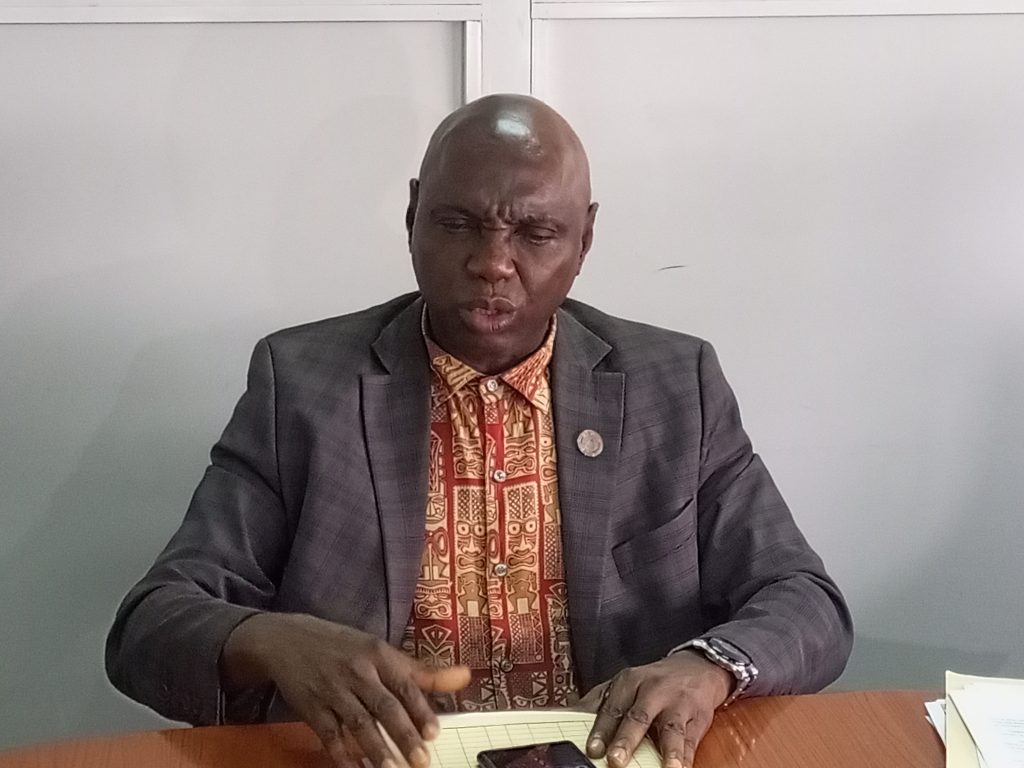
In this exclusive interview with Joshua Yousouph of Shipping Position Daily, the Technical Adviser on Maritime, to Maritime Anti-Corruption Network (MACN) Nigeria and Centre for Business Integrity (CBi) and former Director at the Nigerian Shippers’ Council (NSC), Mr. Moses Fadipe, , speaks candidly on the controversy surrounding shipping companies’ proposed tariff hike. Drawing from years of regulatory experience, he speaks on the importance of adhering to established procedures, the role of efficient service delivery in determining tariffs, and why stakeholder engagement remains critical in maintaining industry stability. He also shares insights into complaint resolution mechanisms, the growing role of technology in enforcement, and ongoing efforts to build a collaborative, transparent framework for Nigeria’s port operations.
A Regulator Must Be Far Ahead Of The People They Are Regulating
User Experience Diary will aid the National Single Window
The Council for the Regulation of Freight Forwarding in Nigeria recently launched the ‘User Experience Diary’ to provide a more robust and sustainable enforcement framework for the maritime industry. Does that mean this User Experience Diary can also serve as a backup for the National Single Window?
Yes. That’s exactly what we want to achieve. This is because the lapses of the National Single Window have just been measured. They don’t really have another support system whereby they can send complaints. So that means there are some issues. At the Nigerian Port Process Manual side where we have a system, we also have a Help-Desk. The User Experience Diary is aimed at addressing these lapses for seamless operations at the cargo side of the maritime industry.
There has been sustained controversy over the proposed tariff hike by shipping companies. What is your perspective on this development?
Now, usually, let me say this—for every action to be carried out, there are processes. Yes, shipping companies have the right to say they want to increase their tariff. It’s an intention. That intention will be brought before the concerned government agency. When they receive that proposal, they will study it. When they study it, they will now have recourse back to the rules and regulations guiding tariff increment. One major thing in that, is engagement of the stakeholders before you give approval. Was that done? Two, in the industry, you look at what we call service reflection. If I’m charging you $10 to move this box from point A to point B, is that $10 worth it or not? I’m just increasing because I feel I’ve not increased in the last 10 years, I’m due for another increment—no, it doesn’t work that way. If your service is not improved, you have no reason to require an increment. You can’t. And the regulator, at the time of receiving that proposal, it is part of their duty to engage the stakeholders privately in terms of service reflection.
So where exactly do you think the process went wrong?
If in a system, you don’t follow the required rules and regulations, the end result is what you are seeing in the industry—the disruption of the industry. People will come out and resist such things. But if they followed the required processes, by the time the users—the freight forwarders react, the next thing is to show them: these are the processes, we engaged you, these are your positions. But once that is not done, you now see the back and forth—going forward, going backward—asking people to stop. For God’s sake, they are a regulator. A regulator must be far ahead of the people they are regulating, not people that are regulating and pushing you from left to right.
The regulator has now asked parties to halt the increase. What practical steps should be taken to resolve the issue?
Well, I read in the newspapers where they said all parties must refer back to status quo, which is a good one. Having referred back to status quo, the Nigerian Shippers’ Council will now follow the processes that should be done- stakeholders’ engagement between all parties—they can even divide it. Just like in the National Assembly, don’t they have public hearings? They should extract the services they want to increase on and engage stakeholders using those services. How is the service like as we speak? Is it porous? Is it excellent? If it’s excellent, those are the key points to increase such services. But if it’s porous, my dear brother, it should be stopped. That’s my candid advice. But not the question of ‘we’ve not increased in 20 years, so we want to increase.’ It doesn’t work that way.”
You have seen similar situations in the past. What lessons should the industry learn?
This is not the first time they are asking for increment. It has happened in the past. It happened in the time of other past Executive Secretaries, it happened in the time of Captain Biu, it happened in the time of Hassan Bello, also in the times of Emmanuel Jime. So where have we stopped it? If you lack the required expertise, nothing is stopping you from getting assistance from outside. You need to bring all your people together. That’s the key thing.
Let’s talk about eradication of corrupt practices particularly at the ports by MACN-CBi at the ship side. How has the industry performed recently, particularly in 2025?
You know we published the performance in 2024. For 2025, we are having a meeting in April—April 27th to 1st of May—in Athens, Greece. We are going to present all these things, and when it is ratified, we will make it public. But being an administrator of that platform, I can tell you it was a very significant improvement over 2024. And I will equally tell you for free that a lot of government agencies do not see us as antagonists anymore. They are now seeing us as a backbone for progress. Such that when even some captains misbehave on board, authorities call us. They say: we will show you location, we will show you vessel, see what the captain is doing—and we intervene. We caution such captains, and if they persist, there are sanctions—fines. Because when you misbehave to government authorities, it has consequences. So we are for both sides. Everybody must carry out his duty the way it should be.
There are plans to replicate this success on the cargo side using a User Experience Diary. How will this work without a strong enforcement structure?
That is why we are advocating for collective action. And that is why the Council for the Regulation of Freight Forwarding in Nigeria signed a MoU with other bodies. That is why we have this kind of forum—to bring people of like minds together. We don’t want to know whether you are enemies or friends. The key thing is: how do we replicate this for the benefit of all? And that is why we said we want to put up a technical team from among the participants who will now be like the drivers of the entire system.
But does CRFFN really have the enforcement capacity required for this?
When we started similar initiatives, we didn’t have enforcement structures. It was the issues that kept coming that led to the formation of those frameworks. So if CRFFN does not have such a thing, but they have an outfit they call enforcement, the question is: what are they enforcing? If they are enforcing A and you find out that B is necessary, they are a government agency—you tell government: these are our challenges. If government wants to move that policy forward, it will happen. The important thing is that they have that department. The rest can be built.
What role will technology play in making this system effective?
Technical support, compliance, and digitalization—those three things will bring out culprits in real time. It will show the pattern, the time, the location, what was done wrong. And when we have all that, enforcement becomes easier. Remember, we have laws—even provisions that give penalties for service failures—but they have not really been tested in Nigeria. If we begin to test them and people see the consequences, the system will correct itself naturally.
Finally, what is the long-term goal of this initiative?
Sustainability through collective responsibility. Everybody is involved. No segregation. When you talk about sustainability, who is responsible? Everybody. Because everybody is represented. So if there is failure, all of them fail. It is no longer about CRFFN alone—it is collective action. The goal is to maintain integrity, advance it, and sustain the system over time.