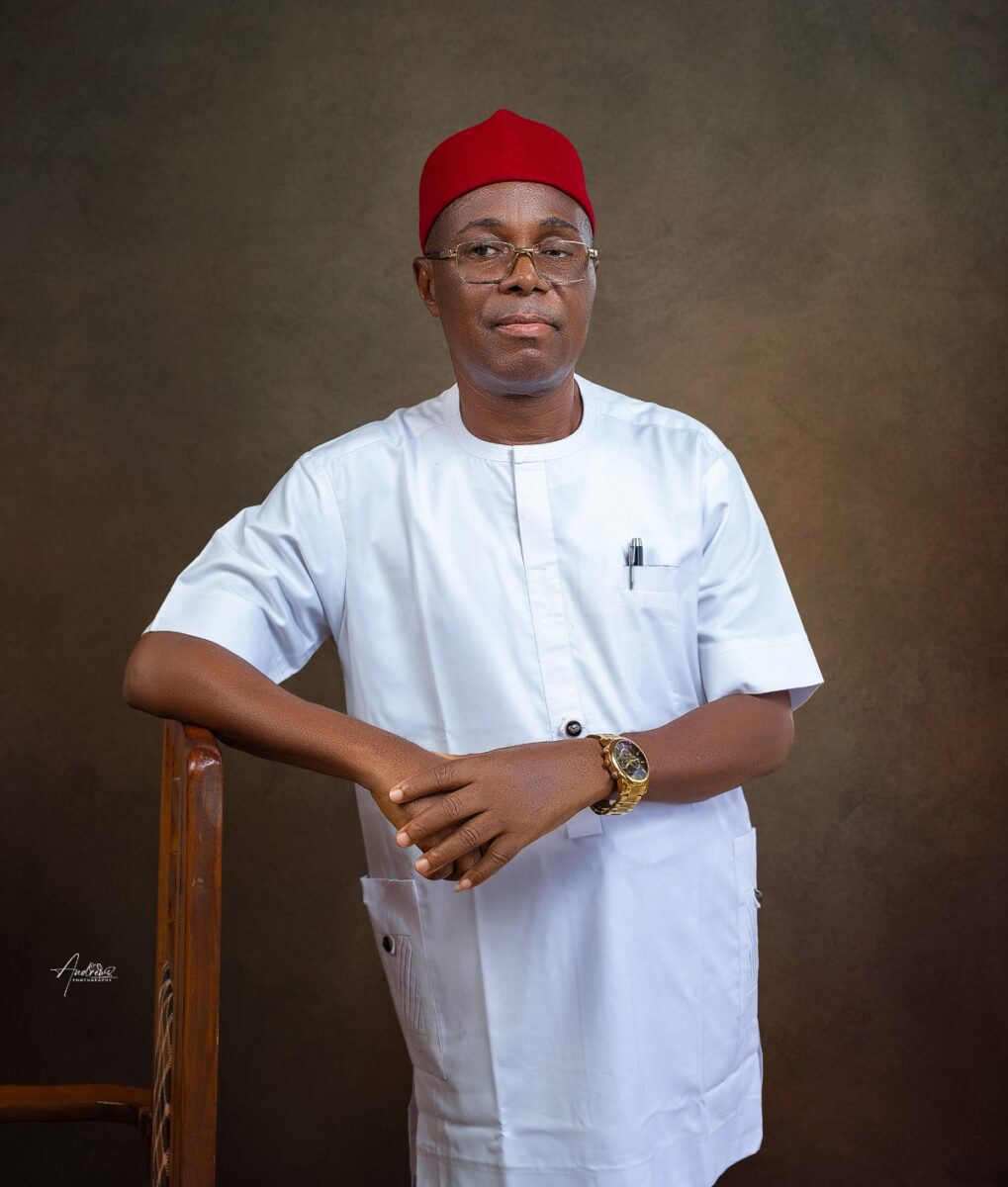
In this interview with Joshua Yousouph, the Acting President of the Association of Registered Freight Forwarders of Nigeria (AREFFN), Chief Frank Obiekezie speaks on his vision for the association, the need for unity among freight forwarding bodies, professionalising the industry, attracting younger practitioners, members’ welfare. He also talks about his expectations from the Nigerian Port Economic Regulatory Agency (NPERA).
Since your assumption of office, there appears to have been considerable restructuring, both at the chapter and national levels. What is your vision or, perhaps, your immediate goal for this restructuring?
My vision is informed by more than 13 years of experience in the association, where I have served as Assistant Secretary, Secretary, Chief of Staff and now Acting President. I have also been in the freight forwarding industry since 1987, so I have seen where we were, where we are and where we can be. My immediate goal is to introduce changes that will help develop freight forwarding as a true profession and improve the way the association operates.
What are some of those things you believe need to change?
First and foremost, I want to address the disunity among freight forwarding associations. I believe there is a need for greater cooperation and collaboration. I am not saying all associations should merge, but we can coexist and work together in the interest of the profession. During my engagements with stakeholders, I have seen examples where members of different associations support one another regardless of their affiliation. That is the kind of relationship I want to encourage. We are not political parties competing for one position. Associations can exist independently while collaborating on issues affecting the profession. The best way to discourage unnecessary proliferation is through inclusivity, openness and effective internal dispute resolution. If people feel heard and accommodated, they are less likely to leave and create another association. Since assuming office, I have engaged the leadership of several associations, including NAGAFF, because my first objective is to bring the various bodies closer together.
What do you think will be the benefit of such cooperation?
Once the associations begin to work together, we will be in a better position to contribute to determining who qualifies to be a professional freight forwarder. Yes, we have a regulator, but I believe the associations also have an important role to play in promoting professional standards. For a long time, freight forwarding has sometimes been regarded as a business for people who dropped out of school or people who had no other options. We want to change that perception. Freight forwarding is an international profession. International trade cannot take place effectively without freight forwarders and customs agents. Therefore, it should not be a profession that people simply enter without adequate education, training and professional preparation. We want to clean up the profession. When we cooperate, it will also be easier for Customs to engage with us and easier for the regulator to regulate the profession effectively. So, coming together is my first priority. And by coming together, we can begin to clean-up the profession and improve our practices.
You also mentioned attracting young people into the profession. How important is that to your administration?
It is very important. My second mission is to attract younger people into freight forwarding because we must think about what happens after our generation leaves. I don’t want to leave the profession the way I met it. I want to look back and say that we came in, cleaned it up and took it to another level for the next generation. We also want to change the mindset that working in the port is simply an opportunity to make quick money. People should see freight forwarding as a profession through which they can earn a legitimate living and serve the country. That is why training and ethical values are critical. When people are properly trained, they understand the consequences of corruption and can develop the discipline to make the right choices even when nobody is watching.
Beyond the broader freight forwarding industry, what specific changes are you bringing to AREFFN itself?
As I said earlier, what I have discussed so far concerns the general trends I want to create in the industry. But within AREFFN itself, you can see that we are rebuilding. For about eight years, the association’s national operations were largely run from the East, where the former president operated from. To a large extent, this affected the visibility of the association. When you are in Lagos and the president is somewhere far away, stakeholders may end up interacting with the vice president or the Chief of Staff. It is not the same as having the president physically present and directly engaging stakeholders. Now that I am here, we are going to redesign many things. We are going to improve the visibility of AREFFN by enhancing the training of our members, participating actively in Customs activities and responding to invitations from other government agencies and stakeholders. For example, we recently visited the Maritime Police. These engagements show that there is renewed activity within the association. We are also renewing our membership identification cards. Before you plan for an organisation, you must know the number of people you are planning for. So, membership verification and updating our database are very important. Welfare is something we are looking at very seriously. Previously, members’ welfare was not necessarily at the top of our priorities, but the current economic situation makes it important for members to have some form of collective support. A member should be able to come to the association and say, “This is the problem I am facing today,” and know that there is a structure through which assistance can be provided.
You raised the issue of foreign businesses. What would you like the government to do?
I want to appeal to the government to take a second look at the situation and consider whether certain categories of businesses should be reserved for indigenous Nigerians. There may be exceptions in areas where the capital requirement is very high and where foreign participation may be necessary. But some smaller businesses should be protected for Nigerians who are now becoming stranded. We were told that the issue also involves the Immigration Service, which issues work permits to foreigners. Those permits should clearly indicate what the person is coming to do and the area of the economy in which the person is authorised to operate. There is also the issue of Nigerians who serve as fronts for foreign businesses. Government policies should be clear and definite. If a particular action contravenes the law, the consequences should also be clear. Once people see that violations attract consequences, it will serve as a deterrent. Our members are suffering. Even those of us running the association are finding things difficult, because associations are largely funded through annual subscriptions from members. Members who benefit from the leverage of the association are expected to contribute towards its running. But if members themselves are struggling because of the downturn in business, it becomes difficult to sustain the association. We understand that economic cycles change. Eventually, things will pick up again. But for now, we have to acknowledge the difficulties our members are facing.
The Nigerian Port Economic Regulatory Agency, formerly the Nigerian Shippers’ Council, has now been given a new legal framework and additional regulatory responsibilities. What are your expectations of the agency?
Before now, one of our major concerns has always been the activities of shipping companies, particularly the way charges are increased from time to time. There were occasions when shipping companies increased their charges and we approached the Nigerian Shippers’ Council. The Council would tell them to go back and consult with stakeholders. I participated in one of the consultations organised by some shipping companies. During that meeting, we were told that the Shippers’ Council had already approved the charges, whereas our understanding was that they had only been asked to consult stakeholders. It did not appear to me that there was genuine consultation because we were told that the charges would take effect immediately. Eventually, the charges were implemented. This nearly created problems in the industry because some people were giving the impression that the shipping companies had discussed with their national offices and reached an agreement. But we found out that there had not been such negotiations with the stakeholders we expected to be involved. That is one issue. Another issue is container deposits and terminal charges. There are situations where people pay deposits and then have difficulties obtaining refunds. You can make an application and, eventually, somebody locally tells you that he is helpless and gives you a telephone number to contact somebody outside Nigeria. At the end of the day, it can take considerable persistence before a person gets the deposit refunded. Some people may simply give up. Now that the former Shippers’ Council has been given stronger regulatory powers as the Nigerian Port Economic Regulatory Agency, we expect it to live up to the responsibilities provided under its new law.
What specifically would you want the agency to do?
I expect the agency to engage stakeholders once again and educate them about the provisions of the new law. There are many things in the new legal framework that stakeholders may not fully understand yet. Some provisions appear to be coming out one after another. So, the agency should invite stakeholders, educate them and seek their cooperation. No matter how much regulatory authority you have, cooperation is important. Voluntary cooperation and compliance are critical to effective regulation. The agency should therefore bring stakeholders along.
Recently, the inland dry ports were moved from the regulatory purview of the former Shippers’ Council to the Nigerian Ports Authority. Do you think the inland dry ports can perform better under the NPA?
I don’t know what informed the decision, so I would not want to speculate. The Minister may be in a better position because he may have access to information that we don’t have. However, perhaps under the Nigerian Ports Authority, the dry ports may receive a new impetus and become more functional. The reality is that many Nigerians are not even aware of the existence of some of these inland dry ports, apart from the one in Kaduna. There were issues in the past about where customs examination should take place and where duties should be paid. There was also the issue of government insisting that containers should be examined at the seaports before being moved to the inland ports. I believe that was eventually recognised as not being consistent with standard practice. Another major issue is the reliability of rail transportation in Nigeria. We have infrastructure challenges, including vandalism. So, we sometimes have very good policies on paper, but implementation becomes the problem. Government can approve an inland port, but if the infrastructure and commitment required to make it work are not there, the objective will not be achieved. Let us therefore see what the NPA will do with the new responsibility. The purpose of an inland dry port is to take some pressure away from the seaports and bring port services closer to cargo owners in other parts of the country. If the NPA can bring new life and impetus into these facilities, then perhaps we will begin to see the benefits.
Recently, APM Terminals signed a Memorandum of Understanding relating to the development of the Badagry Deep Seaport. Do you think Nigeria needs another deep seaport in Lagos, particularly now that Lekki Deep Seaport is operational?
I don’t know the statistics or the specific information that motivated the decision, so I would not want to make a definitive judgment on it. However, there is a general perception among many Nigerians that Lagos is becoming congested from a port perspective. We have several ports in Nigeria. Instead of concentrating so many activities around Lagos, there should also be a deliberate effort to develop and utilise ports in other parts of the country. When you consider the existing facilities around Lagos, including Tin Can Island Port, Apapa Port and Lekki Deep Seaport, and then you add another major port development in Badagry, the question naturally arises as to whether we are sufficiently spreading port activities across the country. Those who insist that major port developments should remain within Lagos may have information and reasons that I do not have access to. But ordinarily, from the standpoint of efficiency and geographical distribution, we should be looking at how to spread port activities. The congestion in Lagos is increasingly affecting other aspects of life, including accommodation, transportation and security. So, while I cannot speak to the specific feasibility or justification for the Badagry project without access to the underlying data, I believe the broader conversation should be about how Nigeria can properly distribute port infrastructure and cargo activities across the country. If we can develop other ports and make them functional, we will reduce the pressure on Lagos and create economic opportunities in other regions.
Finally, what would you like stakeholders to take away from your administration at AREFFN?
The message is simple: cooperation, professionalism and renewal. We want freight forwarding associations to work together. We want to attract young people into the profession. We want to improve training and ethical standards. We want to make AREFFN more visible and more responsive to its members. We also want to improve our membership structure, welfare and engagement with government agencies and other stakeholders. Most importantly, we want to leave the profession better than we met it. Some of us have been in this industry for decades. We cannot continue to do things exactly the same way and expect a different result. We have to create a system that the younger generation can inherit and improve upon. That is the vision I am bringing into this role.