By Oluyinka Onigbinde
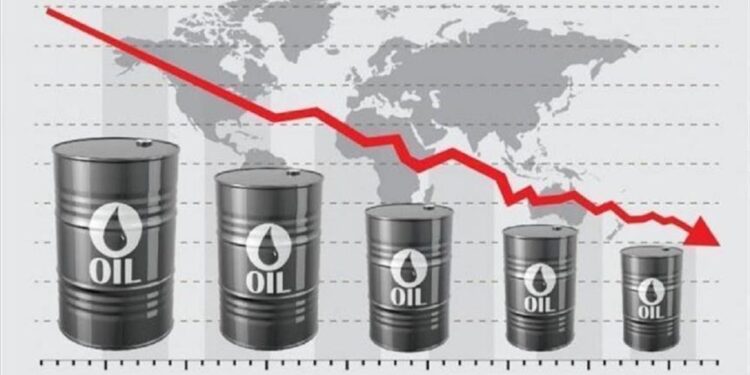
Nigeria’s oil revenue could decline by more than 60 per cent from 2030 as global demand for crude oil weakens, a new report has warned, raising concerns over the country’s fiscal stability and ability to fund public services.
The report, based on research by the E3G think tank and published by The Guardian UK, said the anticipated decline in global oil demand would be driven largely by the transition to renewable energy, increasing adoption of electric vehicles and efforts by countries to reduce dependence on fossil fuels.
Nigeria, according to the report, is among oil-producing countries considered highly vulnerable to the transition because of its heavy dependence on petroleum revenues and limited economic diversification.
The study warned that global oil demand was expected to plateau over the coming decade, with a likely peak in the early 2030s. This, it said, would force oil-producing countries to compete for a shrinking market, with only the lowest-cost producers and countries with strong infrastructure likely to remain competitive.
It projected that Algeria could suffer an 87 per cent decline in oil revenue, while Nigeria could record a fall of more than 60 per cent from 2030.
The report warned that a sharp reduction in oil income could leave affected countries struggling to finance basic public services and meet debt obligations, potentially triggering fiscal crises with broader economic and security consequences.
A co-author of the report, Beth Walker, said governments were not adequately preparing for the consequences of declining global oil demand.
“Governments are not thinking about and not prepared for these outcomes,” she said, warning that producer fragility could eventually become a global security risk.
The report noted that oil revenue currently accounts for more than 40 per cent of government income in 17 countries globally, with the figure reaching between 70 and 90 per cent in countries such as Iraq and Libya.
For Nigeria, it warned that declining oil revenues could weaken the government’s capacity to provide essential public services and create wider economic and security challenges, particularly given the country’s population and strategic influence in Africa.
Walker said the expected crisis would not necessarily emerge as a single global event but could develop through a series of national fiscal crises, potentially leading to unrest, migration and heightened security challenges.
She identified Nigeria as a particular concern because of its size and influence on the African continent, warning that the consequences could be significantly larger than previous oil-related economic crises experienced by countries such as Venezuela.
The report also pointed to changes in global oil consumption, noting that the energy transition was already affecting demand in several major economies.
China, previously a major driver of global oil demand growth, has begun experiencing a downward trend in consumption, partly due to the rapid adoption of electric vehicles.
The researchers said India’s future oil consumption remained uncertain and could become a major factor in determining the pace at which global oil demand declines.
However, another co-author of the report, Maria Pastukhova, cautioned against delaying the global energy transition as a response to the potential economic consequences for oil-producing countries.
She argued that a poorly managed transition could be as destabilising as a rapid one.
The E3G study, reportedly conducted over two years, involved “war-gaming” different scenarios of declining oil demand with more than 100 public servants and experts from around the world.
It called on governments, the International Monetary Fund, the World Bank and private financial institutions to work together to help oil-dependent economies prepare for declining petroleum revenues.
For Nigeria, the warning reinforces the need to accelerate economic diversification and reduce the country’s dependence on crude oil as the principal source of foreign exchange and government revenue.
The report stressed that oil-producing countries that fail to prepare for the changing global energy market could face severe fiscal pressures when demand begins to decline significantly.