The rising volume of illicit drugs intercepted at Nigeria’s seaports is a troubling reminder that the battle against narcotics trafficking is far from won. While the National Drug Law Enforcement Agency (NDLEA) deserves commendation for its sustained enforcement efforts, the increasing quantities of drugs being intercepted raise serious questions about the scale of trafficking attempts, the resilience of criminal networks and the potential dangers posed by consignments that evade detection.
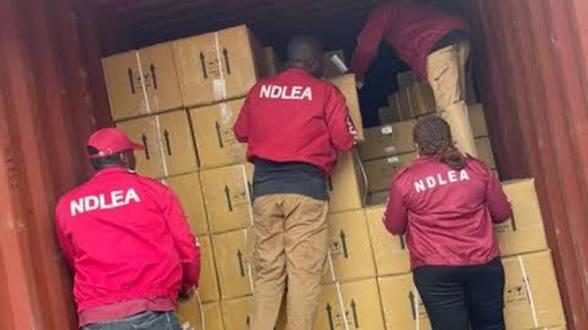
Findings by Shipping Position Daily reveal that the NDLEA intercepted at least 119,354.5 kilogrammes, equivalent to 119.35 tonnes, of illicit drugs valued at more than ₦72 billion at Nigerian seaports between January and September 2026. This staggering figure is not merely a record of successful seizures; it is a disturbing indication of the volume of narcotics being channelled through the nation’s maritime gateways and the enormous stakes involved in the illicit trade.
According to official statistics and seizure records released by the NDLEA, 109,306.75 kilogrammes of illicit drugs were intercepted in the first half of 2026, while another 10,047.75 kilogrammes were seized in major operations publicly reported between July and September. The first-half seizures were estimated by Shipping Position Daily to be worth more than ₦45 billion, while the major third-quarter consignments identified by the newspaper were valued at approximately ₦27.78 billion. This brings the combined value of the seizures to over ₦72.78 billion in just nine months.
These figures should command the attention of every stakeholder in Nigeria’s maritime sector and the wider national security architecture. They represent an alarming quantity of substances capable of devastating lives, destroying families, undermining public health and contributing to insecurity if they find their way into circulation.
The development is particularly concerning when viewed against the backdrop of the enormous quantity of illicit drugs intercepted at Nigerian seaports between 2021 and 2025. As previously reported by Shipping Position Daily, a total of 2,553,132.90 kilogrammes of illicit drugs, valued at over ₦3 trillion, were seized at the nation’s seaports during that five-year period. The latest figures demonstrate that the threat remains significant and persistent, even as enforcement agencies continue to record major interceptions.
Although the nine-month total for 2026 cannot, on its own, establish that drug trafficking has increased compared with previous years, the scale of the seizures is sufficiently alarming to demand stronger preventive measures. The figures represent drugs detected and intercepted, not the total volume traffickers attempted to import. More importantly, they do not account for consignments that may have escaped the attention of enforcement agencies. The possibility that some illicit substances could still be finding their way into the country makes the situation even more worrisome.
Nigeria’s seaports are critical gateways for international trade, industrial development and economic growth. Their strategic importance, however, also makes them attractive to transnational criminal networks seeking to exploit the enormous volume of cargo moving through maritime supply chains. A single container can conceal a substantial quantity of narcotics, making the maritime corridor particularly attractive to traffickers seeking to move drugs on an industrial scale.
Unlike the familiar image of individual smugglers carrying small quantities through airports, maritime drug trafficking often involves sophisticated operations, elaborate concealment methods and consignments worth billions of naira. Such operations suggest the involvement of well-financed networks, capable of exploiting weaknesses in cargo documentation, intelligence gathering, inspection procedures and inter-agency coordination.
The danger is not limited to the quantities already intercepted. Every successful attempt to smuggle narcotics into Nigeria represents a potential threat to public health, social stability and national security. Hard drugs can fuel addiction, worsen mental health challenges and expose vulnerable populations; particularly young people, to serious and sometimes irreversible consequences. Drug proliferation and habitual usage also place additional pressure on families, healthcare providers, rehabilitation centres and law enforcement agencies.
There is equally a compelling security dimension to this challenge. The proceeds of narcotics trafficking can sustain organised criminal networks, while drug dependence and the illegal drug economy can contribute to violence and other criminal activities. Although drug trafficking should not be treated as the sole explanation for Nigeria’s insecurity, its potential links with organised crime make it a serious national security concern that must not be underestimated.
It is against this background that we commend the NDLEA for the significant seizures recorded in the first nine months of 2026. The interception of more than 119 tonnes of illicit drugs, with an estimated value exceeding ₦72 billion, demonstrates the importance of sustained vigilance, intelligence-led operations and effective enforcement. The Nigeria Customs Service and other relevant agencies must also be recognised for their critical roles in securing the nation’s maritime borders and facilitating the identification of suspicious consignments.
However, commendation must not become an excuse for complacency. The volume and market value of the intercepted drugs demand that enforcement agencies look beyond celebrated seizures to examine how these consignments entered the country’s supply chains, in the first place. The central question is not only how many tonnes of drugs have been seized, but also how traffickers continue to organise operations on such a scale and what more can be done to prevent their consignments from reaching Nigerian shores and communities .
Investment in modern cargo scanners, advanced surveillance, data analytics and technology-assisted risk management must also be sustained. However, technology alone cannot eliminate the threat. Equipment must be properly maintained, personnel adequately trained and inspection procedures supported by transparent accountability mechanisms. Allegations of insider collaboration, where substantiated, must be investigated and dealt with decisively. No individual or institution should be allowed to compromise national security for financial gains.
Nigeria must equally strengthen collaboration with exporting countries, transit nations and international law enforcement partners. Since narcotics trafficking networks operate across borders, effective disruption requires intelligence and coordinated action before suspicious consignments reach Nigerian ports. Tracking financial flows, identifying the organisers behind major shipments and dismantling the networks that finance and distribute illicit drugs are as important as intercepting the consignments themselves.
At the same time, the national response must extend beyond the supply side of the drug problem. The huge financial value attached to the intercepted narcotics points to the enormous profits that traffickers believe are available in the illegal market. Demand reduction, public education, youth engagement and accessible rehabilitation services must therefore complement port enforcement. Schools, families, religious institutions, community organisations and public health authorities all have important roles to play in discouraging drug use and supporting people struggling with addiction.
The government should also ensure that reliable data on seizures, arrests, prosecutions and convictions are regularly published. Such information would help the public assess enforcement performance, identify emerging trafficking patterns and determine whether seizures are translating into the dismantling of criminal networks.
Success must be measured not only by the quantity of drugs intercepted, but also by the reduction in trafficking attempts, the prosecution of major offenders and the disruption of the financial structures sustaining the trade.
Nigeria cannot afford to treat the interception of 119.35 tonnes of illicit drugs in nine months as an ordinary enforcement statistic. Behind the figure lies a threat to the health of citizens, the safety of communities and the integrity of the maritime industry. The more than ₦72 billion worth of drugs intercepted represents a substantial disruption of the illegal trade. But, more importantly, it also underscores the magnitude of the challenge confronting the country.
Our seaports must remain gateways for legitimate commerce, not channels for the destruction of lives. The NDLEA and other enforcement agencies must be strengthened to sustain their operations, while weaknesses in the maritime security chain must be identified and addressed without delay.
The increasing concern surrounding drug importation demands urgency, coordination and a willingness to confront both the criminal networks supplying the substances and the conditions sustaining their demand. Nigeria must not wait until the drugs that evade detection and seizure produce consequences that are far more difficult and expensive to reverse.
The message from the latest figures is unmistakable: yes, the seizures are significant, but the threat remains formidable. Protecting Nigeria’s ports is therefore not merely a matter of securing containers or safeguarding trade. It is a responsibility to protect public health, preserve national security and defend the future of the country’s next generation. The seaports remain an important gateway, which must never be compromise for drug smuggling.