By Oluyinka Onigbinde
The Chairman of the Nigeria Revenue Service (NRS), Mr Zach Adedeji, has warned customs brokers that the rapid advancement of technology, particularly Artificial Intelligence (AI), will fundamentally reshape the profession, urging them to embrace digital transformation or risk being left behind.
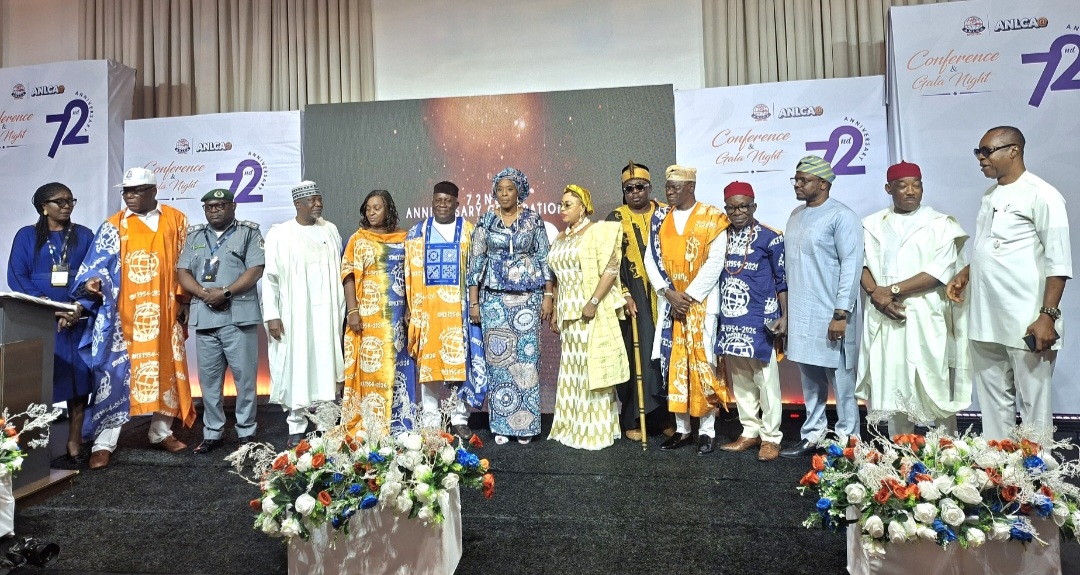
Adedeji, who was represented by the Director, National Single Window Project, Mr Tola Fakolade, gave the warning at the 72nd anniversary of the Association of Nigerian Licensed Customs Agents (ANLCA), stressing that the future of customs brokerage would depend heavily on technology, professionalism and strict compliance.
The NRS Chairman said AI was already being deployed globally in areas such as document checking, classification support and risk analysis, indicating that customs brokers must prepare for a new operating environment in which technology would increasingly influence the processing and clearance of cargo.
“Every generation of customs brokers has faced a new system, and every generation has adapted. The next one will be no different,” Adedeji said.
He said the emergence of AI made it more important for customs brokers to continuously acquire new skills and adapt to technological changes in the industry.
However, Adedeji placed an even stronger emphasis on compliance, describing it as the most important responsibility facing customs brokers and potentially their greatest professional asset.
He said accurate valuation, correct classification and honest declarations were essential to ensuring that government collected the revenue due to it without disputes and leakages.
“Compliance should not be seen as a burden. It is your competitive advantage. In a world where trust is everything, the compliant broker is the one clients will choose,” he said.
According to him, the consequences of non-compliance extend beyond government revenue, as a single customs broker who cuts corners could damage the reputation of the entire profession.
He warned that clients, regulators and the public often judge a profession by the conduct of its weakest members.
Adedeji also cautioned that incorrect declarations could expose importers and exporters to penalties, delays and legal problems, making compliance critical not only to government but also to the businesses that customs brokers represent.
He challenged ANLCA to take greater ownership of professional standards by clearly communicating compliance requirements to its members and promoting peer accountability within the profession.
“A profession that quietly holds its own members to a high standard is respected far more than one that waits to be corrected from outside,” he said.
The NRS Chairman said the ability of customs brokers to survive for 72 years was itself evidence of the profession’s capacity to adapt.
He recalled that customs brokerage had evolved from handwritten declarations, physical ledgers and printed tariff books to online declarations, digital duty payments and real-time tracking.
Adedeji said the same capacity for adaptation would be required as customs administration moved deeper into digitalisation and emerging technologies.
He also commended ANLCA for its contribution to the implementation of the National Single Window Project, describing the Association as a major player and partner in the reform.
He said customs brokers had participated in consultations, transition planning, user acceptance testing and training, with their practical feedback helping to identify gaps and improve the system.
The NRS Chairman urged the Association to sustain its partnership with the government while preparing its members for the next phase of technology-driven customs administration.