By Joshua Yousouph
Stakeholders in Nigeria’s maritime industry have called for a private sector-driven financing model beyond the Cabotage Vessel Financing Fund (CVFF) to address the funding challenges confronting indigenous shipowners and improve their competitiveness against foreign operators.
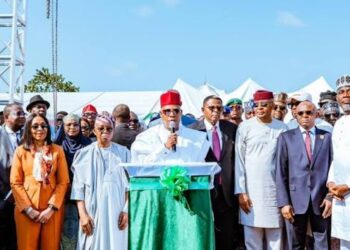
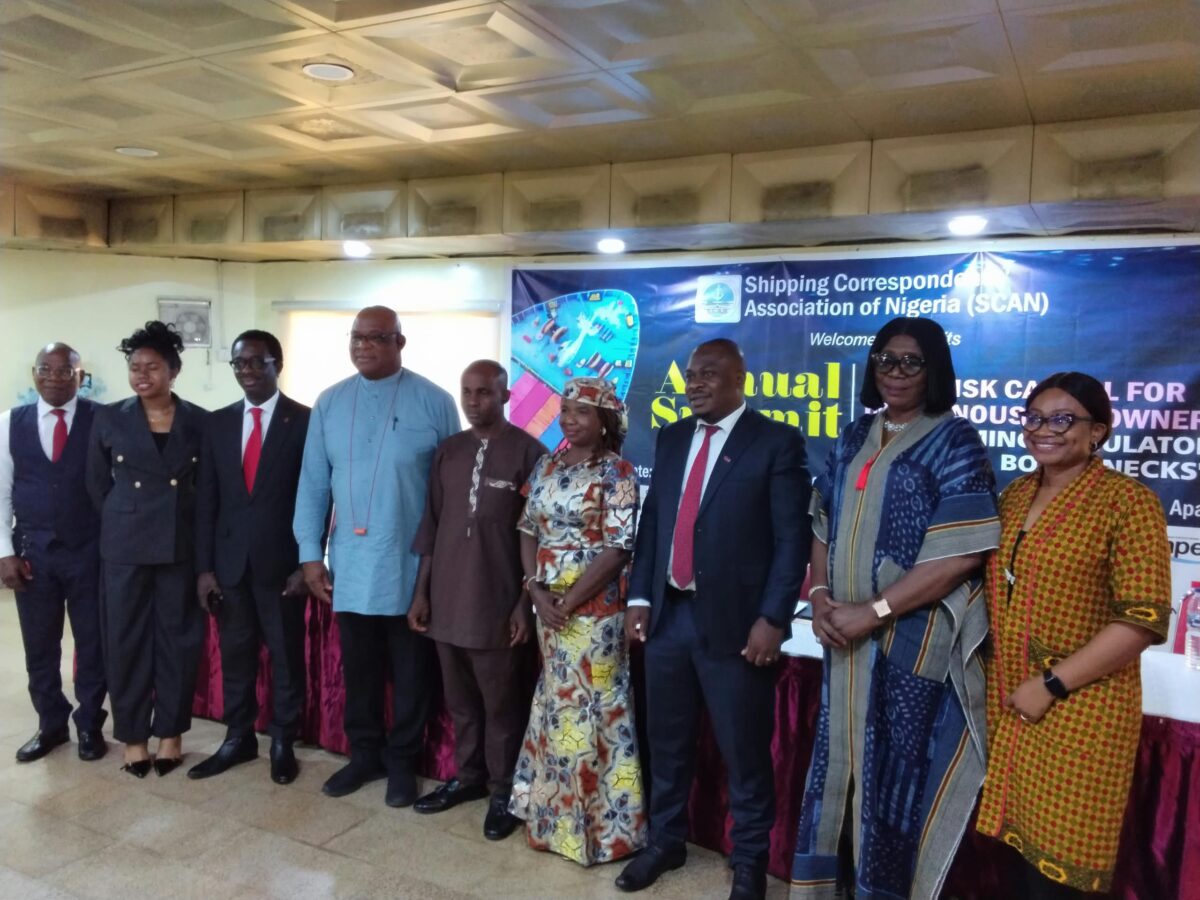
The stakeholders made the call at the 2026 Annual Summit of the Shipping Correspondents Association of Nigeria (SCAN), held on Thursday in Lagos, with the theme, “Low-Risk Capital for Indigenous Shipowners: Overcoming Regulatory and Financial Bottlenecks.”
Former Director-General of the Nigerian Maritime Administration and Safety Agency (NIMASA), Barr. Temisan Omatseye, said Nigeria needed to adopt a private sector-led approach to shipping finance, arguing that the country’s enormous maritime opportunities remained largely untapped because of inadequate access to affordable capital.
Omatseye identified crude oil lifting, the 650,000-barrel-per-day capacity of Dangote Refinery, liquefied natural gas (LNG) shipments and solid minerals evacuation as major opportunities that could sustain indigenous shipping if properly harnessed.
He said reliable data on cargo availability, vessel demand and operational projections would enable financial institutions to develop appropriate financing models for local shipowners.
According to him, the National Planning Ministry and the Nigerian Content Development and Monitoring Board receive multi-year operational plans from international oil companies, detailing their marine transportation requirements.
He said the information should be made available to indigenous operators to help them develop bankable business proposals and demonstrate their capacity to repay loans.
Omatseye, however, expressed concern over the inability of Nigerian banks to provide shipping finance at competitive rates, noting that the high cost of borrowing placed local operators at a significant disadvantage.
He cited the cost of an LNG tanker at about $250 million, arguing that Nigerian lending rates of approximately 25 per cent could not compete with financing rates of around two per cent available to foreign operators.
He explained that foreign shipping companies could obtain up to 85 per cent financing at relatively low interest rates, acquire vessels and deploy them in Nigeria at lower operating costs than their indigenous counterparts.
According to him, local shipowners are left to contend with high interest rates, stringent collateral requirements and limited access to long-term funding, making it difficult for them to acquire modern vessels and compete effectively.
To illustrate the impact of access to cheaper capital, Omatseye cited the example of foreign traders who borrow at three per cent interest to purchase Nigerian commodities during the harvest season, warehouse them and sell at substantially higher prices during the off-season.
He said the arrangement enabled such traders to retain significant profit margins, demonstrating how access to affordable financing could determine competitiveness across economic sectors.
The former NIMASA boss urged the Federal Government to create an enabling environment for a private sector-led special purpose vehicle to drive vessel acquisition, gas development and broader maritime investment.
He maintained that a sustainable financing structure should be built around identifiable commercial opportunities and bankable cargo commitments rather than relying solely on government-backed funding interventions.
Also speaking, the Minister of Marine and Blue Economy, Adegboyega Oyetola, acknowledged the difficulties indigenous shipowners face in obtaining long-term financing, noting that vessel acquisition requires substantial capital amid high borrowing costs and stringent collateral conditions.
Oyetola, who was represented by the Director of Media at the ministry, Mrs Anastasia Ogbonna, said the administration of President Bola Tinubu was committed to strengthening indigenous participation in the maritime sector, retaining maritime value within the Nigerian economy and creating sustainable employment.
He said the government recognised the importance of the Cabotage Vessel Financing Fund as a strategic instrument for supporting qualified operators to acquire modern vessels, expand their fleets and stimulate growth in ship repair, marine engineering and maritime logistics.
The minister disclosed that he had directed NIMASA to commence disbursement under the CVFF, launch a transparent application portal in January 2026 and expand the number of approved Primary Lending Institutions to 12.
He also urged financial institutions to develop maritime-friendly financing products while encouraging shipowners to embrace sound corporate governance, disciplined repayment practices and professional fleet management to build lenders’ confidence.
Beyond the CVFF, Oyetola said the Federal Government was exploring the establishment of a commercially driven national shipping line through a public-private partnership arrangement.
He called for stronger collaboration among government agencies, financial institutions, regulators and shipowners to develop a resilient and competitive shipping industry.
Meanwhile, the Regional Manager, Apapa, United Bank for Africa Plc, Mr Nelson Edoye, reaffirmed the bank’s commitment to supporting indigenous participation in the maritime value chain through tailored financing and trade facilitation solutions.
Edoye, who represented the Group Managing Director of UBA, Oliver Alawuba, described the summit’s theme as timely, saying improved access to capital for indigenous shipowners was essential to economic diversification, job creation and national prosperity.
He said UBA, which operates in 20 African countries, understood the capital-intensive nature of shipping and would continue to partner with regulators and industry stakeholders to unlock growth opportunities for indigenous operators.
Earlier, the President of SCAN, Moses Ebosele, said Nigeria required a comprehensive strategy to address the financial, regulatory and infrastructural constraints limiting indigenous shipowners’ ability to compete with foreign operators.
Ebosele noted that shipping remained critical to international trade and national economic growth, adding that a strong indigenous fleet would enable Nigeria to retain more maritime revenue, create jobs, support local shipbuilding and strengthen economic independence.
He identified limited access to affordable financing, high operational costs, multiple charges, policy inconsistencies and inadequate maritime infrastructure as major challenges requiring coordinated intervention by the government, regulators and financial institutions.
He said addressing these constraints would require a collective commitment to creating a more favourable operating environment for indigenous shipowners and ensuring that Nigeria derived greater economic benefits from its maritime resources.