By Oluyinka Onigbinde & Joshua Yousouph
Even though there is a 42.5 per cent increase in vehicle imports through Nigerian ports in the first half of 2026, car prices have remained high in Lagos markets. This is more than five months after the Federal Government began reducing tariffs and other charges on imported vehicles.
Findings by Shipping Position Daily show that while changes in the government’s fiscal policy have encouraged the importation of more vehicles and reduced the attractiveness of ‘accidented’ vehicles, the expected reduction in retail prices has yet to materialise, with some popular models recording fresh price increases.
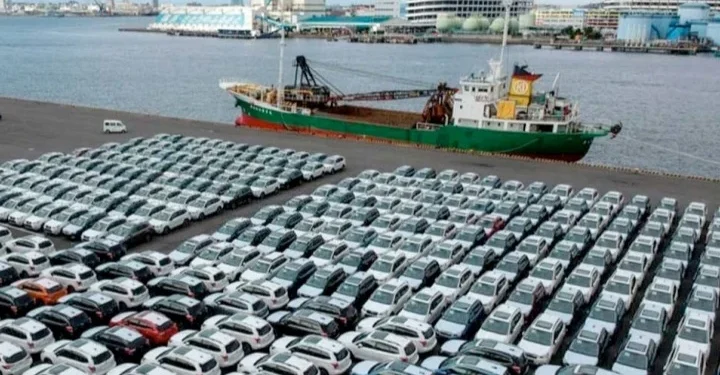
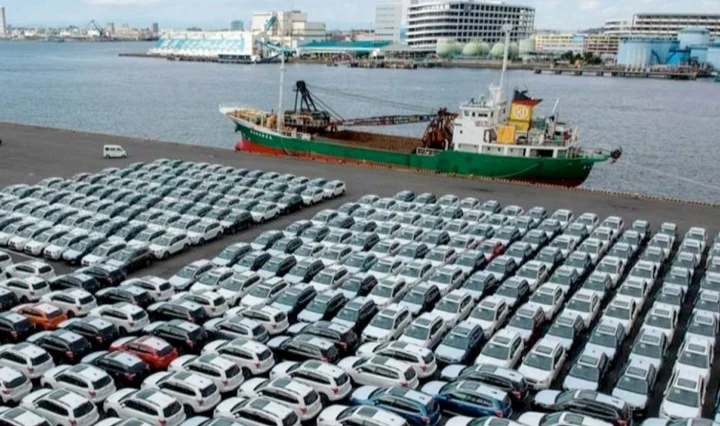
Data from the Nigerian Ports Authority (NPA) showed that vehicle traffic through the nation’s ports rose from 72,568 units in the first half of 2025 to 103,375 units between January and June 2026, representing a 42.5 per cent increase.
The figures were presented by the Managing Director of NPA, Dr Abubakar Dantsoho, at a recent industry event in Lagos, where the agency compared its first-half operational performance with the corresponding period of the previous year.
According to the NPA boss, who was represented by the Principal Manager, Statistics, Mrs Okenwa Igwebuike, the growth in vehicle handling was driven largely by transhipment activities at the PTML Terminal on Tin Can Island Port, which contributed significantly to the increase recorded during the period.
However, stakeholders in the vehicle-clearing sector attributed part of the changing import pattern to the Federal Government’s green tax policy and adjustments to vehicle-related charges, saying the changes have encouraged the importation of more conventional, roadworthy vehicles.
Under the 2026 Fiscal Policy Measures issued by the Federal Government in a circular dated April 1, 2026, the total effective tariff on fully built passenger vehicles, four-wheel-drive vehicles and station wagons was reduced from 70 per cent to 40 per cent.
A further adjustment took effect from July 1, when the import levy on new vehicles was reduced from 20 per cent to 10 per cent, while the levy on used vehicles was cut from 15 per cent to five per cent.
The changes were expected to ease the cost of importing vehicles into Nigeria and potentially translate into lower prices for consumers. However, checks by our correspondent at some major car marts in Lagos and the Berger vehicle market showed that prices have largely remained high.
In some cases, vehicles are now being offered at higher prices than they were about four months ago.
For instance, a foreign-used 2009 Toyota Corolla that sold for about N9.2 million around four months ago was quoted at N9.6 million at one of the car marts visited by our correspondent.
Similarly, a foreign-used 2015 Toyota Highlander XLE, with a 3.5-litre, six-cylinder engine, which previously sold for between N21 million and N22 million, was being offered for N23.5 million.
The price movements are significant because both models are popular in Nigeria’s used-car market and are commonly sought after by buyers seeking relatively affordable personal vehicles and family SUVs.
Online listings for vehicles in Lagos also show considerable price variations depending on the model year, condition, specification and usage history. Some foreign-used Toyota Corolla models are advertised at prices approaching N10 million, while foreign-used 2015 Toyota Highlander models are listed in the range of N22 million to N25 million.
The market checks suggest that the reduction in import-related charges has not translated into a uniform decline in retail vehicle prices.
Speaking with our correspondent, the General Secretary of the Car Dealers Association, Mr Theo Olaniran, said dealers had yet to experience any significant impact from the government’s intervention.
“We have not seen any impact. The prices of vehicles still remain the same because the exchange rate is still the same,” Olaniran said.
According to him, the prevailing exchange rate remains a major factor determining the cost of vehicles brought into Nigeria, meaning that lower tariffs alone may not be sufficient to bring down market prices.
He explained that customs duties and import levies are only some of the expenses involved in bringing vehicles into the country.
“The cost of purchasing vehicles abroad, the naira exchange rate, freight, insurance, port and terminal charges, clearing expenses, transportation, storage and dealers’ operating costs all contribute to the final price,” he said.
Another factor affecting prices is the cost of existing stock. Dealers who purchased vehicles several months ago when exchange rates and landing costs were higher may be reluctant to reduce their prices immediately following the introduction of a lower tariff regime.
Passing on the full benefit of the tariff reduction before selling off such stock could force some dealers to sell at a loss, particularly where the cost of acquiring the vehicles remains above prevailing market prices.
While consumers continue to contend with high prices, freight forwarders said the changes in vehicle duty assessment have also affected the demand for accidented vehicles, which were previously attractive to some importers because of the duty advantages associated with damaged vehicles.
The Public Relations Officer of the Association of Professional Freight Forwarders of Nigeria (APFLON), Tin Can Chapter, Clinton Okoro, said the importation of ‘accidented’ vehicles had reduced because importers no longer enjoy the previous duty advantage.
According to him, importers of accidented and non-accidented vehicles are now required to pay the same customs duty, making damaged vehicles less attractive to buyers who must also bear the cost of repairs.
“For instance, if you import a Corolla vehicle 2022 or 2020, you pay the same duty whether it is ‘accidented’ or not,” Okoro said.
He noted that although these vehicles were still being imported into Nigeria, he could not establish their exact proportion among the increased vehicle traffic recorded by the NPA.
Okoro added that the availability of auctioned vehicles overseas had historically contributed to their importation into Nigeria, but changes in the customs duty structure had affected their attractiveness to local importers.
“The truth about the issue of accidented vehicles is that they do auction them abroad, and almost all the vehicles are insured. Someone can decide to change a car after three or four years and the insurance will clear the bill,” he said.
Also speaking, the PTML Chapter Chieftain of the Association of Registered Freight Forwarders of Nigeria (AREFFN), Musa Gbadamosi, said importers were increasingly turning away from accidented vehicles because the financial incentive that previously encouraged their importation had disappeared.
He explained that an importer could still choose to bring in an accidented vehicle, particularly where the intention was to repair and use it personally. However, the additional cost of repairs and labour, combined with the same customs duty applicable to sound vehicles, had made the option less attractive.
Gbadamosi linked the broader increase in vehicle imports to changes in the government’s fiscal policy, particularly the implementation of the green tax and adjustments to vehicle-related charges.
According to him, the reduction in the overall duty burden had encouraged importers to bring in more standard vehicles rather than damaged units that would require additional expenditure on repairs.
“People are no more going for accidented trucks. It was in those days, about six years ago, when there was a discount on it, but now, be it accidented or not, you will still pay the same duty. So, people are no longer interested in it unlike before. They now bring in normal vehicles; accidented vehicles have reduced,” he said.
“Yes, more vehicles are coming in because of the green tax policy and implementation, and the duty has also reduced. People now bring in normal vehicles,” Gbadamosi added.