By Joshua Yousouph
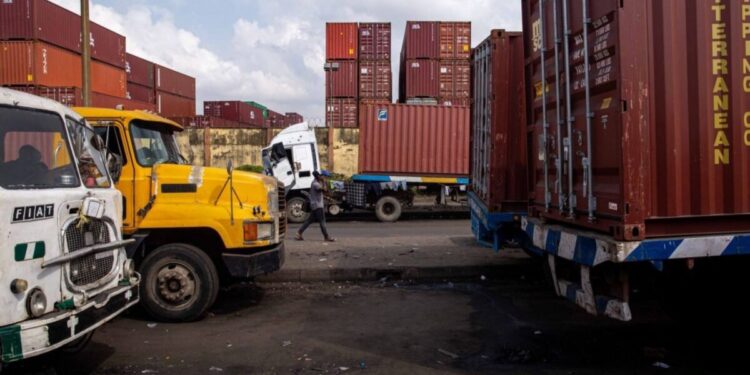
Findings by Shipping Position Daily have revealed that deepening divisions among truckers’ associations in Lagos have once again come to the fore as rival stakeholders trade accusations over the legitimacy of the Council of Maritime Transport Unions and Associations (COMTUA), exposing the vested interests, leadership struggles and competing claims that continue to frustrate efforts to unify the sector.
Recall that COMTUA was a Nigerian maritime collaboration that allegedly ceased to exist. In July 2023, seven of its founding member organizations—including major bodies like the Maritime Workers Union of Nigeria (MWUN) and the Association of Maritime Truck Owners (AMATO)—officially withdrew their membership and legally disbanded the coalition.
Following the split, founding members and national security agencies publicly disowned the entity, warning the public that any individuals still operating under the COMTUA banner are doing so without legal authority and are considered impostors.
The latest war of words between truckers’ union leaders underscore the persistent fragmentation that have characterized truckers’ associations in Lagos over the years. Attempts by stakeholders and the Lagos State Government to harmonize the various associations under a common platform have repeatedly been undermined by leadership disputes, conflicting interests and disagreements over representation, leaving the sector without the unified voice many industry observers say is needed to address operational challenges at the ports.
The latest war of words was sparked by allegations from a former member of COMTUA, Mordecai Adekanbi, who accused COMTUA President, Yinka Aroyewun, of allegedly continuing to operate under the banner of the coalition despite its purported collapse, even as COMTUA has dismissed the claims as the outburst of a former member seeking relevance.
Adekanbi who is a member of the Lagos State Committee on Truck Operations (LASTCOC) alleged that COMTUA had ceased to exist after several unions and associations withdrew from the coalition, insisting that the body no longer possesses the authority to represent any organization.
According to him, COMTUA was originally conceived as a coalition bringing together registered unions and associations within the trucking industry, but argued that the withdrawal of key unions effectively rendered the coalition defunct. He maintained that “once there are no unions in the coalition, you cannot continue using the name COMTUA because the name itself represents unions and associations.”
The LASTCOC member further accused Aroyewun of allegedly printing and selling operational stickers under the COMTUA platform while diverting proceeds into private accounts instead of an official account belonging to the coalition.
He claimed that COMTUA had no corporate account and questioned why revenues generated in its name were allegedly being managed through an individual’s personal account. “He has been printing stickers, selling them and putting the money into private pockets,” Adekanbi alleged, adding that he had reported the matter to law enforcement agencies and was prepared to present documentary evidence to support his claims.
Adekanbi also alleged that COMTUA had become an instrument for intimidation, blackmail and oppression under its current leadership, claiming there were pending cases involving the coalition at different police formations. He, however, did not present the documents during the interview, saying they would be made available at the appropriate time.
Beyond the allegations of financial impropriety, Adekanbi suggested that the recurring disagreements among truckers’ groups are largely driven by personal ambitions and vested interests rather than genuine disagreements within the industry.
According to him, the trucking community itself remains largely united, while only a few individuals continue to fuel disputes over leadership and representation. “The trucking community, there is no disunity among them… it is just one person,” he said, insisting that the majority of associations continue to work together despite the public disagreements.
Reacting to the allegations, COMTUA, in a statement signed by its Secretariat through Raman Folorunsho, described Adekanbi’s claims as misleading and urged stakeholders to disregard what it termed attempts to create confusion.
The coalition maintained that it remains a voluntary collaboration of maritime transport unions and associations, stressing that member organizations are free to join or leave without affecting its existence.
According to COMTUA, Adekanbi’s Green Initiative advocacy group had since been expelled from the coalition following the collapse of a Lagos State Government harmonization process, while other organizations, including the National Association of Road Transport Owners (NARTO), the Maritime Workers Union of Nigeria (MWUN), TACAN and Young Owners, voluntarily withdrew from the alliance.
The coalition insisted that it continues to admit new collaborators and remains operational despite the exit of some members. COMTUA further challenged Adekanbi to seek legal redress if he believed any wrongdoing had occurred instead of prosecuting his grievances through the media.
“We urge the public to disregard any misrepresentations from this individual and remain focused on the collaborative efforts driving the maritime transport industry forward,” Folorunsho noted.
Also weighing in on the controversy, General Secretary of the Amalgamated Maritime Truck Owners Association (AMATO), Bala Muhammed, distanced his association from the lingering feud, saying AMATO would not be distracted by disputes among rival groups.
Muhammed said the association was concentrating on improving business opportunities for its members, through policy advocacy and operational reforms rather than engaging in public exchanges.
“I don’t even want to make reference to COMTUA. We are focused on promoting business for our members through facilitation, policy and other means to support the operating environment. We don’t have time looking back at people who have nothing to add apart from blackmail, false accusations and spreading calumny. If you want to make yourself relevant, you should do so by adding value and finding solutions to the challenges facing haulage operations and the maritime industry.” Muhammed noted.