By Oluyinka Onigbinde
The cost of travelling by water in Nigeria has risen significantly, with waterway passenger fares jumping by 30.88 per cent year-on-year in May 2026, the latest Transport Fare Watch by the National Bureau of Statistics (NBS) has revealed.
The increase places water transportation among the transport categories that recorded the sharpest year-on-year fare increases during the period, coming behind motorcycle and intra-city bus transportation, but ahead of intercity bus and air travel.
The NBS data showed that the average fare paid for waterway passenger transportation rose from N1,739.32 in May 2025 to N2,276.48 in May 2026.
The figure also represents a 2.41 per cent increase from the N2, 222.99 recorded in April 2026, showing that the cost of water transportation continued to rise on a monthly basis.
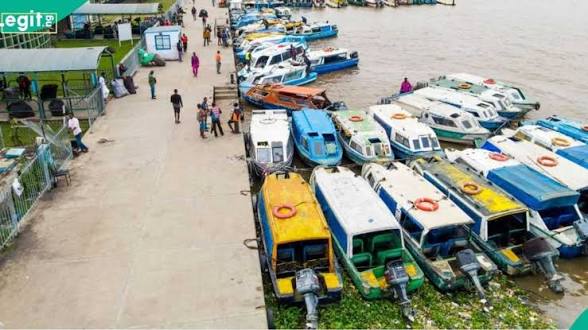
The development is significant for Nigeria’s maritime sector as waterways are increasingly being promoted as an alternative to road transportation, particularly in Lagos and other coastal and riverine communities.
But, for some Lagos commuters, rising fares are already threatening the affordability advantage of water transportation.
A Lagos waterway commuter, Oludare Aina who commutes between Ikorodu and CMS, said the increasing cost was putting pressure on his daily transport budget.
Aina said he was spending nearly N3,400 daily on water transportation and threatened that another fare increase could force him to return to road transport, despite the congestion.
“If fares increase again, I might have to start enduring road traffic because water transport is no longer sustainable,” he said.
His experience highlights the dilemma facing commuters who have turned to waterways to escape the long hours and rising costs associated with road transportation.
The latest NBS figures showed that the national average fare of N2,276.48 masks substantial differences across the country.
Rivers State recorded the highest average water transport fare at N6,893.55, followed by Bayelsa at N5,600.02, while Borno recorded the lowest at N1,010.50, followed by the Federal Capital Territory at N1,128.68.
The difference between Rivers and Borno is striking, with the average fare in Rivers about N5,883 higher than the figure recorded in Borno.
At the regional level, the South-South recorded the highest average water transport fare at N5,112.51, while the North-East recorded the lowest at N1,411.60.
For Lagos, the development is particularly important given the state’s growing reliance on waterways as part of efforts to reduce pressure on its congested road network.
Data released on Lagos waterways, showed that passenger movements increased during much of the first half of 2026, reaching 467,854 passenger movements in June the highest monthly figure in the six-month period. The figure compared with 418,564 in June 2025.
The growing patronage, however, is taking place against a backdrop of rising operating costs and fares, raising questions about whether water transportation can remain an affordable mass-transit option for ordinary Lagos residents.
The NBS data showed that water transport fares have increased by more than 117 per cent since May 2023, rising from N1,045.15 to N2,276.48 in May 2026.
This means that the average fare has more than doubled in three years.
Industry operators have previously attributed rising water transport costs to the increasing expenses of maintaining boats, servicing engines and procuring spare parts, with operators warning that they cannot continue running at a loss.
The NBS Transport Fare Watch is based on fares collected across all 774 local government areas and the Federal Capital Territory from more than 10,000 respondents and locations, with the figures reflecting fares households reported actually paying. The Bureau’s audit team subsequently conducts verification of selected fares.