By Oluyinka Onigbinde
The Federal Government is stepping up efforts to produce globally competitive Nigerian seafarers through expanded training, professional certification and practical onboard experience, while intensifying plans to modernise ports outside Lagos.
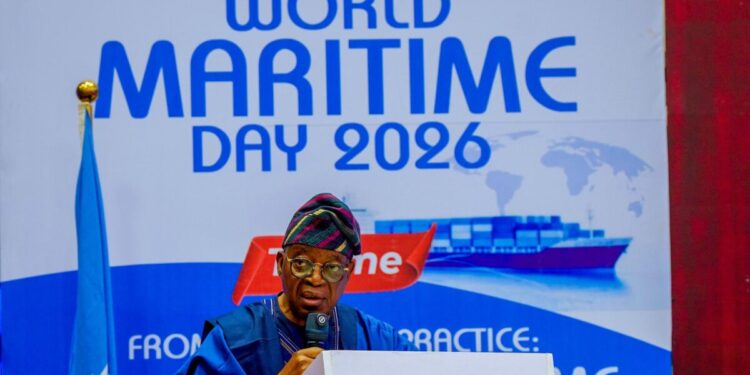
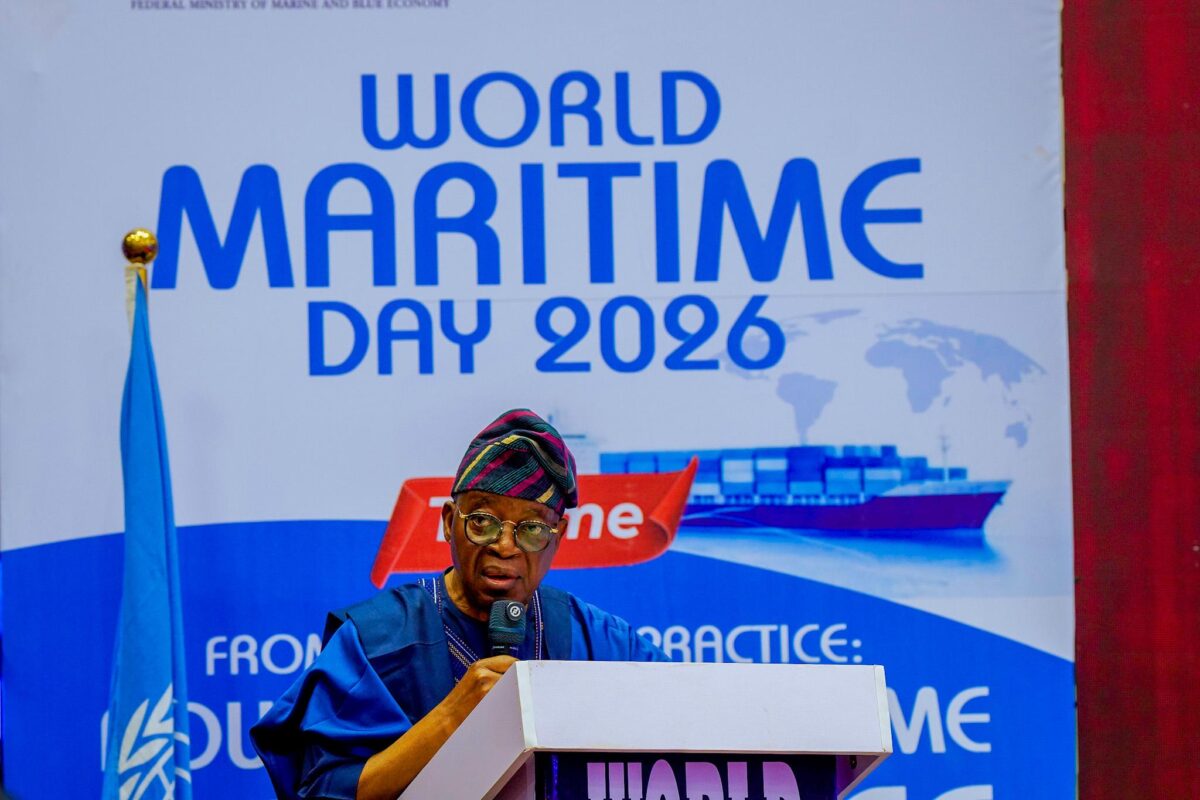
The Minister of Marine and Blue Economy, Dr. Adegboyega Oyetola, disclosed this on Friday at the 2026 World Maritime Day celebration held at the Lagos Continental Hotel, Victoria Island, Lagos.
The event was held under the theme, “From Policy to Practice: Powering Maritime Excellence.”
Oyetola described skilled manpower development as critical to Nigeria’s ambition to strengthen its position in the global maritime industry, noting that the government was expanding training, certification and sea-time opportunities for Nigerian seafarers in line with international standards.
“We are expanding seafarer training, certification and practical sea-time opportunities in line with international standards,” the minister said.
He highlighted the partnership between Nigeria LNG Limited (NLNG) and the Maritime Academy of Nigeria, Oron, including a sea-time training memorandum of understanding aimed at helping cadets acquire the onboard experience required for professional certification.
“Together with wider seafarer training and placement initiatives, this is building a skilled Nigerian maritime workforce ready to compete globally,” he said.
Oyetola said the government was also strengthening fisheries colleges and research institutions to equip young Nigerians and women with practical skills in aquaculture, fish processing, marine technology and sustainable fisheries management.
“Through improved training, research and industry partnerships, we are equipping young Nigerians, women and fishing communities with the skills to increase productivity, create enterprises and contribute to national food security,” he said.
Beyond manpower development, the minister said the Federal Government was intensifying efforts to improve maritime security, following the lifting of longstanding United States Coast Guard Condition of Entry restrictions affecting vessels arriving from Nigerian ports.
He noted that the development had significant economic implications, given that the overwhelming majority of Nigeria’s international trade by volume moves by sea.
“Reducing security-related burdens and delays will lower shipping and logistics costs, strengthen the competitiveness of our businesses and, as savings move through the supply chain, help reduce the cost of goods and services for Nigerians,” he said.
On port infrastructure, Oyetola reaffirmed the Federal Government’s commitment to modernising ports outside Lagos as part of efforts to improve cargo handling, reduce logistics costs and spread maritime economic activities across the country.
He identified Onne, Warri and Calabar ports as part of the modernisation programme, which complements development efforts at Apapa and Tin Can Island ports.
The minister also reiterated the government’s commitment to deep seaport development, covering proposed projects at Agge, Bakassi, Bonny, Gateway, Ibom and Ondo.
He said the initiative was designed to expand port capacity, improve operational efficiency and establish a more balanced network of maritime gateways across the country.
According to him, the government was working towards better connections between seaports, inland dry ports and production centres through an integrated transport system involving roads, railways and inland waterways.
Oyetola explained that improved connectivity would bring cargo closer to producers and consumers, reduce haulage costs, ease pressure on Lagos ports, strengthen exports and stimulate industrial and logistics activities across the federation.
He stressed that Nigeria’s maritime development agenda extended beyond coastal communities, noting that inland ports and waterways, including Onitsha and Baro, remained important to connecting businesses and production centres to national and international markets.
The minister said the government was working with relevant agencies and investors to ensure that port development plans translated into functional infrastructure, efficient cargo handling, navigable channels and reliable transport connections.
He also highlighted the Nigerian Ports Economic Regulatory Agency Act, 2026, as part of efforts to strengthen economic regulation, promote fair competition and improve service delivery across the port system.
In fisheries and aquaculture, Oyetola disclosed that fish production rose from approximately 1.1 million metric tonnes to 1.4 million metric tonnes in 2025.
He said the government was building on the progress through responsible aquaculture, improved processing, cold-chain investment and better market access.
Oyetola maintained that sustained investment in maritime infrastructure, workforce development and improved connectivity would help attract investment, support exports, create jobs and strengthen Nigeria’s competitiveness in the global maritime industry.
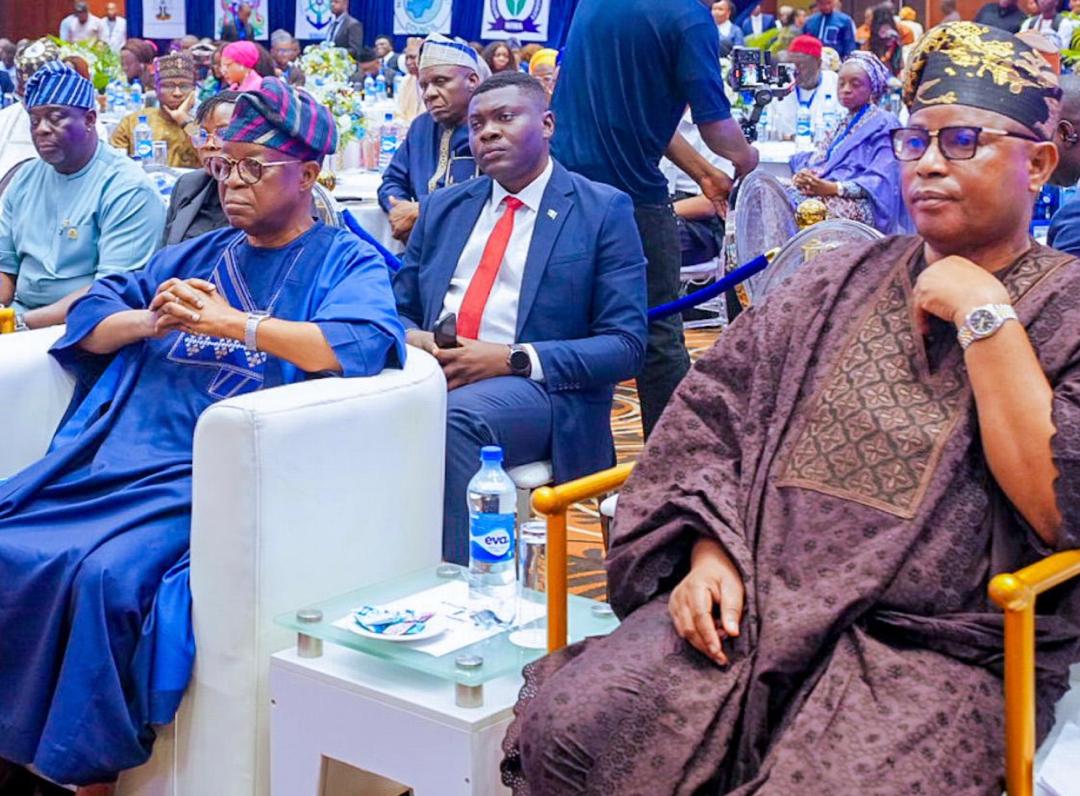
The event was attended by the Chairman of the Senate Committee on Marine Transport, Senator Wasiu Eshinlokun; Deputy Chairman of the House of Representatives Committee on Maritime Safety, Education and Administration, Hon. Odudoh Uduak; heads of maritime agencies and other industry stakeholders.
In his goodwill message, Eshinlokun called for an end to attacks on seafarers in the Strait of Hormuz.
The celebration also featured the presentation of prizes to winners of an essay competition organised by agencies under the Federal Ministry of Marine and Blue Economy.