Operators of the Lekki Deep Seaport have highlighted the need for increased adoption of non-intrusive inspection methods, noting that despite the availability of advanced drive-through scanners capable of inspecting containers in just 30 seconds, physical examination is still occasionally applied in the cargo clearance process.
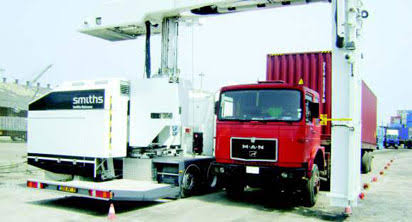
Speaking on the operational efficiencies and constraints of the new deep seaport, the Deputy Chief Operating Officer of Lekki Freeport Terminal, Mr. Daniel Odibe, revealed that the port currently has two FS6000 scanners that allow for automated, non-intrusive inspection of cargoes, drastically reducing dwell time and enhancing cargo security.
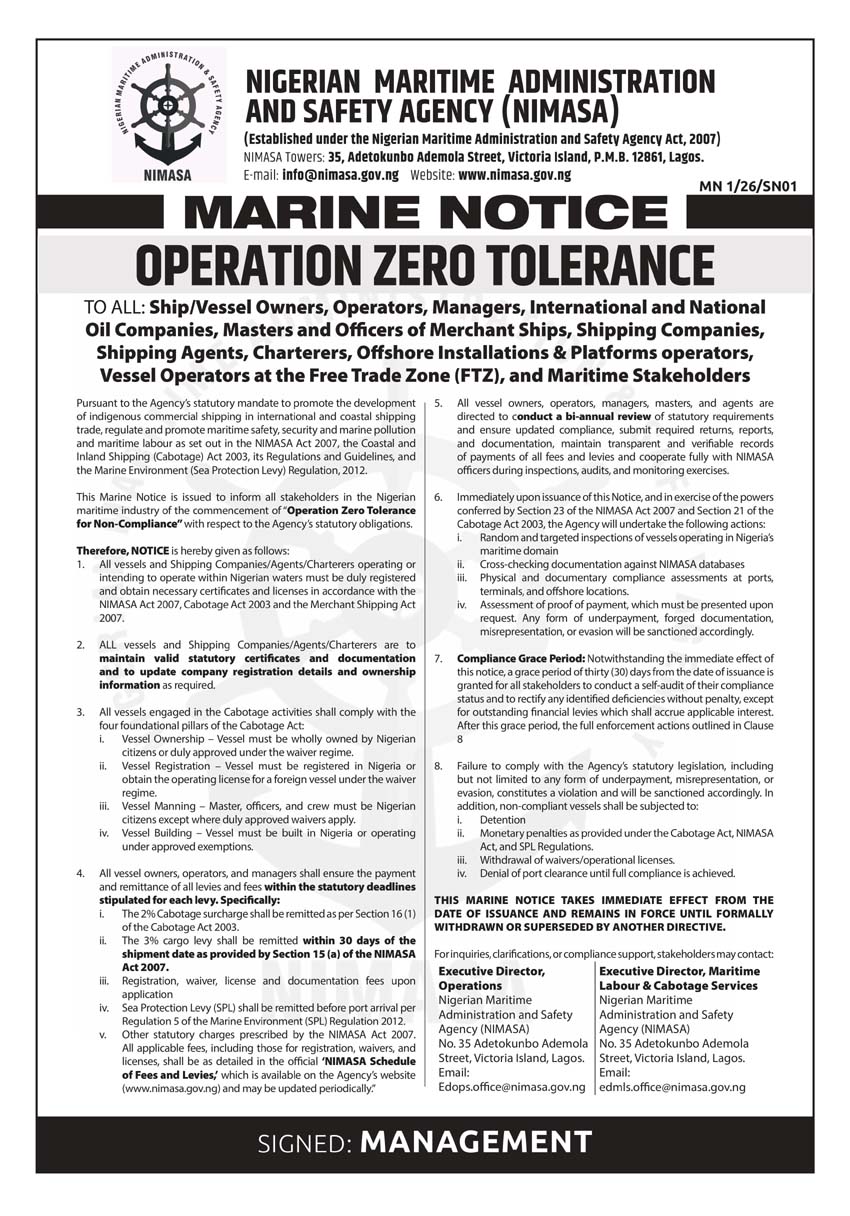
He noted, however, that Customs officials rely on manual inspection, a situation he described as counter-productive and disruptive to the port’s end-to-end automation model.
“Our scanners can process containers in 30 seconds. It’s a drive-through system where even if you have bottled water inside a sealed bag, the system will pick it up clearly,” Odibe said. “But despite this, Customs is still insisting on manual examinations in some cases, which defeats the purpose of such investment.”
Odibe expressed concern that the physical examination process not only consumes space within the terminal, but also slows down cargo movement, undermining the port’s efficiency goals. “We’ve allocated space for physical inspection, but the idea is to eliminate this completely in favour of full scanning. Customs must evolve,” he said.
The Lekki Deep Seaport, which commenced full commercial operations in 2023, is positioned as Nigeria’s most modern seaport with plans to handle over one million twenty-foot equivalent units (TEUs) annually. According to data from the terminal, over 222,000 TEUs have already been handled in the first half of 2025, nearly quadrupling the 2024 figure.
Apart from the scanning technology, the port has deployed an advanced Vehicle Booking System (VBS) and an automated truck entry system to manage port traffic. Odibe noted that trucks are scheduled digitally and granted access through a man-less auto gate, where biometric and license plate recognition systems are used to process entry without human intervention.
This level of automation, according to port stakeholders, could serve as a model for the overhaul of Nigeria’s other aging port systems, particularly those at Apapa and Tin Can Island, where congestion, manual processes, and extortion remain rampant.
Industry watchers argue that the reliance on physical examination in older ports provides cover for under-declaration, concealment of prohibited goods, and outright smuggling. With Lekki’s system making such concealment more difficult, calls are growing louder for Customs to standardize automated scanning across all ports.
A maritime logistics analyst, Mr. Segun Olabisi, told Shipping Position Daily that physical examination has become a tool for compromise and inefficiency. “It slows down trade, increases costs, and allows for corruption. With scanners now available, why are we still stuck in the past?” he queried.
He added that Lekki Port’s system has exposed the inefficiencies in the nation’s broader port ecosystem, calling for swift reforms to align Customs operations with 21st-century practices.