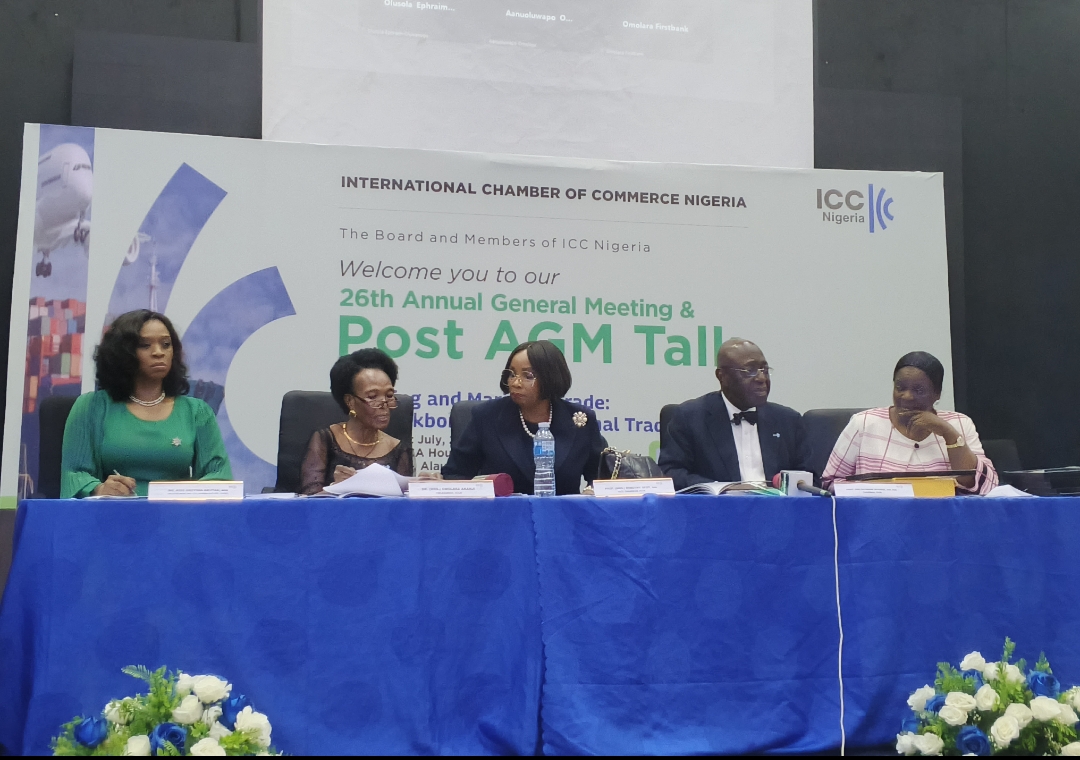
The Nigerian Shippers’ Council and the International Chamber of Commerce (ICC) Nigeria, have cautioned stakeholders in the maritime and trade sectors against the misuse of International Commercial Terms (Incoterms), warning that incorrect application of the globally-recognised trade rules often fuels avoidable disputes in cross-border transactions.
The International Commercial Terms (Incoterms) are a globally recognized set of rules that define the responsibilities of buyers and sellers in international trade transactions. They clarify who is responsible for costs, risks, and obligations related to the delivery of goods, from the seller’s location to the buyer’s destination.
Speaking to Shipping Position Daily at the sidelines of the ICC Nigeria Post-AGM Talk, which held in Lagos last week, Deputy Director, Trade Services, Ms Adaora Nwonu, who represented the Executive Secretary of the Nigerian Shippers’ Council, Dr. Pius Akutah, warned that many disputes between buyers and sellers in international trade stem from the wrong application of Incoterms — the globally recognised framework that defines the obligations of trading partners.
Dr. Akutah explained that part of the Council’s mandate is to educate shippers on trade rules, conventions, and policies, while also relaying feedback to policymakers to ensure regulations remain practical and beneficial to legitimate players in the maritime trade ecosystem.
Highlighting the Council’s collaborative relationship with the ICC, Dr. Akutah said such partnerships allow Nigeria to benefit from the ICC’s specialised committees — including trade, banking, and legal — as well as arbitration platforms that support fair dispute resolution.
“If you use the wrong Incoterms, it results in more disputes. That’s not what we want. The Shippers’ Council would rather spend its time developing innovative solutions, than resolving disputes that could have been avoided,” Akutah said.
The NSC boss also stressed the importance of strengthening Nigeria’s logistics framework to maximise the benefits of global trade agreements. He reaffirmed the Council’s commitment to working with local, regional, continental, and international partners to stay abreast of global shipping developments, adding that collaboration is key to driving exponential growth in the maritime sector.
“Sometimes we are unable to benefit from certain continental or global trade conventions because of gaps in our logistics performance. We must up our game so that when new conventions are signed, Nigerian shippers can truly gain from them,” he said.
On her part, Secretary-General of ICC Nigeria, Mrs. Olubunmi Osuntuyi, underscored the importance of strategic collaboration in advancing Nigeria’s compliance with global trade standards, particularly through the adoption of the Incoterms.
Osuntuyi explained that the Incoterms 2020 rules remain the globally accepted framework for defining the responsibilities of buyers and sellers in cross-border trade. She stressed that proper application of these terms is crucial for avoiding disputes and ensuring the legal validity of international trade contracts.
She commended the Nigerian Shippers’ Council for its partnership with ICC Nigeria in promoting knowledge of Incoterms through an annual training forum. She noted that a Memorandum of Understanding (MoU) between both organisations laid the foundation for joint capacity-building initiatives targeting stakeholders nationwide.
Although insecurity in parts of the country has hindered the planned regional outreach to the North, East, and West, Osuntuyi maintained that the collaboration has been instrumental in equipping Nigerian trade practitioners with the tools to operate effectively in the international marketplace.
“In global trade, it is essential to specify whether goods are to be delivered Free on Board, Cost and Freight, or under other terms. Without these specifications, contracts can become a source of contention, and that can be costly for businesses.
“The Nigerian Shippers’ Council has shown commendable commitment to strengthening Nigeria’s trade ecosystem. Our collaboration is a clear example of how institutions can work together to improve compliance, minimise disputes, and position Nigeria more competitively in global commerce,” Osuntuyi added.