The African Development Bank (AfDB) has warned that Africa is losing over $580 billion every year to corruption and illicit capital outflows, much of it linked to trade mis-invoicing and profit-shifting in international commerce that is largely maritime-based.
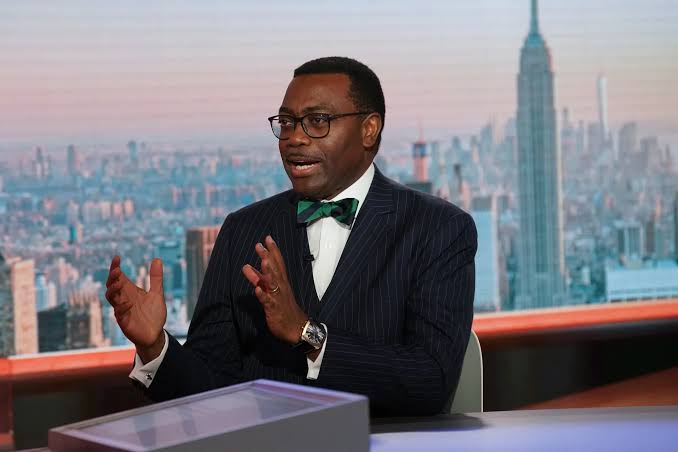
AfDB President, Dr. Akinwumi Adesina, speaking in a Bloomberg interview, described the losses as a major obstacle to Africa’s growth, noting that they exceed the continent’s ability to finance infrastructure and development even as total debt burden approaches $2 trillion.
“It doesn’t matter how much water you pour into a bucket if the bucket is leaking,” Adesina said. “If you’re able to reduce the leakages to illicit capital, also corruption and all of these things, Africa will be able to keep a lot of these resources and meet the amount of infrastructure it needs.”
AfDB data shows that Africa loses about $1.6 billion daily through what it terms “financial leakages.” This includes $90 billion annually in illicit financial flows, $275 billion lost through profit-shifting by multinational corporations, and $148 billion drained by corruption. A significant portion of these illicit outflows occurs through mis-declaration of trade goods, under-invoicing, over-invoicing, and other practices in cross-border maritime trade.
These losses come at a time when the continent faces an infrastructure financing gap of up to $170 billion annually. Instead of deploying resources to close this gap, many governments are burdened with escalating debt-service obligations, leaving little room for investment in shipping, port development, and logistics infrastructure critical to Africa’s trade growth.
A recent study by the Boston University Global Development Policy Center and the Institute for Economic Justice found that Africa’s debt servicing has risen to its highest level since the early 2000s debt crisis. Shockingly, more than half of African governments now spend more on interest payments than on public healthcare, underscoring how illicit maritime trade flows and corruption undermine national budgets.
Adesina stressed that while access to concessional financing and debt restructuring remain important, the most decisive step is plugging the leakages. “If Africa curbs illicit flows and trade-related corruption, it will safeguard resources that can fund port expansion, shipping capacity, and the infrastructure needed to create jobs for its youthful population,” he said.
The AfDB, in its 2025 African Economic Outlook, further projected that some African countries may spend up to 75 percent of their revenues on interest payments in 2025. The Bank explained that even countries with relatively low debt-to-GDP ratios could face debt crises if excessive portions of revenues are consumed by debt servicing.
It noted that while debt levels declined marginally in 2022 and 2023 due to favourable interest-growth differentials, this progress remains fragile. A slowdown in economic growth, higher interest rates, or reckless borrowing—particularly on commercial terms—could easily reverse the gains.
With more than 80 percent of Africa’s trade conducted via shipping, Adesina maintained that strengthening transparency in maritime commerce, clamping down on trade misinvoicing, and enhancing customs enforcement are critical to plugging leakages and reducing reliance on unsustainable debt.