The Minister of Marine and Blue Economy, Mr. Adegboyega Oyetola, has projected that the Lekki Deep Sea Port will contribute about \$200 billion in revenue to the government within its 45-year concession period.
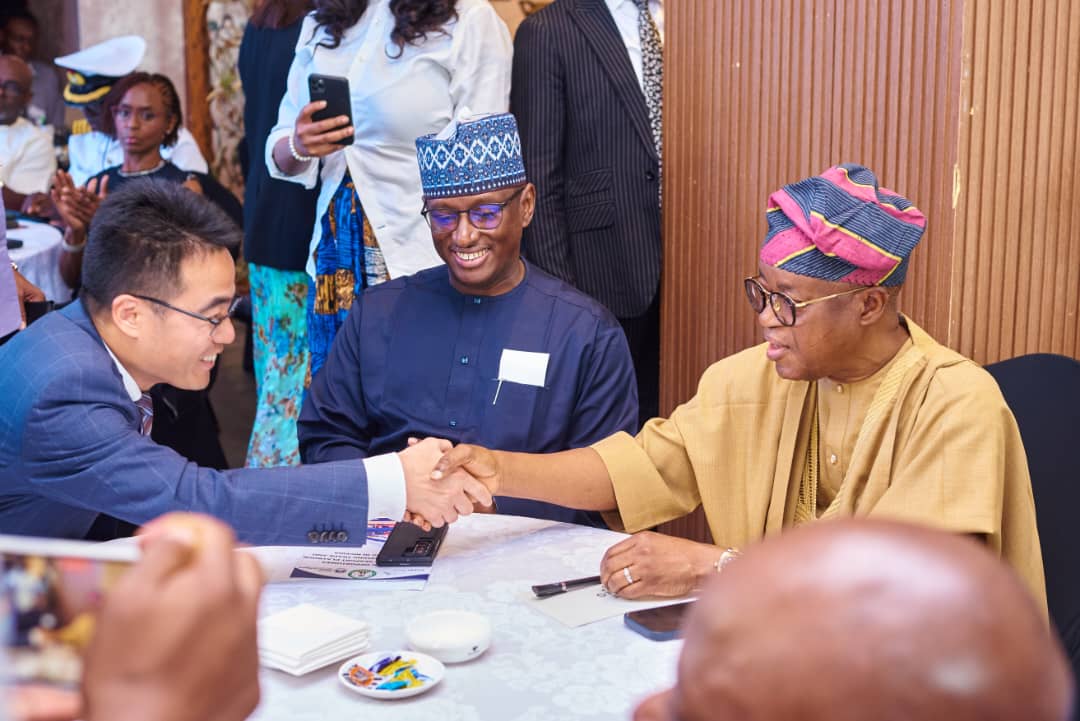
Oyetola, who disclosed this during a breakfast meeting organised by the Nigerian Chamber of Shipping (NCS) in collaboration with Lekki Port in Lagos, noted that the facility has already begun easing congestion in Lagos ports since the commencement of its commercial operations. According to him, the port is strengthening Nigeria’s competitiveness as a logistics hub and restoring investors’ confidence in the maritime sector.
The minister explained that the federal government, in partnership with the Lagos State Government and private sector players, has invested in critical road infrastructure linking the port to major highways, ensuring faster cargo evacuation and smoother trade flows. He emphasised that the Lekki Port represents a replicable model of port development and growth in Nigeria, anchored on five pillars: strategic location with regional access, strong public–private partnerships, integrated transport links, supportive policies and incentives, and technology-driven operations.
Highlighting ongoing reforms, Oyetola added that the federal government is modernising Apapa Port, upgrading the Eastern Ports in Onne, Calabar, and Rivers, and working to finalise the Port Community System, aimed at transforming Nigeria’s seaports into modern, competitive gateways.
On his part, the Managing Director of Lekki Port, Wang Qiang, described the deep-sea port as a showcase of bold policy, modern infrastructure, and effective partnerships capable of advancing Nigeria’s blue economy. He revealed that the port, with its cutting-edge Post Panamax Ship-to-Shore Cranes, automated gate systems, and drive-through container scanners, has the capacity to reduce cargo dwell time, lower logistics costs, and boost efficiency.
Qiang stated that beyond the \$200 billion revenue projection, the port is expected to contribute about \$361 billion in overall economic impact during its lifespan—about 230 times the cost of construction. He also disclosed that the port has already positioned Nigeria as a transshipment hub since 2023, a move expected to reclaim maritime business lost to neighbouring West African countries while supporting the trade needs of landlocked nations in the region.
He urged stakeholders to view Lekki Port not just as a singular achievement, but as a national blueprint for trade transformation, job creation, and sustainable blue economy growth.
In his remarks, the Managing Director of the Nigerian Ports Authority (NPA), Abubakar Dantsoho, stressed the importance of mobilising resources for large-scale capital projects like Lekki Port, while the President of the Nigerian Chamber of Shipping, Aminu Umar, described the creation of the Ministry of Marine and Blue Economy as a visionary decision. Umar added that the NCS is proud to partner with Lekki Port, given its role in driving trade volumes, creating jobs, and enhancing national prosperity.