By Oluyinka Onigbinde
The Nigerian maritime industry received a major boost on Thursday as the Maritime Centre of Excellence (MCOE), operated by the Nigerian Shipping and Maritime Logistics (NSML), announced that it has secured international certification from the UK-based Nautical Institute, a development expected to strengthen Nigeria’s reputation as a hub for world-class maritime training and competence development.
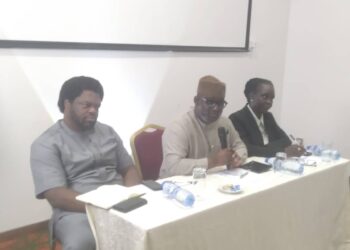
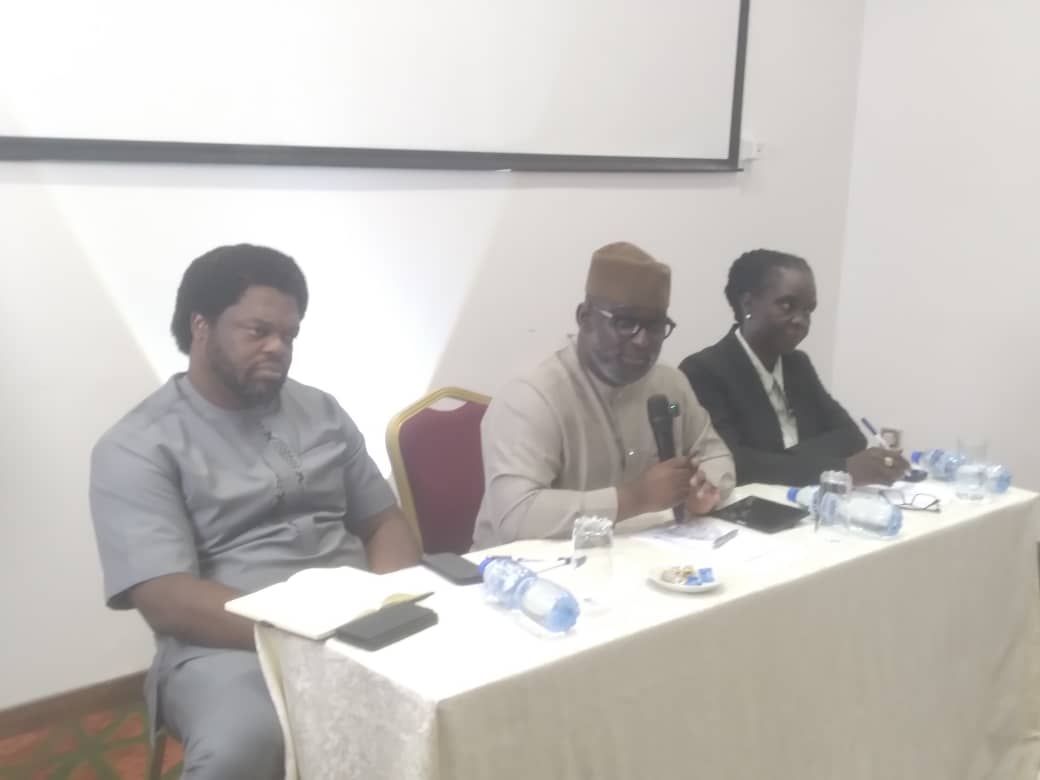
Speaking at a press conference held in Lagos, the Managing Director and Chief Executive Officer of NSML, Abdulkadir K. Ahmed, described the certification as a landmark achievement not only for the organisation but also for Nigeria’s maritime sector and the wider West African region.
Ahmed said the certification validates the quality, relevance, and global competitiveness of the training programmes offered by the Maritime Centre of Excellence, which is located on Bonny Island, Rivers State.
According to him, the MCOE was established as a one-stop centre for maritime training, research, and professional development, serving seafarers and maritime professionals across Nigeria, West Africa, and the international maritime community.
“The Maritime Centre of Excellence has successfully secured international certification from the UK Nautical Institute. This certification is a strong validation of the quality, rigour, and relevance of the training delivered at the Centre and confirms that the MCOE meets internationally accepted standards for competence development and operational excellence,” Ahmed stated.
He noted that the facility is equipped with state-of-the-art simulators and modern training infrastructure designed to support continuous professional development, offering both mandatory and specialised maritime courses.
The NSML boss explained that the latest recognition builds upon an already impressive record of international accreditations secured by the Centre.
He disclosed that the MCOE is accredited by DNV under globally recognised standards, including ISO 9001:2015 for Quality Management Systems and DNV-ST-0029 standards for Maritime Simulator and Training Centres.
According to him, these certifications underscore NSML’s commitment to maintaining the highest standards of quality, consistency, and excellence in maritime training delivery.
Ahmed further revealed that the newly obtained certification grants the MCOE a licence from the UK Nautical Institute to deliver a range of Dynamic Positioning (DP) programmes, including induction, simulator, revalidation, and vessel maintenance courses.
With this development, he said, the Centre has become one of the few institutions in West Africa accredited by the Nautical Institute to provide Dynamic Positioning training.
In addition to the DP programmes, Ahmed said the Centre offers several specialised courses accredited by the UK Maritime and Coastguard Agency (MCA), which is widely regarded as one of the leading authorities in maritime training globally.
These courses include Gas Tanker Operations, Dynamic Positioning, Human Element Leadership and Management, Electronic Chart Display and Information Systems (ECDIS), and High Voltage Training at both operational and management levels.
Highlighting the significance of the certification for Nigeria, Ahmed said the recognition demonstrates that maritime training delivered within the country can meet and even surpass global standards.
He stressed that certification by internationally respected organisations serves as evidence that the expertise developed in Nigeria is capable of competing with the best maritime institutions worldwide.
“This achievement strengthens our global standing. Certification by globally respected bodies affirms that the standard of training and expertise developed here in Nigeria can compete with the best anywhere in the world,” he said.
Ahmed added that internationally recognised training programmes would significantly improve the employability and mobility of Nigerian maritime professionals, enabling them to access opportunities across global shipping fleets and offshore operations.
He maintained that the milestone also supports NSML’s vision of developing local capacity and reducing the country’s dependence on foreign maritime training institutions.
According to him, the achievement demonstrates that world-class maritime education can be delivered within Nigeria while contributing to the growth of indigenous expertise and technical competence.
Beyond capacity development, Ahmed said the certification would help strengthen safety standards and professionalism within the maritime industry.
He noted that maritime operations require high levels of discipline, technical expertise, and continuous learning, adding that the certifications attained by the MCOE provide assurance that professionals trained at the Centre meet international expectations in operational readiness, safety, and performance.
The NSML chief executive further linked the achievement to Nigeria’s broader economic aspirations, particularly within the blue economy sector.
He explained that a highly skilled maritime workforce contributes directly to improved shipping operations, offshore activities, international trade, and national productivity, while also supporting job creation and economic competitiveness.
Ahmed attributed the success of the MCOE to years of strategic investment in infrastructure, curriculum development, instructor capacity building, and robust quality assurance systems.
“Our goal has always been clear—to build not just a training institution, but a true Centre of Excellence,” he said.
While expressing satisfaction with the achievement, he acknowledged that the certification also comes with greater responsibility.
According to him, NSML remains committed to continuously raising standards, promoting innovation, and ensuring compliance with global best practices.
Looking ahead, Ahmed said the company plans to further strengthen the Maritime Centre of Excellence by expanding access to maritime education and training opportunities for young Nigerians while deepening collaborations with local and international partners.
“Our ambition is clear—to build a maritime institution that Nigeria is proud of and one that is respected across the global maritime community,” he stated.
He concluded by commending the dedication of the Centre’s staff, instructors, industry partners, and stakeholders whose contributions made the achievement possible.