
COD, CYCY, DM, and DT. Say what? For an untrained ear, this is just gibberish. To international shippers, however, it is a different story. Understanding shipping terms is absolutely crucial when transporting goods across the globe. That being said, it is not easy to remember exactly what the various abbreviations stand for. Luckily, we have created this quick reference guide for you to return to whenever memory fails you.
The importance of understanding shipping terms
Before we go into detail about the most commonly used shipping terms and what they stand for, let us have a quick look at the importance of understanding shipping terms.
Shipping goods across the globe is far more complex than just transporting an object from point A to B. There are a number of procedures and regulations in place to ensure the goods are safely delivered to their final destination.
Keeping track of shipping terminology is crucial as these terms play a fundamental role for everyone involved in the shipping process. By understanding important terms, you can avoid misunderstandings and minimise errors in the supply chain.
Now, let us have a look at some of the most commonly used shipping terms that every shipper should know.
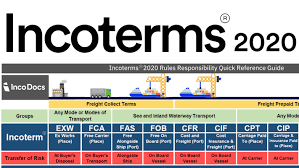
1. Incoterms – International Commercial Terms
When purchasing or selling goods, the goods need to be moved from their origin to their destination. The best way to do this is to negotiate at the point of purchase how it is going to be accomplished. But in order for both parties to understand and agree on the particulars, they have to speak the same language and agree on what the terms actually mean.
Incoterms is short for International Commercial Terms. They are a series of pre-defined commercial terms published by the International Chamber of Commerce. The terms are intended primarily to clearly communicate the tasks, costs, and risks associated with the transportation and delivery of goods.
2. COD – Change Of Destination
Imagine that your goods have been loaded onto a container ship and are now on their way to their destination. And for some reason, you realize you have to change the destination!
No need to panic. This is when it is time to request a COD – a Change Of Destination. This is a request asking the container ship to discharge your container and transport your goods to another destination than what was originally booked.
3. CYCY – Container Yard to Container Yard
CYCY is short for Container Yard To Container Yard. A container yard is a port facility where containers are stored before they are loaded onto a ship or after they have been discharged from a ship. The shipping term CYCY explains that the responsibility of the carrier begins (port of loading) and ends (port of discharge) at the container yard.
4. DM – Demurrage
Demurrage is a fee that container lines charge when you haven’t picked up your imported containers in time. When your containers have been discharged, there is a free period for storing them in the port (provided by the container line). You have to pick up your containers before the free period expires. If not, you are charged for the number of days your containers were left in the port.
You can also be charged for demurrage fees if you have containers that cannot be shipped out by the container line due to, for example, customs problems. You are then charged for the number of days your containers have to be stored in the port.
5. Rollover – The container was never loaded onto the ship
It sometimes happens that containers get rolled. This means your container didn’t make the vessel. Not having your container loaded onto the ship may happen because of customs problems, overbooking, or vessel omissions.
Your carrier will reschedule your shipment and place your container on the next departing ship.
6. DT – Detention
Detention is a fee that you have to pay if you have picked up your imported containers but didn’t return them to the shipping line in time. You will then have to pay for the extra number of days it took for you to return the containers. You can also be charged for demurrage fees if you have containers that cannot be shipped out by the container line because you didn’t return them in time. You will then have to pay for the extra number of days the containers have been in your possession.
7. Port Storage
When your containers have been discharged from a ship, they are moved to a container yard. The port provides a free period of storage (not to be confused with the free period demurrage provided by container lines). During this period, you have time to take care of customs clearance procedures and transport your goods to a warehouse or the final destination. This is important to ports as lack of space may affect port productivity and cause port congestion. If you do not clear your goods and move your containers in time, the port can charge you for Port Storage.
8. FCL (Full Container Load) & LCL (Less than Container Load)
FCL is short for Full Container Load. This means you have enough goods to stuff an entire container. LCL is basically the opposite. It is short for Less than Container Load and means you do not have enough goods to stuff an entire container. Instead, your individual consignment is combined and shipped together with other consignments in the same container. At the port of destination, the consignments are separated back into their original individual consignments.
LCL is often beneficial for small or midsize businesses that don’t have very large goods volumes but cannot afford to miss delivery deadlines. It often allows for savings on freight costs as the goods are shipped at lower rates. Sharing space also makes LCL an eco-friendly alternative.
9. Bill of Lading
The Bill of Lading is a legal document issued by a carrier to a shipper including shipment details such as the type of goods, quantity, freight rate, and destination. It represents the agreement between the parties involved and helps guarantee that exporters receive their payment and importers receive their goods. The bill of lading also serves as a shipment receipt.
10. Stuffing & Stripping
The last shipping term I’m going to share with you is the most straightforward: Stuffing is the process of loading a container with loose goods prior to shipment. Stripping is the process of unloading a container when it arrives at the port. As simple as that!
Kindly like us on Facebook














Discussion about this post