The Central Bank of Nigeria (CBN) has spotlighted the Nigeria-China currency swap agreement as a game-changer for the nation’s maritime sector, projecting that the deal will reduce shipping costs, ease foreign exchange pressure, and enhance trade efficiency between both countries.
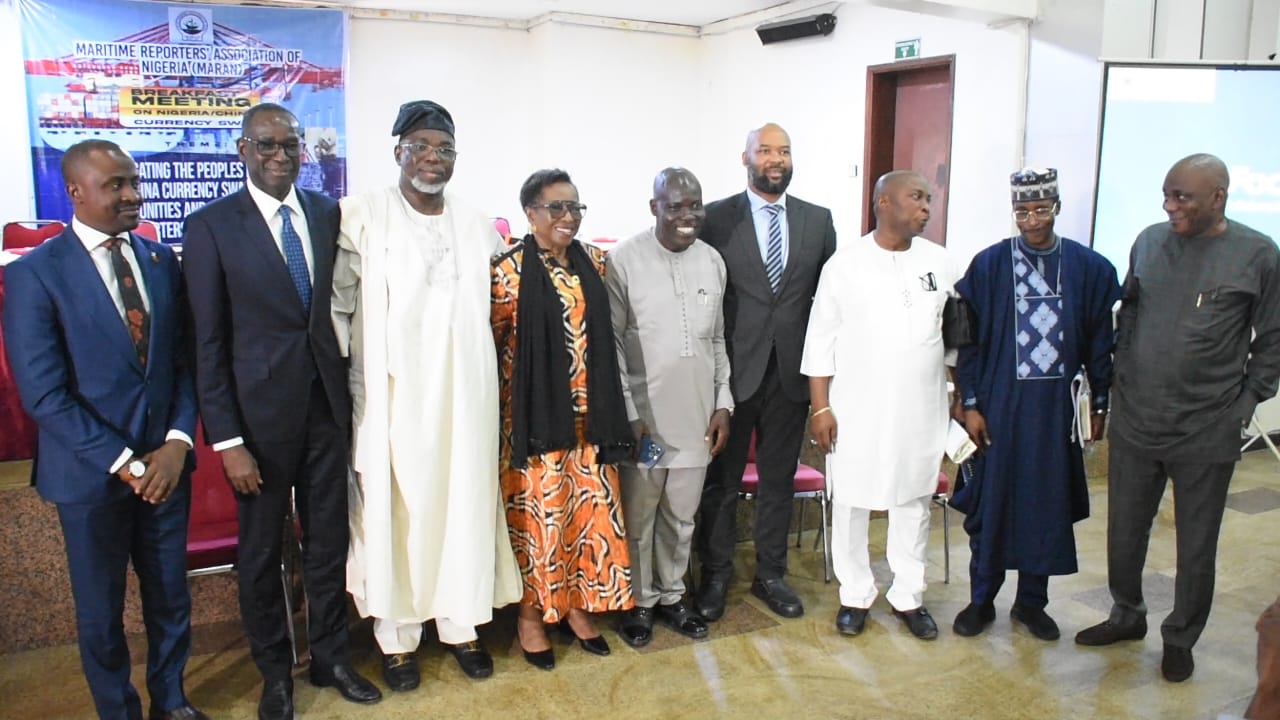
The Governor of the Central Bank of Nigeria (CBN), Mr. Olayemi Cardoso, made these remarks at the Breakfast Meeting organised by the Maritime Reporters’ Association of Nigeria (MARAN) in Lagos on Tuesday.
Speaking on the theme “The Nigeria-China Currency Swap Deal and its Implications on the Nigerian Maritime Industry,” the CBN Governor who was represented by Mr Anthony Ogufere, his Special Adviser on Finance and Strategy, described the bilateral currency swap agreement as a significant policy tool designed to enhance exchange rate stability, facilitate trade, and deepen financial integration between both nations.
According to the CBN Governor, the currency swap agreement, that was first signed in 2018 and renewed twice, most recently in December 2024 — enables Nigerian and Chinese businesses to transact directly in naira and renminbi, bypassing the US dollar. The initial deal, valued at 15 billion Chinese Yuan (about US$2.5 billion), has since served as a platform for reducing transaction costs, mitigating foreign exchange risks, and accelerating trade settlements.
He revealed that China emerged as Nigeria’s largest trading partner by the end of 2024, accounting for around 35% of total imports, with bilateral trade volumes reaching $11.58 billion.
Highlighting the implications for the maritime sector, the CBN Governor noted that the industry stands to benefit from streamlined port processes, lower shipping costs, and improved access to trade finance instruments. He emphasized that the ease of transacting in local currencies would offer financial predictability and reduce delays for shipping and logistics businesses.
He cited the Lekki Deep Sea Port, that was built by Chinese firms under the Belt and Road Initiative as a successful example of China’s growing interest and investment in Nigeria’s maritime infrastructure. Cardoso also hinted at the potential for Nigerian shipping companies to explore vessel financing and procurement opportunities with Chinese shipbuilders, supported by yuan liquidity.
Despite its benefits, Cardoso acknowledged the challenges hindering the full realisation of the agreement’s potential. Chief among them is Nigeria’s large trade imbalance with China and the limited use of the Chinese yuan by Nigerian businesses.
He further called for increased sensitisation by financial institutions, greater adoption of yuan-denominated transactions, and a concerted effort to boost non-oil exports to China.
In his closing remarks, Cardoso urged all stakeholders to collaborate in harnessing the opportunities presented by the currency swap agreement, adding that it is a strategic tool for trade efficiency and economic diversification.
“The swap agreement simplifies the settlement of trade transactions in local currencies and reduces the pressure on Nigeria’s dollar reserves. This, in turn, lowers the costs of doing business and enhances the competitiveness of Nigerian trade.
“In 2023, Nigeria’s exports to China were valued at $2.51 billion compared to $20 billion in imports. This imbalance hampers the optimal use of the swap framework. I commend MARAN for providing this platform to deepen the conversation on this important subject,” Cardoso concluded.
Also speaking, a Representative of Nigeria -China Strategic Partnership, Mr Martins Olajide in his paper presentation called for caution in viewing the Nigeria-China currency swap deal as a lasting solution to the country’s currency woes.
Olajide’s comprehensive paper examined the implications of the bilateral agreement on Nigeria’s maritime industry, port systems, trade logistics, and the broader macroeconomic environment.
The paper, which described the currency swap mechanism as “swapization,” acknowledged that the deal has offered short-term benefits such as easing pressure on Nigeria’s foreign exchange reserves, streamlining trade with China, and reducing transaction costs for port users and importers. However, Olajide warned that the swap deal cannot rescue the naira from its persistent depreciation, nor can it guarantee long-term economic stability without broader structural reforms.
Mr. Olajide explained that Nigeria’s economic vulnerability and over-dependence on imports, especially from China undermines the intended gains of the currency swap. He highlighted the trade imbalance, with Nigeria exporting only $2.51 billion worth of goods to China compared to $20 billion in imports, as a clear indicator of an unequal relationship that weakens the naira further and limits the country’s ability to accumulate yuan reserves.
While the swap deal was acknowledged as a useful tool for easing trade with China and boosting investor confidence, Mr. Olajide reiterated that it remains a monetary instrument, not a fiscal solution. He stressed the need for Nigeria to prioritize the development of its industrial base, add value to its solid minerals and agricultural exports, and reduce its over-reliance on imported goods. Without these changes, he said, the currency swap deal may only reinforce economic dependence on China without solving the underlying issues.
While delivering his opening remarks, the Chairman of the event who is also the Chairman of the Customs Consultative Council (CCC), Aare Hakeem Olarenwaju, identified exchange rate volatility as a major driver of rising prices in Nigeria, calling for greater awareness of alternative currency options to ease the country’s dependence on the U.S. dollar.
According to him, Nigeria’s over-reliance on the dollar has continued to fuel price increases for goods and services. Olarenwaju emphasized the importance of information dissemination, especially by the media, in educating the public about currency alternatives like the Chinese yuan through initiatives such as the Nigeria-China swap deal. He said understanding these alternatives could help reduce pressure on the dollar and contribute to more stable economic conditions.
He also stressed that the unpredictable nature of the naira-to-dollar rate has led to instability in market pricing, affecting both businesses and consumers. He commended the organizers for initiating a timely conversation around trade, currency, and the maritime sector noting that the maritime industry plays a critical role in trade, which is closely tied to currency valuation.
“Every day, we see the skyrocketing of prices. I did a fact-finding on some products, and I found that in other countries, prices have remained stable over the last 10 years. But in Nigeria, the same items are still very expensive, mostly because of exchange rate fluctuations.
“You can’t determine what the price of goods will be in the next one hour. Today it’s ₦1,600 to a dollar, the next three hours it could be ₦1,700 or ₦1,500. And who bears the brunt? The end-users—the common people,” Aare Olarenwaju added.
Speaking earlier in his welcome speech, MARAN President, Mr Godfrey Bivbere noted that the renewed bilateral currency swap deal between Nigeria and the People’s Republic of China offers promising opportunities to enhance trade efficiency, reduce transaction costs, and deepen economic ties between both nations. However, he warned that these benefits must be weighed carefully against the challenges of rising debt and increasing foreign influence.
The MARAN leader emphasized the association’s role as a watchdog over the maritime and blue economy, committed to setting the national agenda through fact-based journalism, policy analysis, and critical conversations. He urged critical stakeholders in the maritime and trade sectors to engage in balanced and informed discussions on the implications of the Nigeria-China currency swap agreement.
“Although these project-tied loans are aimed at development, their increasing volume calls for a thorough understanding of their long-term economic implications. We are not only here to applaud progress but also to interrogate policy. We must understand both the positive impact and the underlying risks associated with China’s expanding economic footprint in Nigeria,” Bivbere said.