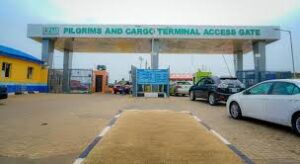
Major freight forwarding associations operating at the Lagos Airport have accused the Federal Airports Authority of Nigeria (FAAN) of reneging on a 2010 agreement that tied a seven-naira-per-kilogramme cargo levy to the allocation of land for a cargo village, warning that the unilateral action could disrupt airport operations and revenue generation nationwide
The standoff is linked to FAAN’s implementation of a new tariff regime, which took effect on Monday, February 2, 2026 which was allegedly tied to the forceful ejection of the associations from their offices at the cargo terminal if they fail to comply.
Freight forwarders who spoke with Shipping Position Daily last week described the tariff increase as unilateral and an act of “institutional blackmail,” alleging that FAAN failed to consult critical stakeholders before introducing the changes.
The affected associations: National Association of Government Approved Freight Forwarders (NAGAFF), the Association of Nigerian Licensed Customs Agents (ANLCA), African Professionals Freight Forwarders and Logistics of Nigeria (APFFLON), and the National Freight Forwarders Association of Nigeria (NAFFAC), operating under the umbrella of the United Freight Forwarders. They occupy offices located at the Hajj Camp, a facility owned by FAAN.
However, FAAN reportedly proceeded with the tariff review without stakeholder engagement, a move that escalated tensions between both parties. In a letter addressed to the freight forwarding associations, FAAN ordered them to vacate the premises immediately.
The freight forwarding associations, in a jointly signed press statement issued last week at the Lagos Airport cargo terminal, disclosed that they had proposed a meeting with FAAN to amicably resolve the dispute. Instead, they were reportedly served with a demolition notice, further worsening the situation.
Speaking with Shipping Position Daily last week, NAGAFF Deputy National President for Air and Logistics Dr. Segun Musa, traced the disagreement to the original 2010 agreement. According to him, prior to the agreement, FAAN collected two naira per kilogramme, a levy challenged by freight forwarders as illegal because cargo handling had been concessioned to companies such as NAHCO and SAHCOL.
Dr Musa said after two weeks of negotiations that disrupted airport activities, FAAN and freight forwarders agreed on a seven-naira levy tied to the allocation of land for a cargo village; a deal that has underpinned airport cargo operations since.
The NAGAFF Chieftain appealed to the Minister of Aviation to intervene and urge FAAN to engage with industry leadership. He assured that normal operations would continue, and that any revenue lost during the standoff would still be remitted once a mutually agreed resolution is reached.
“The seven naira we are talking about is effectively rent for this land. FAAN has no right to impose fresh charges without engaging stakeholders. Just as the Nigerian Ports Authority consults its concessionaires, FAAN should deal with cargo operators through proper dialogue.
“The more cargo we move, the more revenue FAAN generates. Arbitrary fees only harm all parties involved. We are not protesting or threatening; we are appealing for dialogue that benefits both operators and government,” Musa added.
Corroborating the stance of the NAGAFF’s Chieftain, the ANLCA Airport Chapter Chairman, Mr. Tope Akindele, noted that cargo activities had been low as some operators stayed away in protest. He highlighted the burden of multiple overlapping fees, noting that cumulative charges on some cargoes can reach as high as 30 naira per kilogram. They warned that piling additional levies would increase operating costs and weaken the competitiveness of Nigeria’s air cargo sector.
Akindele proposed that any charge increment should not exceed global benchmarks of around 25 per cent, while emphasizing the need for stakeholders to explore strategies for increasing cargo volume.
“We want government daily revenue to continue. We are not frustrating government revenue. We are ready to continue paying, but let us dialogue within the shortest time, so that our job can commence. If a concessionaire that used to make one billion naira weekly is now making half of that, government revenue is immediately affected,” Akindele said.