The Nigeria Centre for Disease Control and Prevention (NCDC) has reported a higher case fatality rate (CFR) for Lassa fever in 2026.
This comes in spite of a decline in the total number of confirmed cases compared to the same period in 2025.
According to its Epidemiological Week 7 Situation Report released on Tuesday in Abuja, 75 deaths were recorded from 326 confirmed Lassa fever cases between Weeks 1 and 7 of 2026.
This represents a case fatality rate (CFR) of 23.0 per cent.
“This is higher than the 19.7 per cent CFR recorded within the same period in 2025, when 89 deaths were reported from 451 confirmed cases, the NCDC said.
The agency noted that while suspected and confirmed cases were lower in 2026, mortality appeared to be increasing proportionately.
“In week 7 alone, 82 new confirmed cases were recorded from 74 in week 6.
“Confirmed cases were reported across 14 states, including Ondo, Bauchi, Taraba, Edo, Plateau, Gombe, Nasarawa, Kano, Ebonyi, the Federal Capital Territory (FCT), Kogi, Kebbi, Kaduna, and Benue.
“Cumulatively, 16 states across 58 Local Government Areas have recorded at least one confirmed case so far in 2026,” the NCDC added.
The report indicated that 84 per cent of all confirmed cases were concentrated in four states: Bauchi (33 per cent), Ondo (22 per cent), Taraba (19 per cent), and Edo (10 per cent).
It said the predominant age group affected was 21–30 years, with cases ranging from one to 90 years and a median age of 30.
“The male-to-female ratio among confirmed cases stands at 1:0.8.
“Five healthcare workers were infected during the reporting week, raising concerns about infection prevention and control measures in health facilities,” the report revealed.
The agency attributed the rising fatality rate to late presentation of cases, poor health-seeking behaviour due to high treatment costs, and inadequate environmental sanitation in high-burden communities.
“Increasing infections among healthcare workers remain an ongoing challenge,” the NCDC said, stressing the need for strict adherence to infection prevention and control protocols in hospitals and treatment centres.
In response, the NCDC had activated a multi-partner, multi-sectoral Incident Management System (IMS) to coordinate national and sub-national response efforts.
“Rapid Response Teams have been deployed to seven high-burden states, while medical countermeasures, including Personal Protective Equipment (PPE) and Ribavirin, have been distributed to affected states and treatment centres.
“The agency is also strengthening surveillance, laboratory testing, community engagement, and behavioural change interventions while advocating for dedicated budget lines to support Lassa fever prevention and control,” it said.
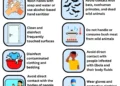
The NCDC urged states to intensify year-round community engagement on Lassa fever prevention and called on healthcare workers to maintain a high index of suspicion while strictly following infection prevention protocols.
Lassa fever is an acute, often fatal viral hemorrhagic illness endemic to West Africa, caused by the Lassa virus and transmitted primarily via infected Mastomys rat excreta. While 80% of cases are mild, severe symptoms include high fever, facial swelling, hemorrhage, and shock. Early treatment with ribavirin and supportive care improves prognosis, though complications can include deafness and multi-organ failure.
Cause & Transmission:
The virus is transmitted to humans through contact with the urine, feces, saliva, or blood of infected Mastomys natalensis rodents. Person-to-person transmission can occur through direct contact with an infected person’s bodily fluids, especially in healthcare settings.
Symptoms:
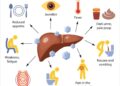
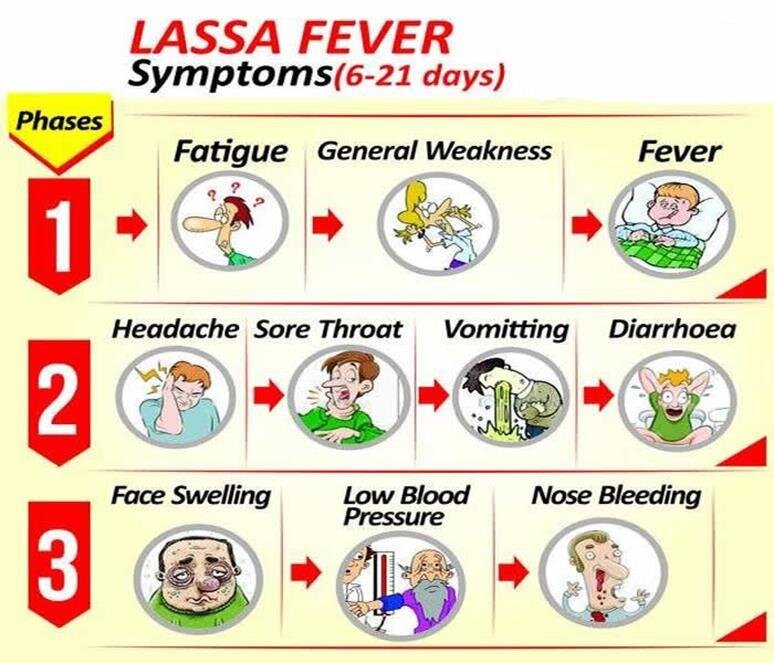
Incubation takes 7–21 days, beginning with gradual fever, headache, malaise, and sore throat. Severe cases (approx. 20%) may progress to facial swelling, fluid in the lung cavity, bleeding from body cavities, and low blood pressure.