By Joshua Yousouph
Investigations by Shipping Position Daily have revealed that traffic gridlock involving articulated trucks along the Tin Can-Apapa ports access corridor becomes more severe during evening hours, with truck operators blaming widespread violations of the electronic call-up Standard Operating Procedures (SOPs) and alleged racketeering.
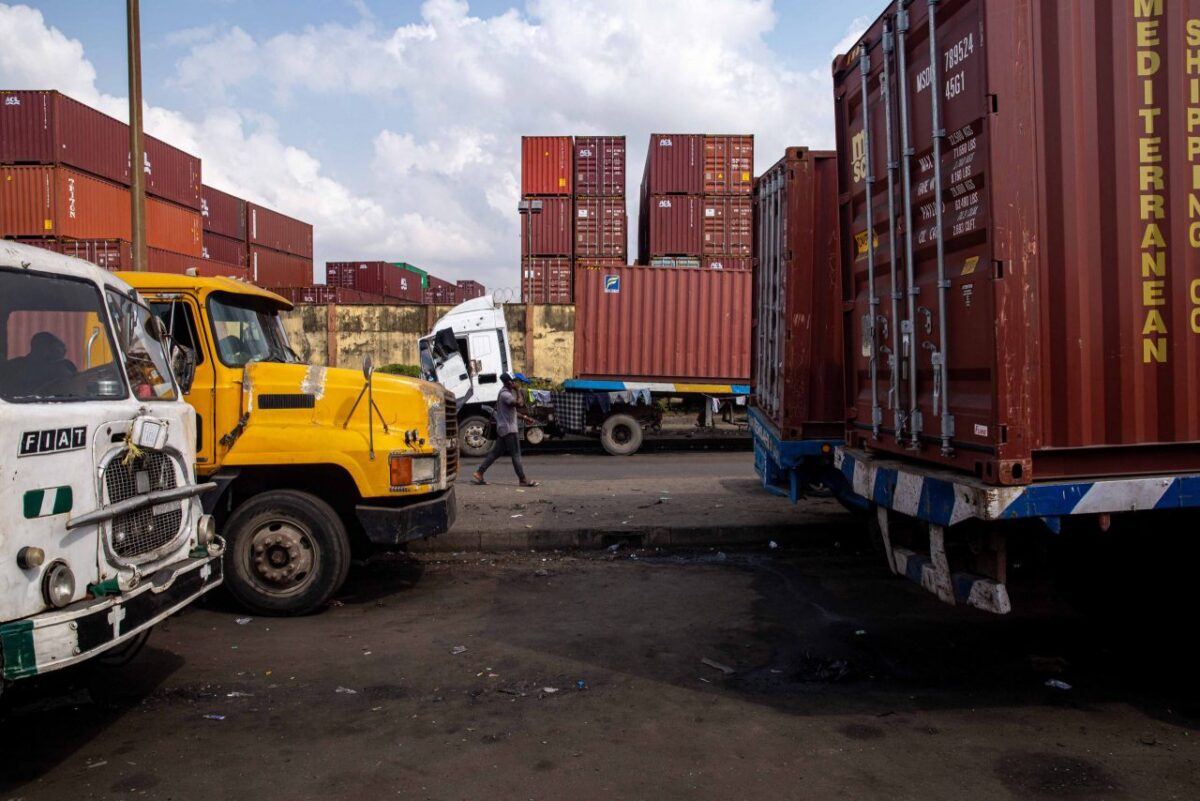
Our correspondent, who visited the Mile 2-Tin Can access road severally last week, observed that traffic gridlock usually begins to build up from about 5pm, gradually extending across strategic points leading and into the port corridor.
While vehicular movement appears relatively freer during the day, the situation becomes increasingly chaotic in the evening as hundreds of articulated vehicles struggle to gain access into and out of the Tin Can and Apapa ports.
Shipping Position Daily recalls that the Presidential Enabling Business Environment Council (PEBEC) announced a two-day clean-up and enforcement exercise along the Lagos Port Corridor from May 14 to 15, 2026.
The operation comes on the heels of recent reports on the resurfacing of the notorious Apapa gridlock and the ongoing blame-trading among maritime stakeholders, including non-state actors, over persistent congestion, alleged extortion, and inefficiencies in the Eto call-up system.
According to stakeholders, the enforcement drive is aimed at restoring sanity to the port access roads and addressing challenges hindering the smooth movement of cargoes and trucks in Nigeria’s busiest port corridor.
However speaking with our correspondent last week, a trucker and General Secretary of the Association of Maritime Truck Owners (AMATO), Bala Muhammed, alleged that some unregistered trucks bypass the approved pre-gate process through illegal call-up arrangements facilitated by unscrupulous elements within the traffic management system.
According to him, the official SOP requires every truck heading to the port to first pass through designated pre-gates before being called into the terminals, based on availability and manifest schedules. However, he claimed that certain operators circumvent the process by obtaining “roadside call-ups,” thereby worsening congestion along the corridor.
“There is SOP for the call-ups. Any truck that wants to come to the port must go through the pre-gate. But what happens is that some people are enabling the bypass of the SOP and allowing direct movement of trucks to the terminals. Some trucks just come and park on the road in conjunction with some corrupt traffic operators. Once the call-ups are ready, they give them access from the roadside.” he explained.
Muhammed further disclosed that his association had written to the Nigerian Ports Authority (NPA), requesting the introduction of an electronic tagging system known as eTAG, which he said would help curb the use of cloned truck identities and illegal access permits.
According to him, the practice undermines the integrity of the electronic call-up system and creates unfair advantages for operators who bypass due process. Muhammed also noted that the evening congestion pattern suggests that operators of the illegal system deliberately exploit periods when monitoring is weaker.
He warned that if authorities fail to enforce compliance with the SOPs, the entire truck management system around the ports could collapse. “We believe some plate numbers have been inserted into the system and are being used to generate call-ups for black market operations. Those who purchase roadside call-ups occupy the roads ahead of those who followed the proper process through the pre-gates. By the time the legitimate trucks arrive, everywhere becomes congested”.
“Most times, the road seems freer during the day for motorists, but it becomes tighter in the evening. This indicates when it is convenient for them to do their business. Ours is for the authorities to ensure compliance so that traffic orderliness and sanity will not be sacrificed at the altar of greed and profiteering,” he stressed.
Another truck operator and Chieftain of the Lagos State Truck and Cargo Operators Committee (LASTCOC), Mr. Seyi Adekanbi attributed the evening build-up partly to the traffic management pattern around the port environment, noting that truck movements intensify after regular working hours.
“During the day, especially between 8am and 4pm or 5pm, efforts are usually made to allow workers and other road users move freely,” he explained.
“But from evening till early morning, that is peak time for container traffic. By that time, workers would have gone home, so more trucks try to ingress into the ports.”
Adekanbi added that the pressure on the road network becomes more pronounced whenever the electronic call-up system experiences operational lapses.
“When the system is not working well, the volume of trucks on the road increases and people begin to manage the situation manually. That is part of what is happening,” Mordecai stated.