By Joshua Yousouph
Stakeholders in Nigeria’s maritime and inland waterways sector have expressed mixed reactions to the proposed West Coast cargo jetty initiative by the National Inland Waterways Authority (NIWA). The proposed jetty, is aimed at enhancing cargo movement across the West African sub-region, particularly between Nigeria and Ghana.
Shipping Position Daily recalls that NIWA recently announced plans to operationalise some of its existing jetties under a pilot scheme designed to strengthen regional trade integration and improve cargo logistics along the West Coast corridor.
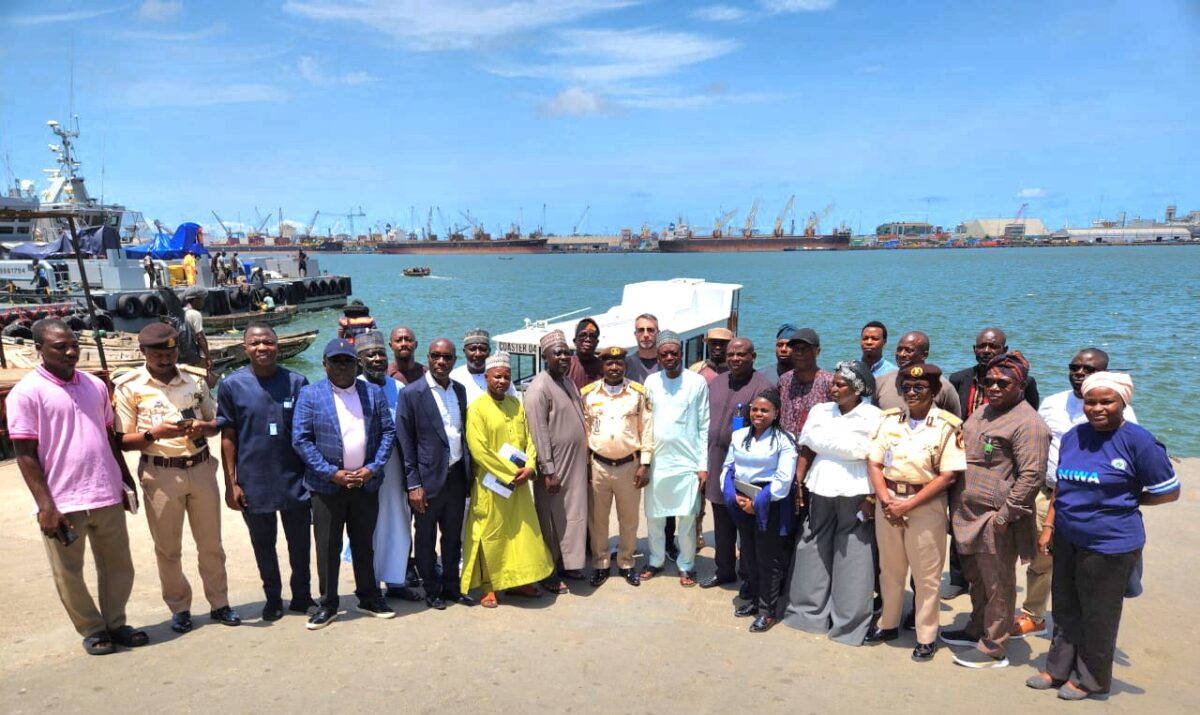
The initiative was discussed during a recent joint inspection of the Marina Jetty in Lagos by officials of the Nigerian Ports Authority, Nigeria Immigration Service, NIWA, and a Ghanaian delegation made up of public and private sector trade representatives.
From the perspective of maritime stakeholders, the project has been largely described as a step in the right direction, though not without concerns over infrastructure readiness, safety standards, and regulatory enforcement.
Stakeholders agree that while the initiative holds strong economic potential, its success will depend largely on infrastructure readiness, vessel standardisation, and strengthened maritime security across the West African corridor.
A chieftain of the Association of Tourist Boat Operators and Water Transporters of Nigeria (ATBOWATAN) who pleaded anonymity expressed skepticism over the readiness of Nigeria’s inland waterways system to support a regional cargo operation of such scale.
He questioned whether NIWA had fully addressed existing challenges within domestic waterways operations, including safety enforcement, regulatory compliance, and accident prevention mechanisms.
The stakeholder also noted that while renovation works were ongoing around the Marina coastal corridor, he was not aware of any new jetty construction project specifically designed for international cargo operations.
He cautioned that Nigeria must ensure proper groundwork is completed before expanding operations across West African waters, stressing the need for phased implementation.
“If they want to start moving cargoes from the jetty to West African nations, it is a good thing, but they must take baby steps. That is how sustainable development happens,” he said.
On his part, a maritime stakeholder, National Public Relations Officer of the Waterfront Boat Owners and Transporters Association of Nigeria (WABOTAN), Chief Raymond Gold, described the initiative as a welcome development, noting that regional cargo connectivity could significantly boost cross-border trade and economic growth if properly implemented.
Chief Gold who also champions a maritime advocacy group, Sustainable Waterways Advancement and Development Organisation (SWAADO) stressed that while the sector must begin somewhere, attention must be given to the development of standard vessels and modern infrastructure to support the operations.
According to him, improved investment mechanisms such as the Cabotage Vessel Financing Fund could play a critical role in ensuring the availability of suitable vessels for West African maritime operations.
Gold also addressed concerns surrounding maritime security along the Nigeria–Togo–Ghana corridor, arguing that such challenges should not stall progress but instead trigger stronger institutional responses.
He maintained that once the project becomes operational, it would naturally draw attention to gaps in maritime security, including the need for stronger coordination among security agencies such as marine police and proposed coast guard structures.
Meanwhile, NIWA’s leadership has continued to insist that the Authority’s existing infrastructure and operational experience, particularly along the Calabar–Cameroon waterway route, provide a strong foundation for the proposed regional cargo framework.
The Lagos Area Manager of NIWA, Engr Sarah Braimah noted also that the Federal Ministry of Marine and Blue Economy is working with NIWA to modernize water transportation and improve safety standards.
Engr Sarat Braimah revealed plans by the government to greatly invest more in safer vessels under the current budgetary provisions.