The future of Africa’s shipping, trade and energy sectors will be shaped by women across the maritime industry.
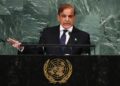
The International Maritime Organisation (IMO) Secretary-General, Arsenio Dominguez, stated this on Monday in Lagos.
He spoke at the ‘From Policy to Implementation: Women Advancing Africa’s Blue Economy’ conference.
The event was organised by the Women’s International Shipping and Trading Association (WISTA) Africa.
Dominguez described the conference as a “call to action” for women-led maritime transformation.
He pledged IMO support for advancing women’s participation across Africa’s maritime sector.
The IMO chief rejected token inclusion, describing gender equality as essential to a resilient industry.
He said full participation must extend from “bridge to boardroom and policy chambers”.
Dominguez noted that Africa’s coastline and exclusive economic zones contain vast maritime resources, saying women are “driving, shaping and leading” Africa’s maritime future.
According to him, fisheries, ports and energy resources remain crucial to sustainable trade. The IMO is partnering with WISTA chapters to deliver practical commitments across Africa.
Dominguez told Nigerian women that the blue economy was being built now. He encouraged them to take leadership roles in creating a safer industry.
Former Nigerian Maritime Administration and Safety Agency (NIMASA) Director-General, Dakuku Peterside, called for action.
Peterside urged African countries to match maritime policies with investments and implementation, saying women must lead ports, fleets and trade infrastructure development.
“Africa is not short of policies. The deficit lies between ratification and outcomes,” he said. He stressed that women’s inclusion was vital for efficient ports and regional trade.
Peterside urged administrations to measure job creation, freight reduction and trade growth.
He advocated smart ports, decarbonisation and regional corridors to create opportunities.
He listed five priorities, including implementation, facilitation, productivity and regional cooperation.
Peterside warned that net-zero regulations would reshape vessels and shipping costs. He urged countries to modernise ports, train seafarers and empower women.
WISTA International General Secretary, Jemilat Mahamah, backed stronger inclusion policies, urging maritime authorities to support women entering and remaining in the sector.
She called for safer workplaces and zero tolerance for harassment. She advocated clear career pathways from entry levels to leadership positions.
Mahamah also urged stronger technical training through maritime institutions, saying diverse companies achieve greater profitability, creativity and problem-solving capacity.
WISTA Nigeria President, Odunayo Ani, highlighted the association’s achievements, adding that WISTA had promoted excellence, leadership and capacity development for 32 years.
She said the group had mentored professionals and created knowledge platforms.
She added that scholarships and leadership programmes were empowering future maritime leaders.
Ani stressed that implementation must replace declarations across Africa’s maritime sector.
Maritime lawyer Jean Chiazor Anishere urged regulatory reforms. She called for harmonised rules, green ports and stronger institutions.
Anishere said fragmented regulations increased costs and limited fleet expansion. She advocated renewable energy, smart technologies and sustainable port systems.
She warned that limited green finance could slow Africa’s maritime transition, urging investment in cleaner vessels, skills and sustainability reporting.
Traditional ruler, the Oniru of Iru, Oba Abdulwasiu Lawal, described Lagos as a maritime gateway, saying the city is suitable for blue economy investment discussions.
Lawal said women’s leadership had become a business necessity. He noted that inclusion would improve shipping, logistics and trade competitiveness.
The Director-General of NIMASA, Dayo Mobereola, highlighted the blue economy’s value.
Mobereola said Africa’s blue economy was worth more than $300 billion annually.
He noted that women remained underrepresented in maritime employment, urging governments and operators to prioritise skills and innovation.
Lagos House of Assembly Deputy Speaker, Mojisola Meranda, demanded stronger inclusion.
She said economic transformation depended on female participation in maritime leadership.
Meranda cited the IMO-WISTA survey on women’s global maritime representation. She urged investment in training, mentorship and financing for women.