By Joshua Yousouph
Maritime leaders from West and Central Africa have called for a “zero tolerance” approach to maritime governance, stronger institutional autonomy and greater political backing for port state control inspectors, warning that the credibility of the Abuja Memorandum of Understanding (MOU) region will depend more on the confidence it inspires than on the number of vessel inspections conducted.
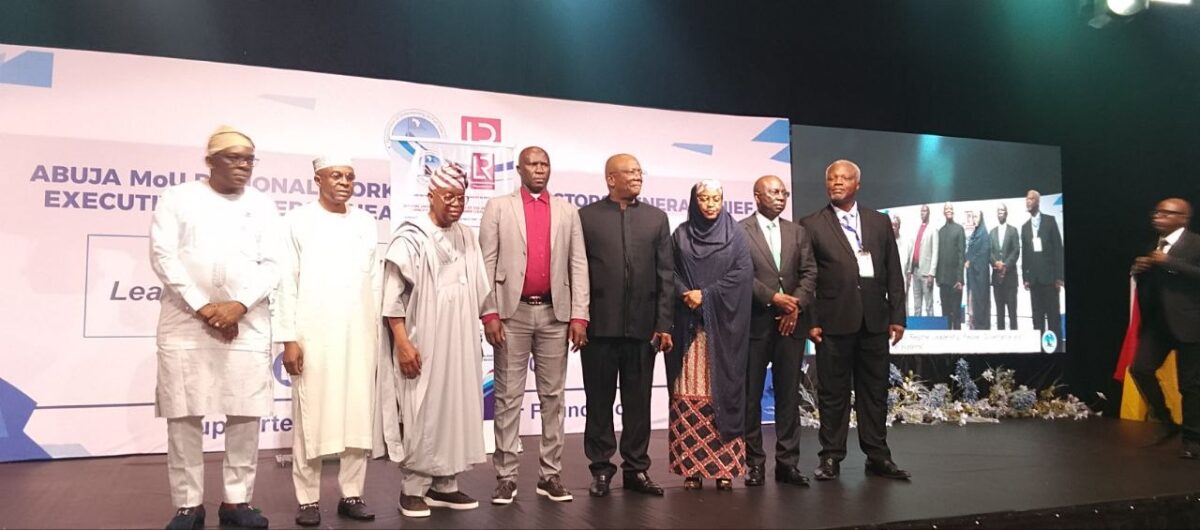
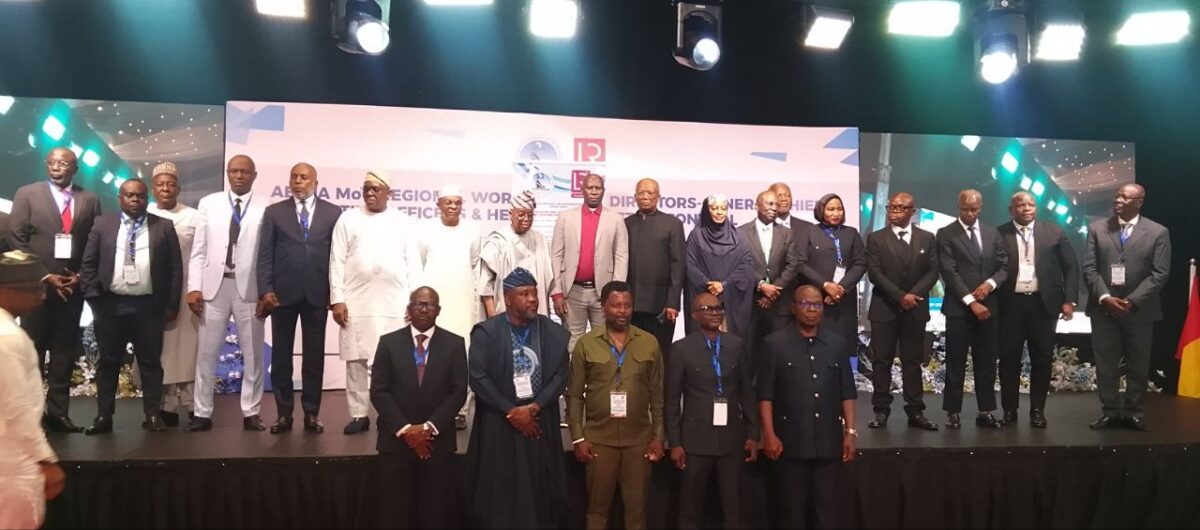
The call was made during a high-level panel session at the Abuja MOU Regional Workshop in Lagos Monday, where directors-general, chief executive officers and maritime administrators gathered to chart a five-year capacity-building programme designed to advance the bloc’s Vision 2030 agenda.
The programme seeks to build strong leadership, high-performing maritime institutions, a professional workforce, data-driven decision-making and a globally respected port state control regime across West and Central Africa.
Speaking during the panel discussion, Gabon’s Deputy Director-General of Maritime Affairs, Ludvig Gaël-Rodriguez-Rodriguez, argued that the effectiveness of a port state control regime should not be judged solely by inspection figures.
“A highly efficient port state control regime is not measured by the number of inspections carried out, but by the confidence it inspires,” he said.
According to him, leadership must begin at the highest levels of maritime administrations through clear policy direction and unwavering commitment to enforcement standards.
“As leaders, we must have a clear vision, an expression such as having zero tolerance in our inspections,” he stated. “We must protect the professional integrity of our inspectors by putting in place training programmes and the logistical equipment that ensures they do their job well. We must also synchronize our legislation internally to avoid conflicts of competence.”
Also speaking, Director-General of the Merchant Navy of the Republic of Congo, Armel Christian Nkou, emphasized that port state control remains central to maritime safety and the elimination of substandard vessels from regional waters.
“The heart of the job is port state control. It is about the security of the sailors, the cargo, and the ship itself,” he said.
While noting that Congo has ratified major international maritime conventions, including SOLAS, MARPOL and STCW, Nkou stressed that continuous professional development is essential for inspectors to remain effective in a rapidly evolving industry.
“The sector evolves very quickly. Three months without recycling, and an inspector can no longer control effectively,” he warned.
He disclosed that the Congolese government has enacted a new law establishing an autonomous Agency of Maritime Affairs to replace the existing directorate structure, a move expected to improve access to resources for recruitment, training and equipment procurement.
A Director-General of the Ghana Maritime Authority also raised concerns over the growing challenge of retaining skilled inspectors, noting that many experienced officers are frequently recruited by private sector organisations.
He urged maritime administrations to prioritize port state control operations and invest in human capital retention.
“How do you recruit and retain very competent officers? Give priority to port state control,” he said.
The Ghanaian maritime chief revealed that he intentionally deployed one of the authority’s most experienced chief engineers to field operations rather than assigning him to an administrative office role.
“Those who lead are those who lead in the field. Once you have certified that you have competent people there, you must stand by their decisions; even when lawyers and shipping companies push back. When they realize you are standing by your officers, they will budge,” he added.
Earlier, Nigeria’s Minister of Marine and Blue Economy, Adeboyega Oyetola, highlighted reforms undertaken by the Federal Government to strengthen the maritime sector.
According to the Minister, revenues generated by agencies under the ministry have increased from about ₦700 billion to over ₦1.8 trillion, while the long-awaited disbursement of the Cabotage Vessel Financing Fund (CVFF) has finally been unlocked after more than two decades.
Oyetola also cited the success of the Deep Blue Project, noting that Nigeria has recorded zero piracy incidents in its waters, a development that has enhanced the country’s maritime security profile and boosted investor confidence.
The workshop, supported by the Lloyd’s Register Foundation, is expected to produce recommendations that will guide the implementation of the five-year capacity-building programme and strengthen the Abuja MOU’s ambition of becoming a globally recognised maritime governance and port state control regime.
Stakeholders expressed optimism that the initiative would deepen regional cooperation, improve inspection standards, enhance institutional performance and accelerate efforts to eliminate substandard shipping across West and Central African waters.