By Oluyinka Onigbinde
Nigeria’s Minister of Marine and Blue Economy, Dr. Adegboyega Oyetola, has urged maritime administrations across West and Central Africa to strengthen their Port State Control (PSC) regimes, describing robust maritime governance as essential to improving safety at sea, facilitating trade and unlocking the vast opportunities of Africa’s Blue Economy.
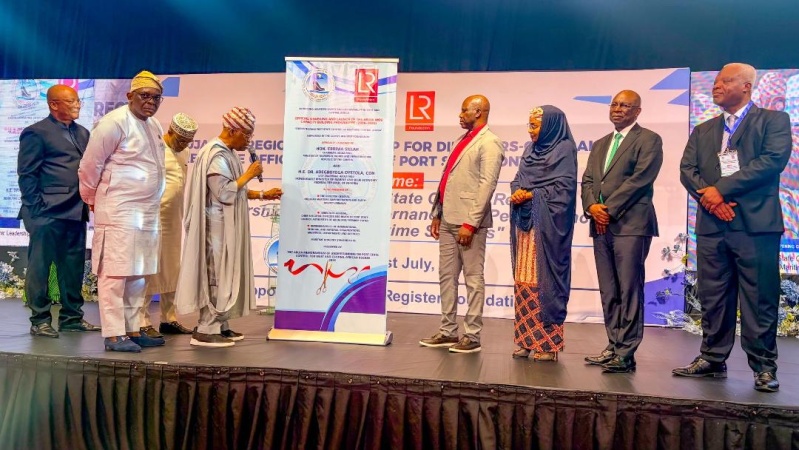
Speaking at the opening of the Abuja Memorandum of Understanding (Abuja MoU) Regional Workshop for Directors-General and Chief Executive Officers of Maritime Administrations and Heads of Port State Control in Lagos, Oyetola said effective Port State Control has become increasingly critical to Africa’s economic transformation, particularly with the implementation of the African Continental Free Trade Area (AfCFTA).
The three-day workshop, which also marked the launch of the Abuja MoU Port State Control Capacity-Building Programme, is supported by the Lloyd’s Register Foundation and has brought together maritime regulators, technical experts and development partners from across the Abuja MoU region.
Oyetola said the workshop aligns with President Bola Ahmed Tinubu’s Renewed Hope Agenda, which identifies the Marine and Blue Economy as a strategic sector for economic diversification, job creation, trade expansion and sustainable development.
“As Nigeria works to consolidate its position as Africa’s leading maritime hub, we recognise that world-class maritime governance, effective Port State Control, safe shipping practices and strict compliance with international standards are indispensable to achieving that vision,” the Minister said.
He noted that strengthening Port State Control across West and Central Africa would not only improve maritime safety but also create an efficient, secure and internationally compliant shipping environment capable of supporting seamless intra-African trade.
“The success of the African Continental Free Trade Area depends significantly on efficient, secure and internationally compliant maritime transport systems. As maritime administrations, we bear a collective responsibility to ensure that our ports, shipping operations and regulatory systems support the free flow of commerce, strengthen regional connectivity and contribute meaningfully to Africa’s economic integration and global competitiveness,” he stated.
Speaking on the workshop’s theme, “A Future-Ready Port State Control Regime: Leadership, People, Governance and Performance for Safer Maritime Systems,” Oyetola described it as timely and strategic, noting that the maritime industry is undergoing rapid transformation driven by technological advancements, environmental obligations, evolving regulatory requirements and shifting geopolitical realities.
According to him, these developments demand Port State Control systems that are not only robust but also adaptive, innovative and future-ready.
He described the workshop as the first major strategic intervention under the Abuja MoU Port State Control Strengthening Programme, designed to equip Directors-General and Chief Executive Officers of maritime administrations with the leadership skills needed to drive institutional reforms, strengthen governance frameworks and improve maritime safety performance across the region.
Reaffirming Nigeria’s commitment to international maritime standards, Oyetola said the country remains firmly aligned with the vision of the International Maritime Organization (IMO), which recognises Port State Control as one of the most effective tools for eliminating substandard shipping, protecting the marine environment and safeguarding the welfare of seafarers.
Earlier, the Secretary-General of the Abuja MoU, Captain Sunday Umoren, commended the Federal Government, maritime agencies and development partners for their continued support in advancing maritime safety across West and Central Africa.
He stressed that stronger collaboration among member states remains critical to building a safer, more efficient and globally competitive maritime sector.
Also speaking, the Director-General of the Nigerian Maritime Administration and Safety Agency (NIMASA), Dr. Dayo Mobereola, called for greater investment in capacity building and institutional development, disclosing that only 16 of the Abuja MoU’s 22 member states currently conduct Port State Control inspections on a consistent basis.
Mobereola revealed that Nigeria carried out 917 Port State Control inspections in 2025, representing an inspection rate of 23.5 per cent—well above the Abuja MoU minimum benchmark of 15 per cent.
He said the achievement underscores Nigeria’s commitment to enforcing international maritime conventions, improving shipping standards and promoting safer navigation within the region.
The workshop is expected to produce practical recommendations aimed at strengthening Port State Control implementation across the Abuja MoU region while laying the foundation for a more harmonised, efficient and internationally respected maritime safety regime in West and Central Africa.