By Oluyinka Onigbinde
The Nigeria Customs Service has taken a major step towards strengthening Nigeria’s border security and combating transnational crime with the deployment of an INTERPOL Data Centre at its headquarters in Abuja, providing officers with direct access to one of the world’s largest criminal intelligence networks.
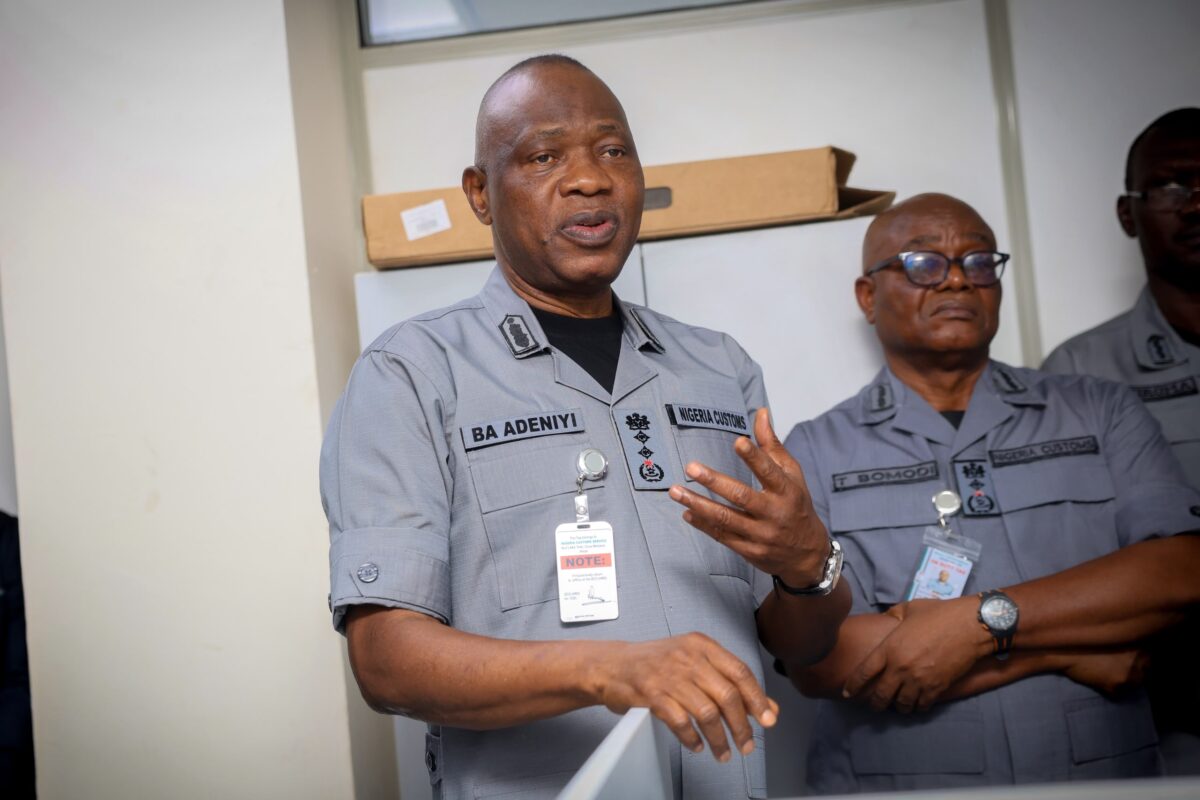
The initiative, unveiled by the Comptroller-General of Customs, Adewale Adeniyi, is expected to significantly enhance intelligence gathering, cargo profiling, border surveillance and the detection of stolen goods moving across international borders.
Speaking during a demonstration of the facility, Adeniyi described the deployment as another milestone in the Service’s ongoing digital transformation and its commitment to intelligence-led enforcement.
According to him, modern customs administration now extends far beyond revenue collection and routine compliance, with technology playing a critical role in safeguarding national borders against organised crime and illicit trade.
“The nature of Customs enforcement has changed. Technology and intelligence are now central to securing our borders and tackling transnational criminal networks,” the Customs boss said.

He disclosed that the Service is also preparing to formalise its collaboration with INTERPOL through the signing of a Memorandum of Understanding (MoU), a move expected to deepen information sharing and operational cooperation between both organisations.
Adeniyi also used the occasion to showcase the Service’s indigenous digital platform, B’Odogwu, describing it as an innovative customs solution capable of improving trade facilitation not only in Nigeria but also across other Customs administrations on the African continent.
Providing further insight into the capabilities of the new facility, INTERPOL Consultant, Chikwe Udensi, explained that the Abuja centre is the eighth INTERPOL Data Centre established in Africa.
He said the platform grants Nigerian Customs officers access to over 152 global criminal intelligence databases containing information on stolen vehicles, vessels, cargo, parcels and other transported assets.
According to Udensi, officers can now instantly determine whether imported goods or transport equipment have been reported stolen anywhere in the world, thereby improving investigations, strengthening border security and enhancing revenue collection through real-time intelligence.
“The system provides immediate access to critical global intelligence that enables officers to verify the status of goods and transport assets before they enter the country,” he said.
Also speaking, the Deputy Comptroller-General of Customs in charge of Enforcement, Investigation and Inspection, Timi Bomodi, said officers have already undergone training on the operation of the platform and that the system has been fully integrated into the Service’s Information and Communication Technology (ICT) infrastructure.
Bomodi noted that beyond security, the platform would also improve cargo profiling, customs valuation and risk management by providing officers with accurate information on the description, origin and movement history of imported goods.