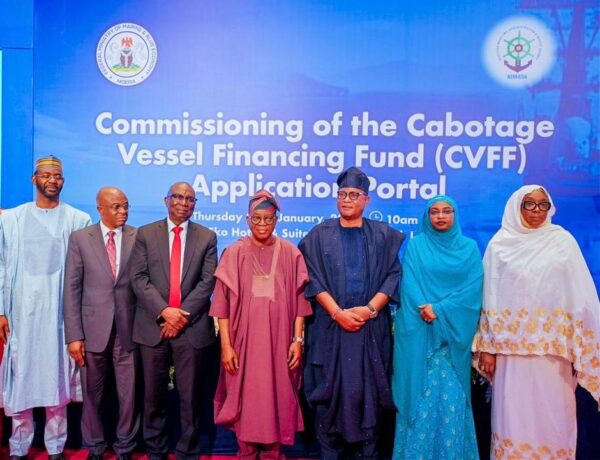
- 60 CVFF applications have been received so far—NIMASA DG
By Oluyinka Onigbinde
Fresh controversy has merged about the disbursement of the Cabotage Vessel Financing Fund (CVFF), as a foremost ship owner and chieftain of the Nigerian Indigenous Shipowners Association (NISA), Chief Isaac Jolapamo, openly questioned the existence and transparency of the fund.
Jolapamo, who is also the Chairman, Board of Trustees of NISA, said he and members of te association have not received any update regarding the disbursement of the CVFF, raising concerns over the state of implementation of the scheme.
This fear comes even as the Nigerian Maritime Administration and Safety Agency (NIMASA) revealed that over 60 applications have been received for the CVFF, since the portal was launched in January 2026.
Speaking at a recent meeting with the Minister of Marine and Blue Economy, Adegboyega Oyetola, where agencies under the ministry also signed the 2026 performance bond, the Director-General of NIMASA, Dayo Mobereola assured stakeholders that the CVFF disbursement process would be transparent and strictly monitored.
His position however allays the fears expressed by Chief Jolapamo. The NIMASA DG had told maritime industry stakeholders, that the level of interest which the CVFF had recorded since the application portal was opened, reflects growing confidence in the scheme and the agency’s reform agenda.
Apparently not convinced and when asked to confirm if there had been any updates on the CVFF disbursement, Jolapamo told our correspondent last week: “I didn’t hear anything.”
In a follow-up line of questioning, Shipping Position Daily further asked whether he had applied for the fund and if ship owners had lost interest in accessing it, given the apparent lack of applications and engagement.
Responding, Jolapamo said he was unaware of any participation among ship owners and referenced discussions within the association’s leadership and membership.
Jolapamo questioned the practicality of the scheme, stating that even if interest existed, the operating environment for indigenous ship owners remains constrained.
“Even if they (ship owners) are interested, where is the work they will use it to do, when we are not talking about protecting our own,” he said.
In a more critical remark, Jolapamo cast doubt on the existence of the fund in tangible form.
“To be realistic, there is no CVFF anywhere. They (NIMASA) will only look for money here and there and give to one or two,” he alleged.
He described the CVFF situation as deeply disappointing, especially for stakeholders who had contributed to the fund over the years in anticipation of meaningful support for indigenous shipping.
“We fought for it (CVFF). We started the contribution. We have spent all our lives and we have nothing to show for it. It is pathetic—more than pathetic,” he lamented.
Corroborating concerns about low engagement and involvement, the President of NISA, Sola Adewunmi, said that the leadership was not aware of any member who had applied for or received the fund.
According to him, this has created the impression that ship owners may no longer be actively pursuing the CVFF.
He said efforts to obtain responses from members through the association’s WhatsApp platform have yielded no feedback.
“I asked if anyone had applied, but I didn’t get any response,” he said.