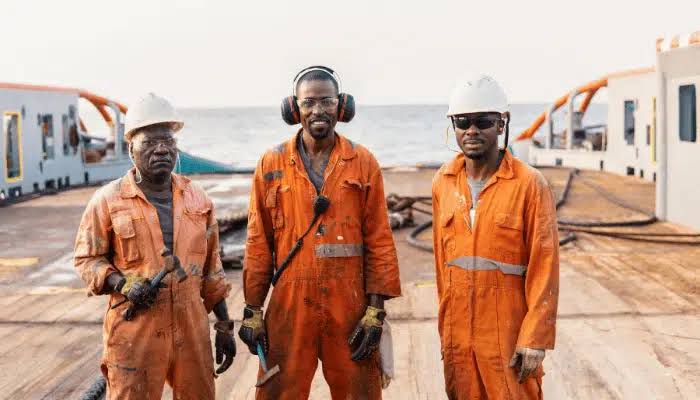
Findings by Shipping Position Daily have revealed that amid rising concerns over seafarers’ abandonment globally, with a 2025 report revealing over 2,200 stranded crew members and $13.1 million in unpaid wages, the real maritime crisis facing Nigerian seafarers is not abandonment, but widespread unemployment and underpayment.
This is even as maritime stakeholders have attributed the crisis to weak labour regulation and poor enforcement of maritime conventions.
Recent data from the International Transport Workers’ Federation (ITF) indicates a 30% increase in reported cases of seafarer abandonment globally in 2025. As of mid-year, 222 vessels have been linked to abandonment incidents involving 2,286 seafarers. The associated unpaid wages amount to $13.1 million.
This marks a rise from the same period in 2024, which recorded 172 cases, 1,838 affected seafarers, and $11.5 million in unpaid wages-already the highest annual figure at the time.
Speaking in an exclusive chat with Shipping Position Daily last week, a seasoned manning agent and Executive Director of Ocean Deep Services Ltd, Mrs. Rollens Macfoy is stated that while seafarer abandonment may be growing globally, the Nigerian maritime industry faces a different but equally serious challenge — a lack of employment opportunities for its teeming population of trained seafarers.
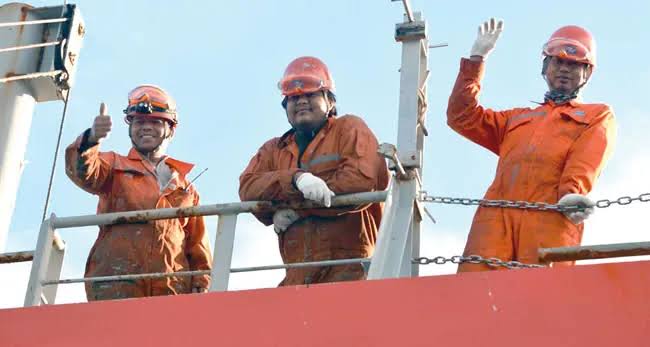
Mrs. Macfoy noted that genuine cases of abandonment are extremely rare in the country and usually arise only in extraordinary circumstances such as piracy or terrorist attacks. In contrast, many Nigerian seafarers are left without jobs due to the dominance of foreign shipping lines and the underdevelopment of indigenous maritime capacity.
According to her, indigenous shipowners are not empowered enough to acquire vessels, leaving foreign operators to dominate the market through joint venture agreements. These arrangements often exclude or limit Nigerian participation, particularly among the crew. As a result, she noted that many trained Nigerian seafarers remain idle, unable to secure placements on board vessels despite possessing the necessary qualifications and certifications.
Macfoy further expressed concern over the widespread underpayment of Nigerian seafarers who are fortunate to secure jobs. She emphasized that their wages fall far below international standards, reflecting broader issues of poor regulation and weak unionization. This wage disparity, she noted, has a demoralizing effect on the workforce and undermines Nigeria’s competitiveness in the global maritime labour market.
Reacting on the issue of abandonment, Macfoy urged for a more informed and contextual understanding. She explained that in some situations, especially involving piracy, what may be perceived as abandonment is actually a case of owners engaging in sensitive negotiations to secure the safe release of crew and cargo.
Macfoy advocated for increased reliance on arbitration to resolve disputes in the maritime sector. She said arbitration provides a platform for technical experts from across the industry to conduct in-depth analyses of complex cases and deliver fair judgments that benefit both seafarers and vessel owners. According to her, arbitration promotes transparency and accountability, allowing both parties to reach mutual understanding based on facts rather than assumptions.
While acknowledging some efforts by the Nigerian government and regulatory bodies to address the challenges facing seafarers, Macfoy called for more urgent and deliberate action. She urged the government to prioritize job creation, empower local shipowners, and implement fair wage structures in line with international best practices. According to her, until these core issues are addressed, Nigerian seafarers will continue to suffer silently despite the global attention on abandonment.
“In this country, there may be only one or two cases of abandonment and even those would likely stem from extreme situations like piracy or terrorist attacks. But the truth is, what Nigerian seafarers are really facing is not abandonment. Its unemployment and underpayment. Our seafarers are not earning salaries that match international standards. This is partly due to the state of our economy and partly due to the lack of proper regulatory enforcement in ensuring fair wages” Macfoy said.
Also speaking, the National President of the Nigeria Merchant Navy Officers and Water Transport Senior Staff Association (NMNOWTSSA), Engr. Bob Yousuo attributed the rising cases of global seafarer abandonment to the poor enforcement of international labour regulations and the low level of union participation among seafarers.
Engr. Yousuo identified the weak implementation of the Maritime Labour Convention (MLC) 2006 by many countries as a root cause of abandonment. According to him, failure to comply with the provisions of the convention allows recruitment agencies and shipping companies to operate without accountability, often leading to the exploitation and abandonment of seafarers.
The Seafarers Union President stressed that union membership is essential for access to a Collective Bargaining Agreement (CBA), which guarantees legal protection, job security, and welfare support. A valid CBA, backed by the union, shipping company, and government, provides a binding document that can be enforced when seafarers’ rights are violated.
To address the crisis, Engr. Yousou urged governments to strengthen oversight of manning agents, ensure they comply with institutional agreements, and enforce policies in line with MLC 2006. He also called on seafarers globally to join their national unions to secure protection under a CBA, which remains the most effective tool for preventing abandonment and safeguarding maritime labour rights. “Without union membership, no one is there to negotiate or defend your rights. Only a CBA gives you legal protection. If you’re not part of the union, neither the ITF nor local unions like MWUN or the Merchant Navy can effectively fight for you,” he stated.
On his part, President of Maritime Professionals Forum, Captain Segun Akanbi said abandonment occurs when ship owners fail to repatriate crew, stop paying salaries for more than two months, or withhold essential provisions such as food, fuel, and spare parts. “When a seafarer joins a vessel at the Lagos port and, during sign-off at another port, is told to ‘find his way’ contrary to his contract, that’s abandonment,” he explained.
Captain Akanbi called on regulators, port authorities, and shipping companies to enforce compliance, apply sanctions, and strengthen mandatory financial security measures to protect Nigerian seafarers from exploitation.
Another industry expert and Immediate Past Chairman of the Institute of Chartered Shipbrokers (ICS), Dr. Chris Ebare strongly condemned the increasing cases of seafarer abandonment globally, describing the trend as unacceptable and damaging to the integrity of the maritime profession.
As a way forward, Dr. Ebare called for the complete eradication of what he termed “behavioral apathy” towards seafarers. He maintained that stakeholders must take deliberate steps to address the systemic issues behind abandonment and implement sustainable solutions to protect maritime workers.