By Oluyinka Onigbinde
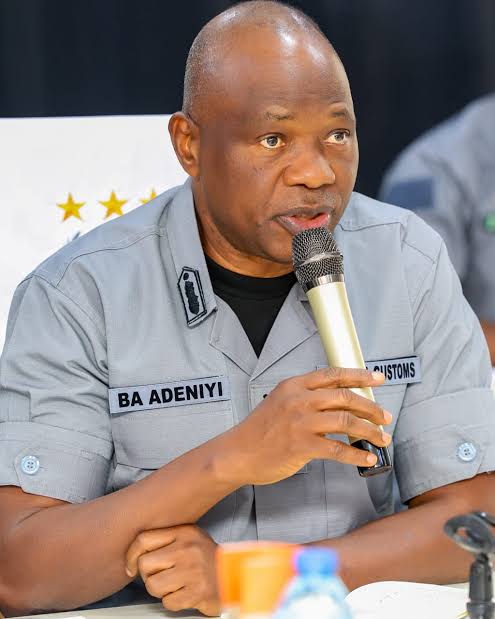
The Comptroller-General of Customs (CGC), Adewale Adeniyi, on Friday led the management of the Nigeria Customs Service (NCS) on a landmark visit to the Manufacturers Association of Nigeria (MAN) in Lagos, pledging sweeping reforms to remove trade bottlenecks, cut production costs and boost industrial growth.
The high-level meeting, which was described by both parties as a “family gathering,” signalled a renewed collaboration between the Customs Service and the nation’s manufacturing sector aimed at balancing government’s revenue drive with the urgent need to revitalise local industries.
Addressing MAN executives, sector leaders and manufacturers, Adeniyi described the manufacturing industry as the backbone of Nigeria’s industrial development and a critical driver of national prosperity. He said the recent suspension of the controversial four per cent Free on Board (FOB) levy on imports by the Ministry of Finance had opened fresh opportunities for dialogue on how to balance fiscal responsibilities with industrial growth. While noting that the levy is provided for under the Nigeria Customs Service Act 2023, he stressed that its implementation would only proceed after genuine consultations with stakeholders.
“Your voices matter. Manufacturers’ experiences shape our understanding of how customs procedures can either enable or constrain industrial excellence,” the Customs boss declared.
Adeniyi outlined a series of trade facilitation initiatives designed to ease the cost of doing business and eliminate delays that frustrate legitimate trade. He announced that the Service had concluded plans to establish a one-stop shop framework that would revolutionise how manufacturers interface with
Customs and other regulatory agencies, removing the multiple clearances and paperwork that slow production cycles. He also disclosed that Customs had commenced integration of its operations into the National Single Window project expected to take off in the first quarter of 2026, a move that will enable real-time cargo clearance, automated risk assessments and seamless supply chain integration.
“Technology should eliminate friction in the supply chain,” he said, citing ongoing investments in digital platforms like the Bonobo system to provide real-time clearance capabilities and reduce human interference while maintaining robust security and compliance standards.
The Customs chief further revealed that checkpoints along major highways have been systematically streamlined to reduce delays that inflate logistics costs without adding value to revenue generation or border security.
“Our engagement today has reinforced that the Nigeria Customs Service and the manufacturing sector share fundamental objectives to support economic growth, job creation, industrial competitiveness and national prosperity,” he said, promising that dialogue with the manufacturing sector would continue beyond the meeting to ensure manufacturers’ perspectives inform future customs policies.
Earlier, MAN President, Otunba Francis Meshioye, while welcoming the Customs delegation, congratulated Adeniyi on his recent election as Chairman of the World Customs Organization (WCO) Council, the first Nigerian to hold the position since the body was established in 1952. He praised the Customs leadership for bringing professionalism and innovation to the Service but warned that the manufacturing sector was currently operating under difficult conditions. He identified the four per cent FOB charge, delays in the deployment of the Bonobo digital platform and other high-cost trade procedures as key issues undermining industrial competitiveness and threatening the survival of many factories.
“The manufacturing sector cannot thrive under unpredictable costs and bureaucratic bottlenecks. We look forward to a definitive resolution of these matters to guarantee an efficient trade facilitation ecosystem and enhance industrial growth,” Meshioye said.
He recalled the creation of a MAN–Customs consultative platform and expressed hope that the latest engagement would revive and institutionalise the arrangement to resolve operational issues and engender inclusive policy formulation and implementation. He pledged the association’s commitment to work with government at all levels to streamline trade processes, reduce the cost of doing business at the ports and strengthen Nigeria’s industrial base.
The meeting comes at a time when the economy is grappling with high production costs, stiff competition from imports and declining foreign exchange inflows. Stakeholders at the session agreed that a stronger partnership between Customs and manufacturers is critical to sustaining factories, creating jobs and expanding the country’s revenue base without stifling industrial growth. As the closed-door discussions continued after the opening ceremony, expectations remained high that tangible policy adjustments, particularly on the suspended four per cent FOB levy, would emerge to redefine the relationship between the government’s revenue agency and the productive sector.