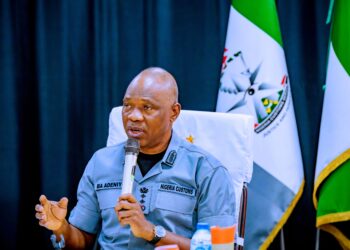
The Comptroller-General of the Nigeria Customs Service (NCS), Adewale Adeniyi, has announced the introduction of a unified 4% Free On Board (FOB) charge, which will replace multiple import-related levies currently imposed on importers.
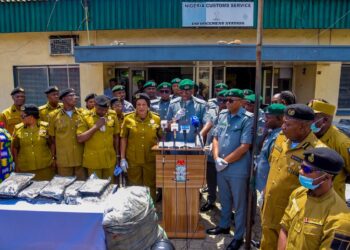
Adeniyi made this disclosure on Monday, July 21, 2025, during a stakeholder town hall meeting held in Lagos. He explained that the new revenue structure is part of ongoing reforms aimed at simplifying the nation’s import duty regime, enhancing transparency, and improving ease of doing business.
According to the Customs boss, the new 4% FOB charge will replace both the 1% Comprehensive Import Supervision Scheme (CISS) levy and the existing 7% cost of collection previously borne by importers.
“Once the 4% FOB takes effect, the 1% CISS levy will cease automatically, and the 7% cost of collection will also be completely eliminated,” Adeniyi stated. “Under the new Act, the 4% FOB is paid upfront—thereafter, 100% of revenue generated by Customs will go directly into the Federation Account. It’s a win-win for all stakeholders.”
The initiative is expected to significantly reduce the cost and complexity of doing business at the ports, while also eliminating room for discretionary charges. Adeniyi noted that the change aligns with broader reforms surrounding the rollout of the B’Odogwu clearance platform—an indigenous digital platform designed to modernize Customs operations and trade facilitation.
The town hall meeting, themed “Enhancing Trade Compliance and System Optimisation Through Stakeholder Engagement,” brought together freight forwarders, clearing agents, and other trade stakeholders. While the new levy structure was generally welcomed, participants raised concerns about delays in system transition, especially with respect to banking and documentation processes.
Deputy Comptroller-General in charge of ICT/Modernisation, DCG Kikelomo Adeola, described the B’Odogwu platform as a national project with the potential to position Nigeria as a leader in digital customs administration. She noted that the initiative aligns with Nigeria’s current leadership role at the World Customs Organisation (WCO).
Also speaking at the event, Chairman of the Trade Modernisation Project Limited (TMPL), Saleh Ahmadu, reiterated the organisation’s commitment to providing the infrastructure needed to ensure seamless implementation and enhance trade experiences.
Panel sessions during the meeting addressed practical concerns from users, with themes including “Overcoming Common Importer Challenges on B’Odogwu” and “Enhancing Transparency, Speed and Revenue through Full Participation.” A Q&A segment allowed participants to seek clarification on policy changes and system functionality.
The introduction of the unified 4% FOB charge is expected to simplify port procedures, curb arbitrary levies, and improve Nigeria’s global trade facilitation ranking.