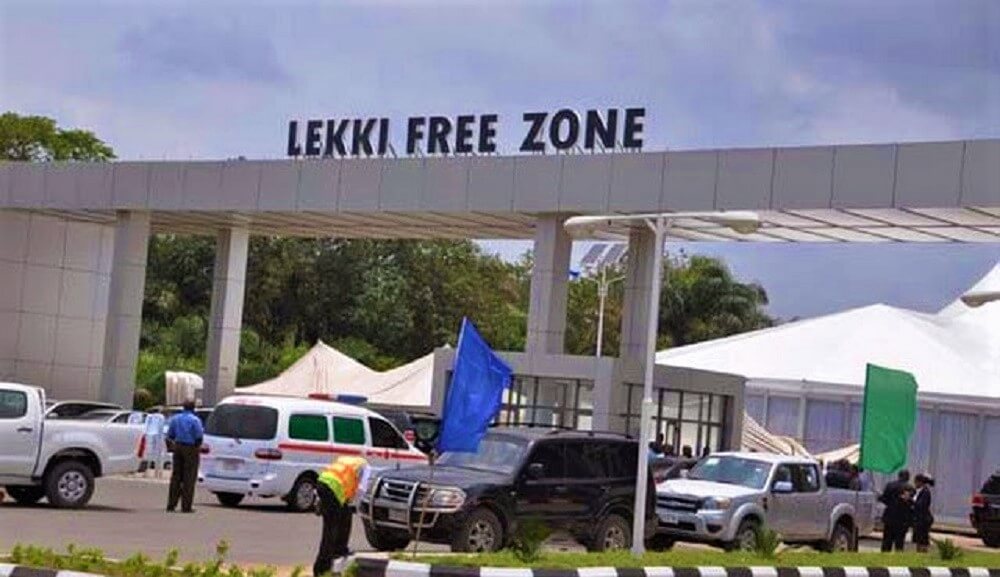
Findings by Shipping Position Daily have revealed that the e-call up system introduced by the Lagos State Government to regulate truck and tanker movements along the Lekki–Epe corridor has become epileptic, owing to poor compliance by drivers and lack of effective enforcement.
The system, which was designed to decongest the ever-busy corridor and bring sanity to truck operations servicing the Dangote Refinery, Lekki Deep Sea Port, and the entire Free Trade Zone, now operates far below expectation as many drivers have abandoned the designated truck parks and are by-passing the electronic scheduling process through unauthorized routes.
Investigations by our correspondent showed that since its formal enforcement began on August 1, 2025, the much-celebrated digital platform has suffered major setbacks, with drivers describing it as unreliable and poorly-coordinated.
Checks by our correspondent reveal that many of them now shun the call-up parks, citing inefficiency, lack of space, and the delays encountered while waiting for electronic clearance that often never comes.
A tanker driver, who simply identified himself as Ibrahim, told our correspondent that the process has become frustrating, forcing most drivers to seek alternative routes to their destinations.
“I paid the required fee and parked at the holding bay as instructed. I waited from 6 a.m. till midday and nobody called us. So I left the bay and drove through another access road to meet up with my delivery. We cannot be waiting endlessly when our time is being wasted,” he lamented.
Another truck driver, Suleiman, who operates along the corridor, expressed similar frustration, saying, “They told us to always use the designated parks, but the place is far and sometimes overcrowded. We pay ₦10,000 for the e-call up, yet there is no order. Some people even move freely without being called up. How can the system work when enforcement is selective?”
Also speaking, Chinedu Sylvanus, a long-haul driver, said the system cannot succeed if the government fails to provide proper facilities. “Most of the parks don’t have good roads or enough security. You can be stuck there for hours without any movement. Until they make the process seamless, most of us will keep finding our own way,” he said.
The once-promising e-call up system, which was meant to be a technological leap from the chaotic scenes of Apapa, has now become a source of renewed gridlock and confusion.
Our correspondent observed that trucks continue to line up around Eleko, Free Trade Zone Road, and other access points, while uniformed officers appear overwhelmed by the growing non-compliance.
Findings also revealed that the recent industrial face-off between the Petroleum and Natural Gas Senior Staff Association of Nigeria (PENGASSAN) and the Dangote Refinery further worsened the situation. The suspension of crude and gas supply during the dispute led to reduced refinery operations and disrupted the movement of product tankers, compounding traffic irregularities along the corridor. Although the Federal Government has since brokered a temporary truce between the refinery and the union, the impact of the stand-off still lingers as truck flow remains unpredictable and disorganized.
A senior truck operator who preferred anonymity told Shipping Position Daily that some truck drivers now deliberately avoid using the e-call up because “it is not working the way they promised.” He said, “when it started, everyone was hopeful that it would bring sanity, but today, it is worse. Some people use back routes and still pass without being checked. There is no proper monitoring or control.”
He said the persistent failure of the system, according to logistics experts, is traceable to inadequate infrastructure, weak monitoring, and corruption among field operatives who allegedly collect bribes to allow unregistered trucks to enter. The e-call up, they said, has become “a cash cow” rather than a transparent traffic management tool.
Efforts by Shipping Position Daily to obtain comments from the management of the e-call up system at Lekki proved abortive, as phone calls, text messages, inquiries were not responded to as of press time.