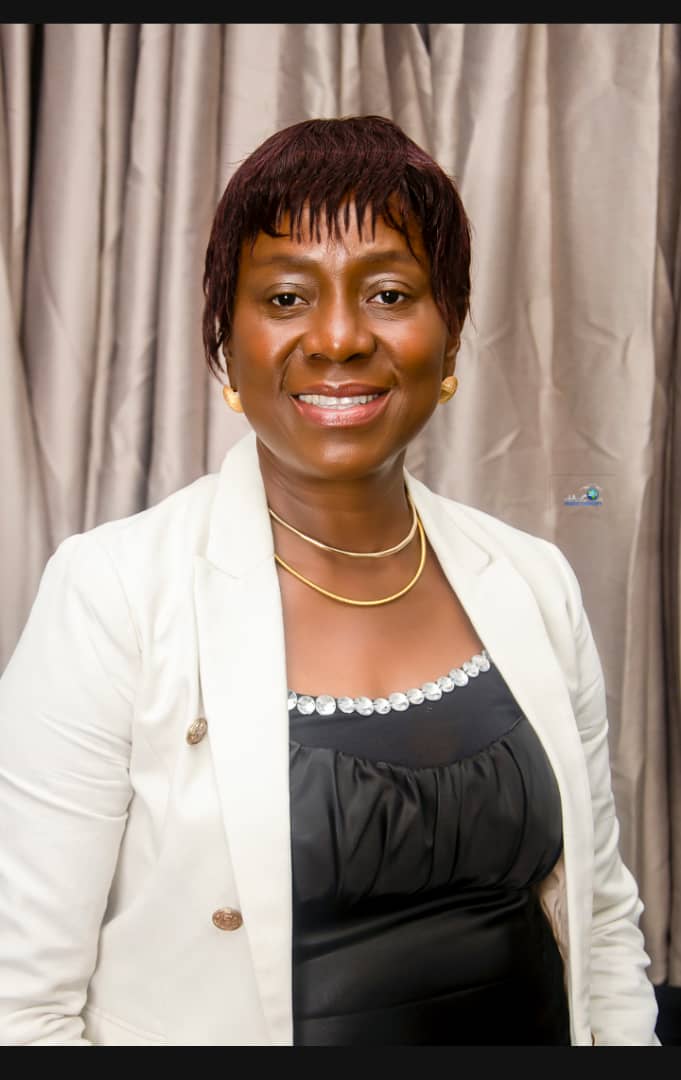
Mrs Bernadine Eloka is the Vice President of Clarion Shipping West Africa Ltd. In this interview with Joshua Yousouph, she speaks passionately about the unveiling of the company’s newly-acquired container vessel—LV Ocean Dragon, its strategic impact on Nigeria’s maritime logistics, regional expansion plans, and the unique financial journey that brought the project to life. She shares insights into the vessel’s capabilities, financing hurdles, and the company’s expectations from the Nigerian government on the implementation of Cabotage Act.
The banks believed in the project. We are sure it will pay-off highest within two years.
We are waiting for the government to give us the enjoyment and full benefits of Cabotage.
How has the journey been so far, bringing the vessel to Lagos?
It has been very interesting, but we’ve also been through a lot. I mean, getting this vessel here was not easy at all. At a point, we were worried and the banks were asking for the ship, but we thank God the ship is here today. From China all the way, having to navigate the language between Chinese and English. But because Chinese people, they don’t speak English, and we don’t speak Chinese, so we had to use technology a lot to understand ourselves. You can imagine with all the ups and downs that you have to go through in the industry. And then also getting the crew — finding the crew from Nigeria, getting them to China — and then all the challenges they had to face coming here. There was a time we even had to go back. After advancing, we had to go back to Malaysia, because they were having some issues with the engine. But then we fixed that.
How many days did it take to arrive?
We left China on the 17th of April, and today is July 1st, so about 60 days; more or less from China to Lagos.
Let’s talk about the crew. There’s often this feeling among Nigerians that they don’t have opportunity on board vessels. How are you addressing that?
Oh, for sure. 70% of the crewmen are Nigerians. You know, we had to fly them from Nigeria to China because we wanted to make sure that it was a Nigerian crew. We wanted it to be a Nigerian vessel run by Nigerians because Nigerians can do this thing. So why are we looking for foreigners. I mean, let’s take advantage of that. So yes, that’s the plan, and it’s already in effect.
What kind of solution does the MV Ocean Dragon provide?
The solution is—instead of people moving their cargo or containers by road from Lekki to Apapa, Tin Can, Onitsha, Port Harcourt, or Calabar, the MV Ocean Dragon can easily move 349 TEUs of those containers and deliver them within 2 days to any Nigerian port. It’s seamless, fast, and bypasses the chaos of road transportation.
Besides Nigerian coastal operations, does the vessel have a regional footprint?
Yes, other than operating in Nigerian coastal waters, the vessel is also meant to service the nearby West African countries like Benin Republic, Togo, Ghana, Sierra Leone, and even as far as Egypt and South Africa.
In terms of visibility, how do you intend to expand across the West African ports or market?
We are already doing it. Even as we speak now, we have bookings to Ghana, Algeria, and Togo. But other than West African Ports, we more importantly already have another vessel that should be loading. The Expected Time of Arrival (ETA) is on the 29th of July, from China, direct to Nigeria. That’s the only service we are marketing. We don’t want to be transiting like other shipping lines, going from country to country and causing delays. So, we are pushing direct service from China to Nigeria. We are expecting the vessel which is a bigger vessel than MV Ocean Dragon.
Is the new vessel also owned by Clarion Shipping West Africa Ltd?
The bigger vessel which is MV 778, which is set to depart China on the 27th of July is also owned by Clarion Shipping West Africa Ltd in partnership with a Chinese company. It’s also coming direct from China to Nigeria.
What motivated Clarion to acquire this new vessel?
It’s nothing other than to provide a solution to our needs in terms of movement of containers from one port to another, and from one state to another—seamlessly, easily, without the severe risk of going by road.
Where was the vessel built, and what were the major challenges in executing this project?
She was built in China. The basic challenge which we all know in Nigeria is funding. Currently in Nigeria, to raise funds and invest in something like this is not funny. Even though we have financial institutions and banks, the challenge was convincing them. But when we did our presentation, and they saw the viability of the project, they decided to fund the acquisition of the vessel. It was finance that gave us the structure. Because the business is there, the customers are there—they just want the service.
What other assets do you currently operate in the Clarion fleet?
We were doing something like this before with ocean going barges. We had two ocean-going barges and about five coastal barges. But those ocean-going barges cannot really handle the kind of volume that MV Ocean Dragon would do. Also, the risk in using those barges is much higher than with a vessel like this. So, with our existing partnerships and customer trust, we knew the only challenge was getting the vessel—and once we had it, the business would be there. So other than the funding aspect that gave us some challenge, we did not have any other issue.
Did you get a single-digit interest loan from the banks?
You know, it’s not the problem of the banks not giving single digit interest when offering loans. It’s about the Central Bank of Nigeria (CBN) and Federal Government policy. If the policy is not there, the banks cannot go against it. So the banks are working in line with the policies of the Federal Government via the Central Bank of Nigeria, including loans, grants and interest rates. So of course, their interest rate is not single-digit—it’s double or even triple digits. But what helped was that there was an understanding. There was a moratorium given and there was that consideration, cooperation, encouragement, support and the motivation we received. The bank believed in the project. And we are sure it will pay-off highest within two years.
Beyond finance, what policy-related challenges could affect the project?
The major challenge I think we may experience is the full implementation of Cabotage. That’s apparently the reason we bought this vessel. Since we are a fully owned indigenous shipping line, we should have the full benefits of Cabotage. We’ve complied to be the first container liner in Nigeria fully owned by Nigerians in compliance with the government regulation because we met all requirements needed by the Nigeria Maritime Administration and Safety Agency (NIMASA), National Inland Waterways Authority (NIWA), Nigerian Ports Authority (NPA), the Nigeria Customs Service and so on. So now we are waiting for the government to give us the enjoyment and full benefits of Cabotage for Nigerian-owned shipping lines. They should stop foreign lines from the business of rendering services meant for Nigerian-owned shipping lines. These services include the movement of containers from Lekki to Tin Can or Apapa. As well as movement of containers from here to Port Harcourt or Calabar. These include empty and loaded containers as well as bulk cargo. That should be for Nigerian vessels. So we are now waiting for the government to implement Cabotage and stop these non-indigenous owned shipping lines from rendering such services. Once the government does this, in next two to three years, we can have about three or more vessels like this.
Are the containers fully-owned by Clarion?
Yes! You can see them. If it is not owned by Clarion, then you cannot carry Clarion name and logo.
What would be your parting words for other Nigerian shippers or entrepreneurs considering a venture like this?
My parting words would be that they should follow their dreams. Don’t do something because somebody else has done it. You have to be sure that you have the calling. And once you have the calling, God is with you. When you know where you are going, you have your mission, your vision, your objectives and your plans, with God on your side, you will get there and achieve your goals.