Naval Captain Stan Igwe (Rtd) is a Marine Safety Investigator with the Nigerian Safety Investigation Bureau (NSIB). In this interview with Joshua Yousouph, he sheds light on the bureau’s expanding mandate beyond aviation into the maritime sector. He speaks on the recurring challenges of accidents on Nigeria’s inland waterways, the independence of NSIB investigations, and why stronger enforcement, collaboration, and prompt reporting are crucial to improving safety and preventing future tragedies.
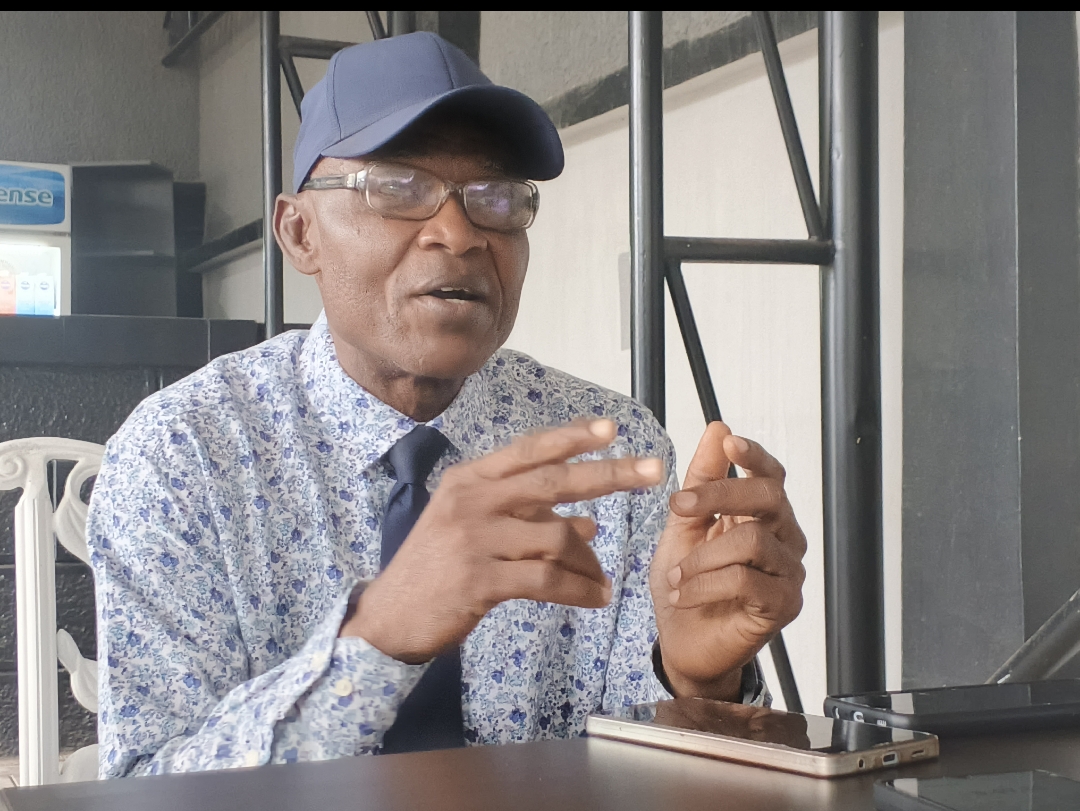
“If recommendations are implemented faithfully, we will see fewer accidents”
“We investigate what caused an accident, identify contributing factors, and issue safety recommendations.
There have been discussions around the challenges on o our waterways, especially in the northern part of the country. What can NSIB do in this regard, knowing that you give safety advice?
It’s unfortunate that despite some safety measures on our waterways, we still have marine occurrences involving fatalities. This year, there have been so many marine accidents, mostly in the northern part. For instance, sometime in February, there was an incident on River Niger between Kogi and Niger State. About 57 fatalities were recorded. The NSIB was involved in the investigation. From our preliminary investigation, bystanders said the boat ran into a submerged tree trunk, which caused it to capsize. We also observed evidence that the boat was overloaded, the hazards were not properly marked, and the crew was undermined and inadequate. And in that process, the passengers in the boat fell overboard and then some of them drowned. There are a few survivors, including the boat driver. The boat itself was wooden, fitted with two outboard engines, and carried nearly 100 passengers. By National Inland Waterways Authority (NIWA) specifications, such a boat requires at least two or three crew members. There is, therefore, a need for stronger enforcement of NIWA safety regulations on our inland waterways. With proper enforcement, such incidences could be minimized, if not eradicated.
As we speak, there are several agencies regulating the waterways—NIMASA, NIWA, NPA—each with their mandates. Are you saying that regulation has not been enough, and that NSIB should step in?
If I understand you, you’re asking about the role of NSIB. For years, NSIB was known for aviation alone, but the new Establishment Act of 2022 has expanded our mandate. It is all inclusive. Before, it was the Accident Investigation Bureau (AIB). Now it is the Nigerian Safety Investigation Bureau, a multimodal transportation agency in accident investigation. Our mandate covers occurrences in air, marine, rail, pipeline, and land transportation. This is very important because it allows pooling of resources and expertise across all modes of transportation under one entity. NSIB now has come up with a marine investigation policy and procedure manual to guide its activities in the maritime and marine sector of our transportation. Just recently, NSIB presented the Marine Safety Investigation Regulation 2025 to the public and stakeholders. With this, the high standards of safety investigation applied in aviation will be extended to the marine sector. That is the role of NSIB and importantly, the essence of safety investigation is different. Unlike NIWA or NIMASA, which are regulatory and supervisory agencies, NSIB is an independent and unbiased body. It is an independent body in the sense that when we investigate any occurrence, it doesn’t involve punitive measures. Our role is not punitive. We do not apportion blame. We investigate what caused an accident, identify contributing factors, and issue safety recommendations to prevent future occurrences. However, if in the course of our investigation, we discover that there are some liabilities or some crime has been committed, it will be given to the appropriate government agencies to handle. So, it’s not punitive.
But NIMASA and NIWA also investigate accidents. Doesn’t that overlap with your work?
No. It cannot overlap. You cannot be a judge in your own case. NIMASA or NIWA investigate under their own authority, which is still subject to their internal control. But the government finds it, as provided by international treaties, to create a safety investigation agency to be unbiased and to be independent. That’s where NSIB comes in. No authority can tell you, don’t do this, don’t do that. Because it’s a safety recommendation, it’s not apportioning blame. We just want to know the exact thing that happened, without you being afraid that you may be indicted, so that you’ll be punished. Our investigations are purely for safety purposes—objective, independent, and not influenced by regulatory or commercial interests. The goal is to make the waterways safer for passengers and goods, not to punish anyone. So, it’s to know what happened and how do we prevent it from happening again, so that we are safer, we have our maritime domain/transportation mode in the maritime area well-other secured and safe for passengers and goods plying the waterways.
Do you have personnel across these sectors who give you feedback when issues happen, or do you rely on agencies to inform you?
According to our Marine Safety Regulations, when an occurrence happens, we rely on the person in charge. Like, if it’s on a boat, the boat operator, if he’s alive, he has the responsibility to contact our hotline. The boat crew, if they’re alive, have the responsibility to contact our hotline. Other legitimate agencies like the Police, NIWA, or NIMASA are also expected to notify us knowing our involvement in safety investigation. Once we receive the notification of the occurrence, we switch into action, because there will be a need to preserve evidence. Delay can alter crucial facts. That’s why prompt reporting is vital.
If your independent findings clash with those of an agency, how does the government handle it?
So far, we have not faced that situation. Remember, the NSIB Establishment Act was signed only about two years in 2022, and we are putting out the framework to enable the agency to perform its assigned role. And then, by nature of the assigned role of a Nigerian Safety Investigation Bureau, there’s no need for any clash, because we are working for a common good. For example, if we investigate an incident and involve any government agency, we forward a safety recommendation. The safety recommendation is not an indictment; it’s a measure that will be taken, so that we can improve safety issues in our waterways. So, I don’t think there will be any area of conflict. Let me be frank with you. We have to move forward. The rest of the world has moved forward. The same thing is practiced in the United States, the United Kingdom, South Africa, and Egypt. We want all the agencies of government to work towards the well-being and welfare of citizens. So, if we are working for something that is for our common good, why would there be conflicts?
But how often have you been receiving calls from agencies?
For now, as I said, we are just establishing. We are going into the field. Gradually, we would get there. Like now, we have a collaboration with NIWA. We have worked together. There’s a good understanding between NSIB and NIWA. There’s a good understanding between NSIB and the Nigerian Navy. It’s a collective responsibility to ensure safety in our waterways. It’s not only something one agency can do.
What about NIMASA?
I’m talking of those that we have got already. We are taking it step by step. We are going to collaborate with NIMASA, NPA, all the key players in the maritime transportation industry for the safety and cleaner Nigerian waterways. When you talk of NIWA and NIMASA, you see these are the conventional regulators in our waterways. But you see, when you talk of inland waterways, NIWA is in a better position to handle inland waterways. NIMASA is more of international shipping, as provided by the International Maritime Organization (IMO).
In the maritime sector right now, there’s this kind of territoriality. Has NSIB faced resistance in any way?
To me, I would say not really. As I said, we are just being established. We are going into the field to exercise a statutory role to ensure safety in our waterways through investigation of marine casualties, and incidents. Yes, so we are just going there with understanding. This is because some of these things you mentioned, like somebody trying to resist somebody or make your work difficult, is sometimes attitudinal and due to lack of understanding. But once we know that we are working for the common good of the community, we are working for the federal government of Nigeria to succeed, to ensure the safety in our waterways, there shouldn’t be any issue.
Finally, what do you think the government, stakeholders, and key players can do to help NSIB achieve its mandate?
First, cooperation is key. Like I said, if there’s any incident or accident that occurs in our waterways, there should be prompt notification of NSIB to our hotline, so that we can take quick action in order to preserve evidence. Because, if we don’t act early, by the time we go to the scene, some of the evidences that we should have collected would have been altered. Also, stakeholders should implement our safety recommendations. This is because, like I said, these safety recommendations are not punitive. It’s something that’s done with the best intention. Normally, we have a methodological way of doing these investigations. We have experts; we have procedures based on international guidelines. So, we arrive at the contributing factors that lead to the safety issues, which we bring out in our safety recommendations. If recommendations are implemented faithfully, we will see fewer accidents, and the waterways will be safer for all.