The Registrar of the Council for the Regulation of Freight Forwarding in Nigeria (CRFFN) Mr Kingsley Igwe in this exclusive interview with the Editorial Team of Shipping Position Daily, sheds light on why Nigeria’s logistics sector must think global, and the role CRFFN should play in transforming the industry. He also draws lessons from international examples, outlines his vision for the Council and explains why the industry must shed outdated mindset to thrive.
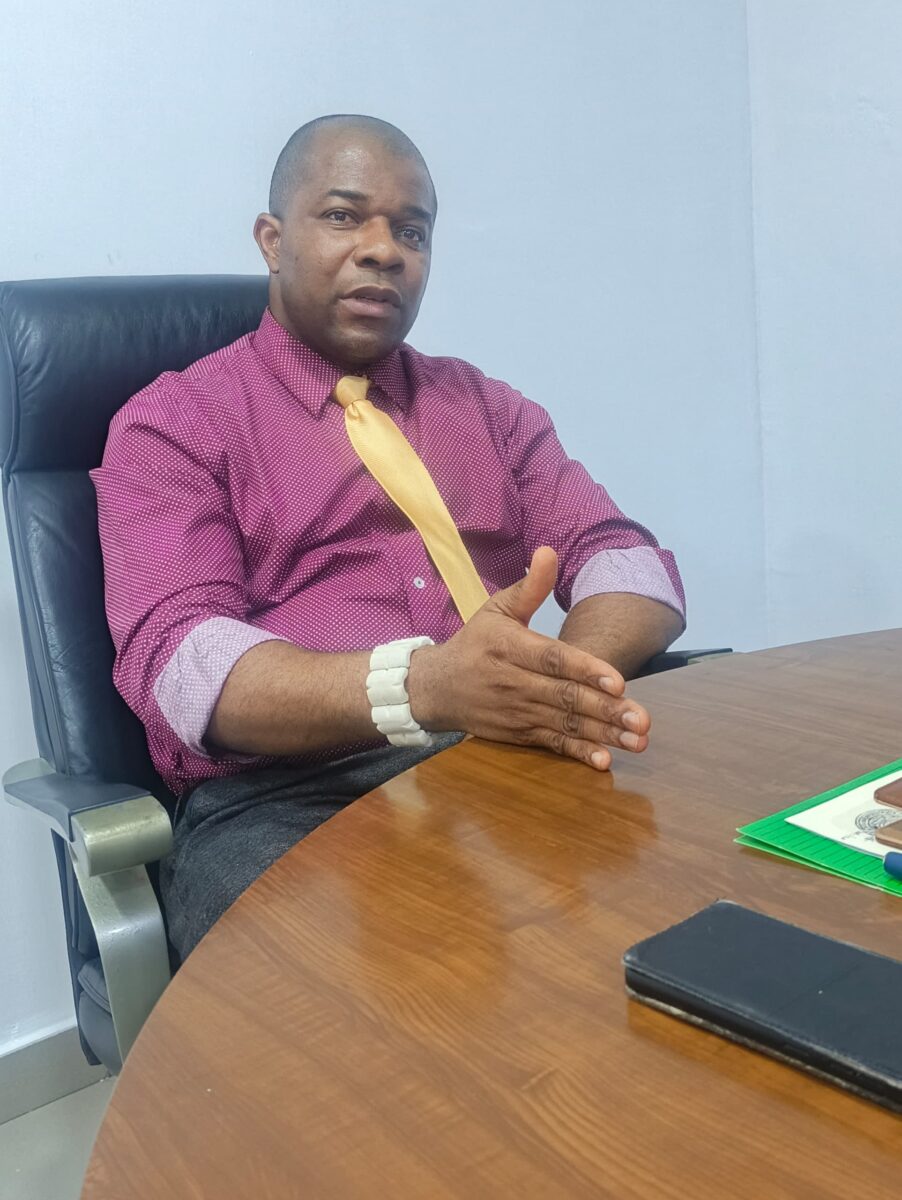
“I am no longer “a NAGAFF man.” I am the Registrar and Chief Executive of the Council”
“We should have a logistics industry that can compete on the global stage”
“A Customs agent is a logistics service provider. A freight forwarder is a logistics service provider”
You’ve spoken often about looking abroad for models of excellence in logistics. Where does that inspiration come from?
I happen to admire a very professional trail—not in these part of the world, not in Nigeria, but in this industry. One of the places I look to is Singapore, which has an advanced logistics sector. Most times, when I see some things happening here, it pains me. Everything I’ve acquired over the years, I want to see some of them here. We should have a logistics industry that can compete on the global stage—abiding by international conventions that govern the industry, and competing in terms of professional service delivery. Today, Singapore, the Netherlands, India—they export professional service providers in logistics. By expansion, we can talk about the US, they have most of their people choose where they want to go and practice; also in the UK. But we can also see most of the Asian countries including China also advancing in that. Why can’t Nigeria export professional logistics service providers? Where is DHL from? Can’t we have Nigerian companies that go abroad—even if not to Europe, the US, Asia, or Australia—at least within Africa? The African Continental Free Trade Area is a big opportunity. We should be exporting our services and showing our African counterparts what this industry is all about. They can be able to administer and become professional or competitive in their trade. We don’t have that. We have all it takes. And CRFFN is at the center of it all, because it is the agency that interplays with every other industry, agency, and stakeholder in the entire supply chain.
In your view, what should CRFFN’s role be?
The key is knowledge. How can I regulate if I don’t know everything about Customs, better than Customs? Or everything about the Standards Organisation of Nigeria, better than SON? CRFFN’s role is to know everything about Customs, SON, the CBN and every other agency in the chain. How can I now regulate those that apply their regulations and policies? I should be the first to know and I should be the one to guide those who are using it. If I don’t know, then I will not identify with those who are using it to make mistakes. That is the function of CRFFN. We need to know everything about Customs, SON, CBN and every other agency in the chain. Then package that knowledge for capacity building, enforcement, and to check trade facilitation leakages. Right now, many sister agencies are not even adopting the rightful principles of trade facilitation, yet everyone talks about it. We need to change that. But everybody is talking about trade facilitation. So this is what I want to really protect. So that by the time Nigeria is coming back to the global stage in 5 years or 6 years’ time, we will have seen grounded professionals speaking. There is always the FIATA convention, general conferences and the rest of it. How many Nigerians have you seen there? It is only maybe people who are just going there for tourism. But we don’t speak. A CRFFN Registrar should be able to engage in that stage and talk to the whole world.
You’ve also raised concerns about clarity in industry definitions. Can you elaborate?
Yes. This word freight forwarder is an ancient word—it has evolved into logistics. But people are finding it difficult to engage in that role because it’s not clear yet. That lack of clarity is one of the problems in Nigeria today. A Customs agent is a logistics service provider. A freight forwarder is a logistics service provider. A trucker, a warehouse operator, a courier, terminal operations, shipping—they are all logistics services. But because this hasn’t been packaged clearly and communicated, people don’t understand. That is one of the things that is causing problems. You see associations like NAGAFF being identified with the word “Freight Forwarders”. ANLCA is identified with the word “Customs Licensed Agents”. What is the difference? And then you have other associations who do not even know where they belong. They just coin their own name by themselves. And today, it is one of the things causing instability in the management and the regulation of the industry. Because of diverse, very short-sighted views and interpretations of what the industry is about. A customs agent is a logistics service provider. A freight forwarder is a logistics service provider. A trucker/ haulage operator is a logistics service provider, operating a warehouse is a logistics service. Courier is a logistics service. Terminal operations and shipping is a logistics service too. But because this has not been packaged clearly and sensitized, people don’t know about it. So everybody only just choose what they know. Now, the problem is the entry method into the industry. The entry method is not well-structured and that is where I am actually very much interested. And we are coming up with a lot of new things.
You’ve described the entry process into the industry as unstructured. What’s wrong with it?
People need proper guidance when entering the industry. Even those already practicing need re-direction. This is a knowledge-based industry—it is not informal. You can’t just wake up, open a shop, and start hosting cargo like when you open a shop and start roasting corn. You have to groom yourself, soak yourself in knowledge about shipping, Customs, import and export regulations, and even basic business management. Without that, you can’t handle consignments as an agent—or even register for franchise service under DHL, for instance. Even if you are doing that, DHL will need to train you. That is the same thing here because you need to speak the language. So, unfortunately, the industry is very dynamic, new things keep coming up new and people need to also get updated every now and then. About the last 3-4 years, maybe we are not talking about National Single Window. But today we are talking about it, and the discussion is very intense now. 10-15 years ago, we were not talking about African Continental Free Trade Agreement. But today, we are talking about its evolution in the industry. There are guiding principles around all of these evolutions. So this is part of it. Then again, I agree with you that we don’t have a National Policy. Even in the industry, it is a pity that we don’t have much resource persons to deliver on this plan. We are still very limited. But thank God, those who grew in their respective offices are very now instrumental to this. So the only thing is to guide them on how to put the knowledge together. They have it. But to put it together is the issue. We don’t just go and adopt the FIATA model. FIATA is fun. It is part of the thing that people should know. But locally, what should people know first?
If you had the power to change the CRFFN Act, where will you start from?
A complete overhaul is necessary. The nomenclature needs to change, and so does the content. If you look throughout these sections of the CRFFN Act, what it speaks and what it intends to speak about are different. It intends to speak about the industry, the regulation of the industry. But it is now talking about regulation of associations and members. And that is why, it is as if CRFFN is regulating associations, especially accredited associations. No, that is not it. It is beyond that. CRFFN is regulating the industry. How should people practice? Even if you want to form an association, how should you form the association? Not that you form an association and you say, you want to come and register. I will not register you. I know how many letters I have receive already. We are not going to register. We need to review those that have registered themselves. Yes, we are going to do that. We are going to do an audit of the associations. And then we will be able to redefine how associations should operate and which associations should even exist in the whole industry. There is proliferation of associations; all doing the same thing. Perhaps most of them don’t even have offices or constitution. What is the membership strength? What is the vision? They don’t have it. But they are the ones causing the most trouble in the industry. Some of the fees collected by associations are illegal and not statutory. That is what is happening. But the industry is suffering due to that. The industry is such that, if properly regulated, terminal operators should not be able to abruptly increase charges without clarity, without benchmark, without guideline. So, to conclude to your question, the CRFFN Act needs a complete overhaul. There is no singular thing in the Act that does not need to be refitted; beginning from construction, infrastructure, financing, everything needs to be completely overhauled.
That’s a huge reform agenda. How realistic is it?
It will be tough, but it’s necessary. Nigeria doesn’t have a national policy that talks about logistics administration, including infrastructure. I’m initiating that. Only a national logistics policy can create seamless connections between sea, air, and land transport. We travel abroad and see cargo moved easily from ports to the hinterland. Why? Because the model of connectivity is seamless. We don’t have that here. Instead, we depend heavily on road transport, which drives up costs. This needs to change.
Some say you’ve only engaged with your “home” association, that is NAGAFF since the beginning of your tenure as the Council’s Registrar leaving out other associations. Is that true?
I’m surprised to hear that. I’m in touch with all of them. One of the misperceptions here is the assumption that I haven’t engaged with them. In fact, we have written a series of letters to all of them — ANLCA, NAFFAC, AREFFN, and others. We began engagements with ANLCA before visiting NAGAFF. Contrary to what you might think, NAGAFF was actually the last on the list. We sent official letters to their Secretaries, and you can verify this with my field officers, the Corporate Affairs Unit, and the Enforcement Unit. Only NAGAFF responded — that’s why you saw me there. The rest did not respond. It surprises me that at their level, they could deny receiving our correspondence, despite our having acknowledged copies of those letters.
Are you saying the leadership is withholding these communications from their members?
Exactly. Most of the letters have been sat on by the Secretaries and Presidents. Some leaders even told me outright that because my appointment is being challenged in court, they will not honour anything from my office. So, in effect, they are refusing to recognise the authority of my office — not because of performance, but for sentimental reasons. You see, I am no longer “a NAGAFF man.” I am the Registrar and Chief Executive of the Council, regulating NAGAFF, ANLCA, and all others equally. But there’s a historic problem between NAGAFF and some of these groups, long before I came into the picture. Unfortunately, I have become a victim of those circumstances. It’s like having five children, and four wake up one day to say, “You’re no longer our father.” Does that stop you from being their biological father? No. The umbilical cord remains — they are tied to the industry, and I regulate the industry.
Have there been direct engagements with individual members outside of leadership?
Yes. Many members attend our training and stakeholder sessions when they receive information directly. At our last engagement, even leaders who have been publicly against me showed up and expressed surprise and appreciation when they realised I was the Registrar. The problem is largely with a few leaders — Presidents and Secretaries — frustrating their members from benefiting from Council programmes.
Let’s move to the Practitioners Operating Fee (POF). There have been allegations that the Council is not getting full records of collections. What is the situation now?
I’ll be transparent. POF is what has kept the Council functioning. However, I have repeatedly said I do not know the full amount collected and I mean it. That was also the problem my predecessors faced, though they chose not to speak about it. The back-end system shows figures, but they don’t correlate with what enters our Treasury Single Account (TSA). For instance, based on port throughput data, even accounting for non-payment and system malfunctions, the figures still fall short. I have requested full statements showing all payments, names of payers, amounts, and where the money hits, from the platform managers since December, but I have not received them. There is also a contractual issue. The original agreement between the Council and the platform managers expired in May, but they are relying on another agreement — which I consider irregular; extending it to 2026. I have directed that the 20% deduction they take from collections must stop as of May 28, and I expect them to account for every kobo deducted. The platform belongs to the Council, and they are due to hand over all assets to us. Until that happens, we cannot fully take over operations. We are preparing to jump in, but I want to ensure we are ready to run the system efficiently once we do.