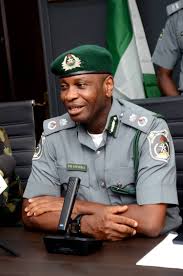
In this interview with the Customs Area Controller (CAC) of the Tin Can Island Port Command of the Nigeria Customs Service (NCS), Comptroller Frank Onyeka, reflects on what he describes as a discipline-driven and faith-anchored transformation that enabled the Command to exceed its 2025 revenue target by over ₦25 billion. Speaking against the backdrop of a historic ₦1.569 trillion revenue performance, he dismisses the notion of “magic” behind the breakthrough, instead attributing the success to professionalism, process reforms, stakeholder trust, and transparent engagement. He also sheds light on the role of technology, particularly the B’Odogwu system, intelligence-led enforcement, trade facilitation reforms, and leadership continuity, while offering insights into future expectations, challenges, and his guiding philosophy as the Command looks ahead in 2026.
- “When Processes Are Transparent And Predictable, Compliance Naturally Occurs”
- “Demand Notices are not ideal, but sometimes they are necessary”
- “If you declare appropriately, pay your duties, and comply with the law, there will be no issues. Why wouldn’t you come back?”
To begin, can you give us an overview of the Tin Can Island Port Command’s performance for the 2025 fiscal year?
For the 2025 fiscal year, Tin Can Island Port Command was assigned a revenue target of about ₦1.544 trillion. I am pleased to inform you that at the time of this report, the Command has generated over ₦1.569 trillion. This means we exceeded our annual target by over ₦25 billion. This is a milestone that reflects discipline, professionalism, and unwavering commitment to duty.
What factors were responsible for this impressive growth in revenue?
This growth did not come by chance. It is the outcome of deliberate reforms in our work processes and collective response measures. Our major revenue contributors include main port carriers, general merchandise, and vehicle imports, which make up a significant volume of trade passing through Tin Can Island Port. The Command ensured that government earnings due from these imports were fully and correctly collected. One of our key focus areas in 2025 was the effective use of relevant valuation tools and professional intelligence. We deliberately addressed the issue of multiple and unnecessary alerts, which often slow down clearance processes and create room for abuse. By eliminating such alerts and strengthening internal coordination, we improved efficiency while still maintaining effective control.
How did stakeholder engagement contribute to revenue generation and compliance?
Trade facilitation and revenue generation are not mutually exclusive. When processes are transparent and predictable, compliance naturally occurs. To this end, the Command sustained regular and meaningful engagement with strategic stakeholders, including importers, licensed customs agents, terminal operators, and shipping companies. These engagements helped us clarify policies, ensure transparency, and build trust. When people understand why they are paying duties and see fairness in the system, it becomes easier to collect revenue without friction.
Despite achieving the annual target, how is the Command balancing enforcement and compliance?
Let me state clearly that the attainment of our annual revenue target does not in any way signify a relaxation of our operational standards or enforcement activities. The Command will not ease its vigilance, even for a single quarter. We remain firm on enforcement through intelligence-led operations and digital monitoring. We recorded significant seizures of prohibited and improperly declared items that contravened existing laws and regulations. All officers and men of the Command remain fully mobilized to sustain revenue generation, intensify compliance, and ensure that all government revenue due is assessed, collected, and accounted for without compromise.
You mentioned reforms such as the B’Odogwu system. How critical was it to this achievement?
As a 21st-century Customs officer, I am proud to be here. I will tell you that I am one of the most fortunate people because of the support I received from my stakeholders. The B’Odogwu system helped immensely. I never thought I would generate such figures, but the system and the partners supporting it made the difference. We thought we were going to have about 10,000 problems, but the only way to solve them was to sit down, listen to stakeholders, and address their concerns. With the confidence we have built and with B’Odogwu fully in place, I am confident we will do even more.
Can you explain how interventions like demand notices and the one-stop shop improved compliance?
Demand notices are not ideal, but sometimes they are necessary. Out of every ten entities, demand notices may apply to about five or six. In some cases, up to 62 or 63 percent of transactions required adjustments, and this added to our revenue profile. However, the key was engagement. When you sit traders down and explain why certain payments are due, compliance becomes easier. One-stop shop is something I strongly believe in. I even started implementing it before it was fully approved because it makes sense. If a trader can resolve all issues at one point, instead of moving from point A to point B and C, it saves time and reduces friction. One-stop shop is the way to go.
Many stakeholders say the environment at the port has improved. What changes did you introduce?
There is no magic. We talk to God first before we talk to anybody. When I came in, many people were not comfortable operating here because of delays and frustration. We listened to them. We improved basic infrastructure, waiting areas, seating spaces, car parks, so officers and port users have better working conditions. I stay here till about 10 p.m. many days, listening to people. If you declare appropriately, pay your duties, and comply with the law, there will be no issues. Why wouldn’t you come back?
I would like you to give a projection of the future. You have realised ₦1.56 trillion. At the moment, going forward, what should we expect?
Well, I don’t really understand what you meant by looking into the future. I’m not a soothsayer, I’m a Customs officer. If I understand what you are saying, you are asking me to tell you what I’m going to do in the future. My core mandate, and I repeat, my core mandate is revenue generation, suppression of smuggling, trade facilitation, and safeguarding national security. That is my mandate. As long as those are the basic ethos of me as a Customs officer, I expect the best from my officers, with your support, of course.
Can you share some of the spectacular seizures you’ve made?
I don’t really understand what you mean by “spectacular seizures.” But yes, we’ve made seizures. One of them was worth about ₦5.2 billion, another was about ₦2 billion. We also have a couple of them that we handed over quite recently. If you’re in tune with the press briefings here, you would know that. The details are with the Public Relations Unit. Our job is to do our work diligently, and at the end of the day, we submit our scorecard for you to appraise us and place us where we belong. We are not looking at what happened before; we are focused on what is happening now and what lies ahead.
What were your major challenges in achieving this feat?
The challenge I had when I came here was that my predecessor, Dera Nnadi, now a Deputy Comptroller-General, did exceptionally well, both institutionally and professionally. So I had very big shoes to wear. When I came in, I had to suit up very well. I had to run to work. People asked me how I was going to cope, and I said it’s only God that can do it. I appreciate my brother, my friend, my boss; Dera Nnadi, for his continuous support. Anytime something happens and I tell him to give me some time, he does. It wasn’t easy coming here and seeing what he had done, but with God’s support, I did the little I could do, and that’s why we are here today.
On trade facilitation, assuming everything is smooth, how many days does it take for a container to leave the port?
Let’s be honest. Assuming there are no issues, no system challenges, no interruptions, if you are part of today’s process and you access the system today, which is Tuesday, then by the grace of God, by Thursday afternoon, you should be able to take your container out of Tin Can Island Port.
On prosecution, are suspects being charged to court?
Obviously, I remember when you asked me where I picked certain intelligence from, and I told you I might not expose my sources. The same place I picked the first one will be where I pick the second one. For those of you who are lawyers, anything that is already in court cannot be discussed. We are very guided and disciplined in that regard.
What is your projection for 2026, and what message do you have for stakeholders going into 2026?
I must put this on record: I have enjoyed massive cooperation from you all. You’ve been consistent, compliant, and supportive. For those who are 100 percent compliant, we thank you because compliance benefits all of us. If we are compliant, won’t we all enjoy the system better? Instead of cutting corners, let us pay the necessary duties and allow proper examination. That is the appeal I want to send across. For those who have been with us, you have been consistent. And we encourage everyone to remain compliant as we move forward.
How would you describe your leadership philosophy?
I believe in discipline, transparency, and the fear of God. Everything we achieved is by God’s grace. We pray, we listen, we engage, and we act within the law. That is all.