There are growing concerns that Nigeria may once again fail to take advantage of a major trade opportunity—this time, a duty-free export window offered by the United Kingdom—just as it did under the African Growth and Opportunity Act (AGOA) provided by the United States years ago.
The United Kingdom recently expanded its Developing Countries Trading Scheme (DCTS), offering Nigerian exporters duty-free or reduced duty access for more than 3,000 products, with a focus on agro and non-oil goods. But members of Nigeria’s Organised Private Sector (OPS), including the Manufacturers Association of Nigeria (MAN) and the Centre for the Promotion of Private Enterprise (CPPE), have expressed doubts over the country’s ability to fully-benefit from the scheme, citing familiar challenges that have undermined previous trade opportunities.
Speaking in a chat with Shipping Position Daily, Dr. Muda Yusuf, Chief Executive Officer of CPPE and a former Director-General of the Lagos Chamber of Commerce and Industry (LCCI), said the UK’s trade offer is indeed positive, especially at a time when the naira’s depreciation makes Nigerian exports more competitive. However, he warned that without urgent steps to build capacity, ensure compliance with global standards, and address structural bottlenecks, Nigeria may be headed for a repeat of the AGOA disappointment.
“We had over 10,000 products eligible under AGOA, and Nigeria did almost nothing with it,” Yusuf recalled. “Countries like Mauritius, Ethiopia and even Botswana were exporting textiles and value-added products to the United States, while we remained stuck exporting raw materials in negligible volumes. If we are not careful, the UK window will go the same way.”
Yusuf explained that while recent forex reforms may have eased some constraints around export proceeds, the bigger issues lie in Nigeria’s inability to meet global export requirements. He highlighted problems such as product quality, packaging, absence of value addition, poor logistics, and the inability of Nigerian exporters to deliver consistent volumes to meet international demand.
“Export is about reliability and scale. When foreign buyers place orders for multiple containers, many of our exporters cannot deliver,” he said. “There are also recurring issues with quality. Rejections of Nigerian agro exports have been common, and this affects our credibility in the global market.”
According to Yusuf, without strategic support from the government in the form of export development financing, certification support, and logistics facilitation, the UK duty-free offer may end up as another lost opportunity.
Also speaking on the development, Director-General of the Manufacturers Association of Nigeria (MAN), Mr. Segun Ajayi-Kadir, said while the DCTS is a welcome development, Nigeria’s readiness to benefit from it remains in question. He noted that the UK’s offer comes at a crucial time when Nigerian manufacturers are battling forex backlogs, supply chain bottlenecks, and shrinking access to the U.S. market due to new tariff threats linked to Nigeria’s BRICS alignment.
Ajayi-Kadir stated that unless there is deliberate policy coordination to tackle issues around forex access, export logistics, product certification, and trade documentation, the DCTS will remain an under-utilised channel for Nigerian manufacturers.
“The benefits of the DCTS can only be realised if we fix the broken export environment,” he said. “Our members are still facing delays in repatriation of export proceeds. There are unresolved FX backlogs. Logistics costs are among the highest in sub-Saharan Africa, and we still lack the infrastructure to meet UK sanitary and phytosanitary (SPS) standards.”
He added that while market access is important, meeting the standards of that market is even more critical. “The UK DCTS offers zero-duty access, but it doesn’t mean relaxed standards. If you cannot meet GMP compliance, traceability standards, or quality assurance, your goods won’t make it into UK shelves.”
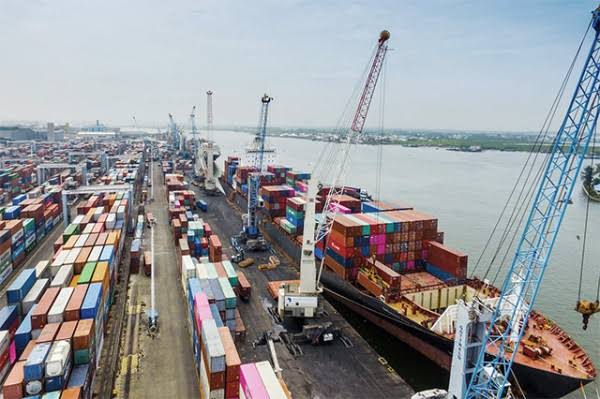
Ajayi-Kadir outlined specific steps government must take if Nigeria is to succeed where it previously failed. These include immediate clearance of FX backlogs, institutional coordination between the CBN, NEPC, Customs and NAFDAC, expansion of the Export Expansion Grant (EEG), fast-tracking of inland dry ports, and the full automation of customs processes.
He also recommended the launch of UK-targeted trade missions and buyer-supplier linkage programmes to connect Nigerian manufacturers directly with British importers, noting that such demand-side engagement would help convert trade policy into actual market traction.
“Our fear is that this will become another AGOA story—full of potentials, with little or nothing achieved,” he said. “The opportunity is there, but our systems are not ready. If we don’t address these issues urgently, we’ll watch other developing countries walk away with the market.”
Both MAN and CPPE stressed that this is not the time for rhetoric or long policy papers. What is needed, they said, is implementation—credible, coordinated, and timely.
“The UK offer is generous, but if we don’t deliver on capacity, standards, and scale, it will just be another window we watched close while we debated,” Yusuf warned.