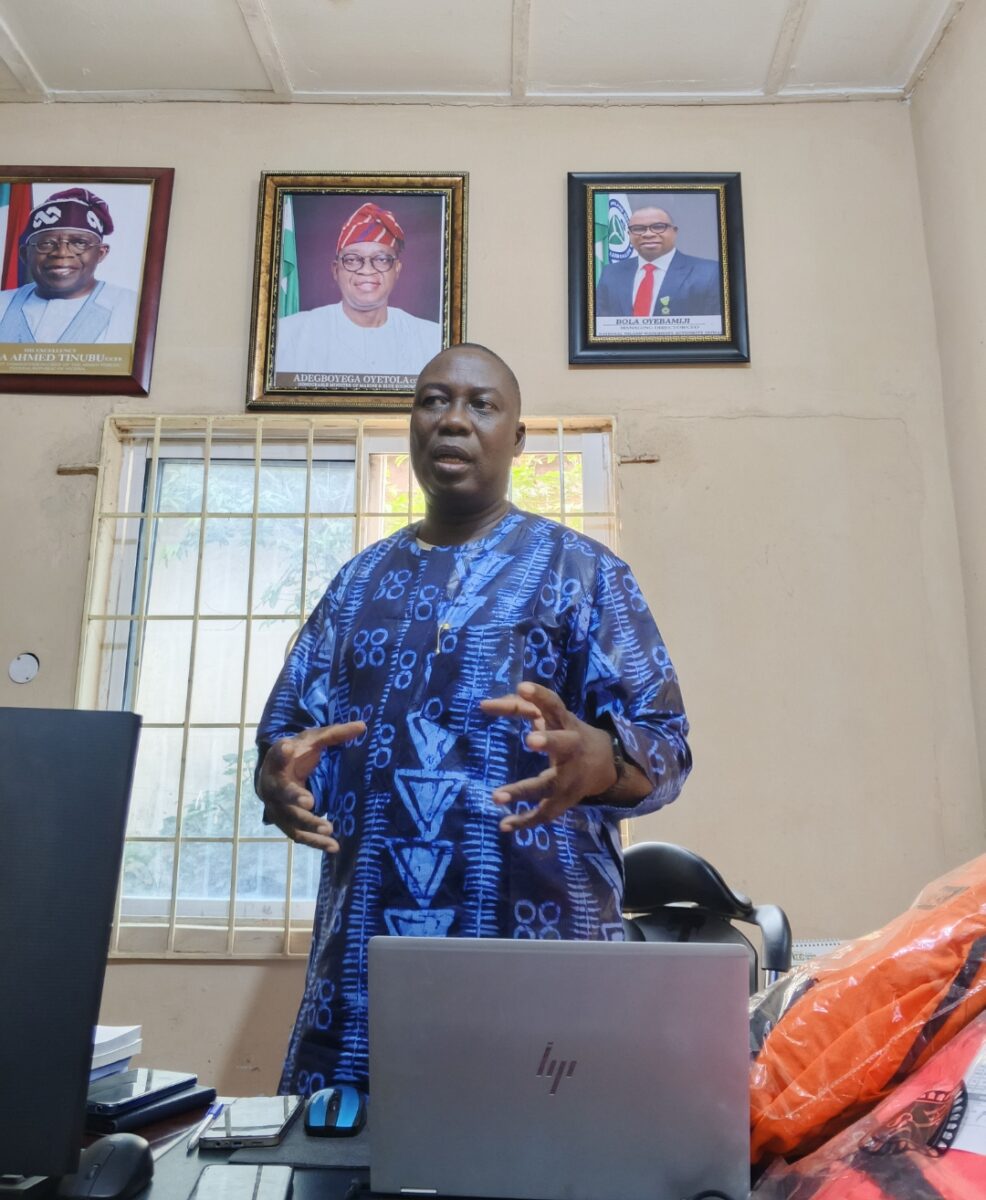
The Niger/Kwara Area Manager of the National Inland Waterways Authority (NIWA), Mr Akapo Adeboye has called for a decisive shift in the mindset of riverine communities towards safety compliance, stressing that genuine change in attitudes is key to reducing boat mishaps across Nigeria’s waterways.
Speaking with Journalists at the NIWA Niger/Kwara Area Office in Minna the Area Manager, Mr. Akapo Adeboye lamented that despite sustained efforts to provide life jackets, sensitise passengers, and enforce safety guidelines, many still engage in high-risk practices such as overloading, embarking on night voyages, and refusing to wear protective gear.
Adeboye said unsafe habits—such as refusing to wear life jackets, ignoring safety rules, and embarking on night voyages—are fuelling avoidable tragedies despite the agency’s interventions.
“Attitude is our number one challenge. Some passengers and boat operators see life jackets as unnecessary. They call them singlets, sell them, or even use them as pillows or farm tools. That mindset puts lives at risk.”

According to him NIWA has responded by deploying “river marshals” in about 30 communities, with most trained as divers and rescue personnel. Abdeboye noted that the marshals work alongside enforcement teams from NIWA, the Marine Police, Civil Defence, and DSS to implement the 2023 Inland Waterways Transportation Code. The rules include “no life jacket, no travel,” restrictions on night movements, speed limits, and mandatory boarding and cargo manifests.
The Area Manager also noted that NIWA is also addressing physical hazards, such as submerged tree trunks that cause boats to capsize, by clearing channels on Kainji and Jebba lakes in partnership with the Hydroelectric Power Producing Areas Development Commission (HYPPADEC) and installing navigational buoys.
While acknowledging support from the Federal Ministry of Marine and Blue Economy and NIWA’s Managing Director, Bola Oyebamiji, Adeboye insisted that lasting change hinges on community cooperation. “We can enforce the law, but without the willingness of the people to adopt safer practices, enforcement alone will not work,” he said.
He urged state governments, local councils, and traditional leaders to work hand in hand with NIWA in sensitizing the public and monitoring the use of safety equipment. “Safety on our waterways is everyone’s responsibility,” he added.