By Joshua Yousouph
The Danish Consul General in Lagos, Jette Bjerrum, has revealed that more than 180 Danish companies are set to explore investment opportunities in Nigeria’s maritime sector, a development that underscores growing international confidence in the country’s marine and blue economy potential.
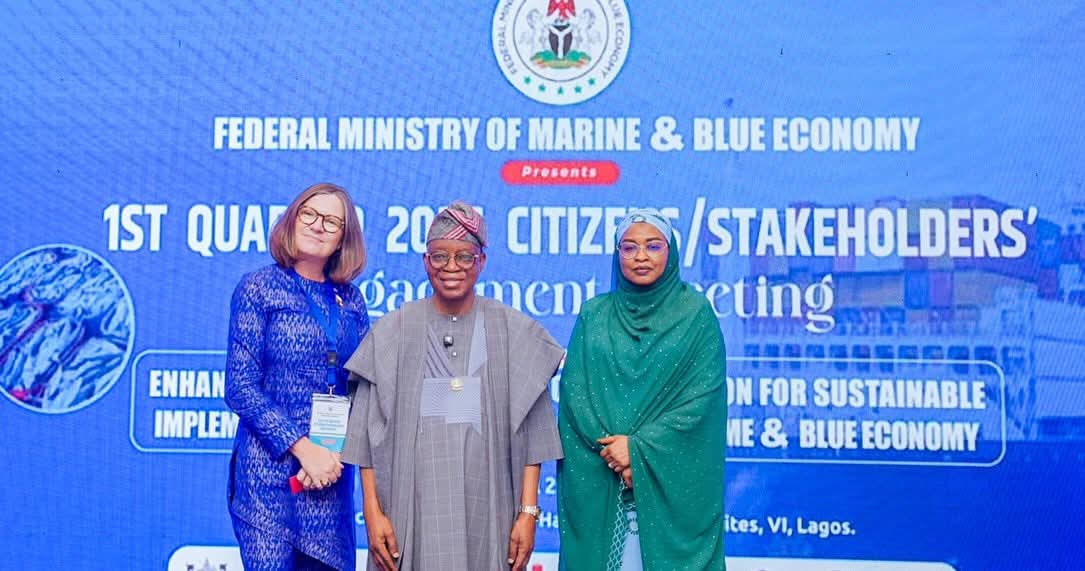
Bjerrum disclosed this during the a stakeholders’ meeting convened by the Federal Ministry of Marine and Blue Economy, noting that the firms, operating under the Danish Maritime Organization, are keen to deepen engagement with Nigeria across multiple segments of the maritime value chain.
She described the move as a strong signal of private sector trust in Nigeria’s evolving maritime framework, particularly as the country intensifies efforts to implement its National Policy on Marine and Blue Economy.
According to her, the Danish Maritime Organization serves as an umbrella body representing a broad spectrum of maritime stakeholders, including shipping companies, port operators, technology providers, and marine innovators, all of whom are increasingly looking towards Nigeria as a strategic destination.
Bjerrum noted that discussions are already underway to facilitate closer interaction between the organization and Nigerian stakeholders, adding that the group has expressed interest in visiting Nigeria to explore collaboration opportunities firsthand.
She explained that Denmark’s interest is driven by its long-standing maritime heritage and global leadership in shipping, port operations, offshore energy, and marine innovation, positioning its companies to contribute meaningfully to Nigeria’s sectoral growth.
The Consul General further highlighted the existing footprint of Danish firms in Nigeria, citing global players such as A.P. Møller-Maersk and APM Terminals, which have maintained a strong presence in the country’s port and logistics ecosystem and are planning additional investments.
She pointed out that these investments are expected to strengthen port infrastructure, enhance operational efficiency, and support the development of inland container terminals.
Bjerrum emphasised that Nigeria’s marine and blue economy presents vast opportunities, particularly as global attention shifts towards sustainable ocean-based industries that drive economic growth, job creation, and climate resilience.
She, however, stressed that realising these opportunities will depend on sustained collaboration between government institutions, private sector players, and international partners.
While commending Nigeria’s efforts to reposition the sector, she noted that the country’s policy framework for the marine and blue economy provides a solid foundation for attracting foreign investment and fostering inclusive growth.
Looking ahead, she identified key areas of potential cooperation between Danish firms and Nigerian stakeholders to include maritime transport, port operations, green shipping solutions, digitalisation, shipbuilding, and data-driven maritime services.
Bjerrum reaffirmed Denmark’s commitment to strengthening bilateral relations with Nigeria, stating that increased private sector participation will play a crucial role in driving innovation, improving efficiency, and unlocking the full value of the maritime industry.
She added that the growing interest from Danish companies reflects not only confidence in Nigeria’s current reforms but also optimism about the long-term prospects of the country’s marine and blue economy.