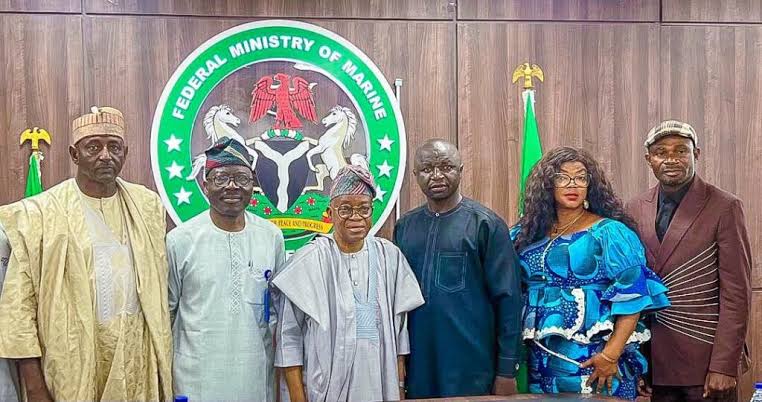
The Minister of Marine and Blue Economy, Mr. Adegboyega Oyetola, has declared an end to Nigeria’s heavy reliance on fish importation, unveiling plans for an aggressive nationwide push to scale up local production.
Speaking on Wednesday during a high-level consultative meeting with key players in the fisheries and aquaculture industry in Abuja, the Minister laid out a roadmap to reposition the sector as a major contributor to national food security, employment generation, and export earnings.
“Nigeria must chart a new course towards self-sufficiency in fish production,” Oyetola said. “The Federal Government is resolute in its support for the fisheries and aquaculture sector through robust policies, technical assistance, and access to finance.”
The consultative forum brought together stakeholders from major cooperative groups, including the Fisheries Cooperative Federation of Nigeria (FCFN), Tilapia Aquaculture Developers Association of Nigeria (TADAN), Catfish Farmers Association of Nigeria (CAFAN), Women in Fish Farming and Aquaculture, and the Practicing Farmers Association of Nigeria.
Oyetola reaffirmed the Ministry’s commitment to empowering women and young people in the sector, disclosing that startup grants and empowerment initiatives are being prepared in alignment with President Bola Ahmed Tinubu’s Renewed Hope Agenda.
“Increasing youth involvement in aquaculture is key to tackling food insecurity and unemployment,” the Minister noted. “We will ensure that women and youths are at the centre of this transformation.”
Participants at the session highlighted a broad range of challenges confronting the sector, including overfishing, lack of access to credit, post-harvest losses, poor cold-chain infrastructure, multiple taxation, low youth engagement, and the high cost of fish feed.
In response, Oyetola assured the gathering that the Ministry is actively working with both local and international stakeholders to address these issues. He revealed that talks are ongoing with the World Bank to unlock financing for fish farmers and that the Ministry is partnering with the Nigerian Agricultural Insurance Corporation (NAIC) to provide affordable insurance packages for operators in the sector.
He also disclosed discussions with the Federal Ministry of Water Resources to replicate the successful aquaculture model implemented at the Oyan Dam across other regions of the country, emphasizing inter-ministerial collaboration as a core part of the strategy.
“This is the beginning of a sustained, action-oriented dialogue with stakeholders,” Oyetola stated. “We are committed to long-term, inclusive growth in this sector.”
Earlier, the Permanent Secretary of the Ministry, Mr. Olufemi Oloruntola, noted that the meeting was a follow-up to promises made during the Ministry’s second-quarter citizens’ and stakeholders’ engagement held in Lagos on July 3rd. He reiterated the Ministry’s resolve to strengthen partnerships with cooperatives to drive sustainable development.
Also speaking, the Director of Fisheries and Aquaculture, Mr. Wellington Omoragbon, stressed the need for institutional reforms and enterprise-driven approaches to improve productivity and attract investment.
Stakeholders lauded the initiative as timely and crucial, expressing optimism that the consultative process would yield concrete outcomes. The meeting ended on a high note, with renewed confidence in the country’s potential to become self-sufficient in fish production and emerge as a fish-exporting nation.