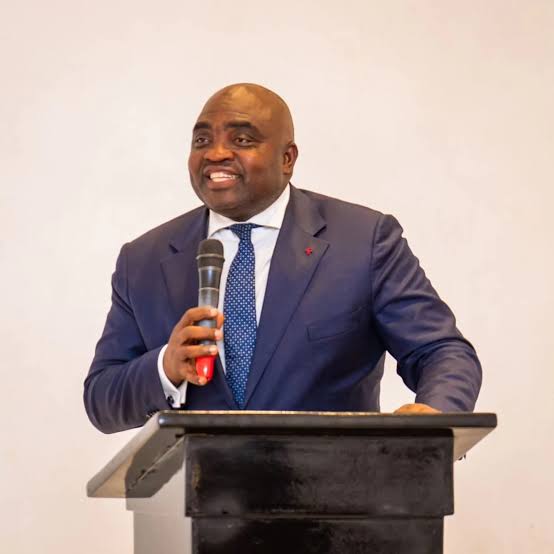
The Infrastructure Concession Regulatory Commission (ICRC) says Nigeria’s Public-Private Partnership (PPP) model has become the template for a 3.1 billion-dollar continental customs modernisation project.
The ICRC said this in a statement by Ifeanyi Nwoko, Acting Head of Media and Publicity, ICRC on Tuesday in Abuja.
Nwoko said the project was under the African Continental Free Trade Area (AfCFTA).
He said that Dr Jobson Ewalefoh, the ICRC Director-General, disclosed this while reacting to the recent signing of the AfCFTA Customs Modernisation Project concession agreement, which adopted Nigeria’s Customs Modernisation Project as its model.
He said that the agreement was signed by the AfCFTA Secretariat with Bergmans Security Consultants and Supplies Ltd., parent company of Trade Modernisation Project (TMP).
According to him, the agreement provides for a 20-year concession to deploy the customs modernisation project across about 50 AfCFTA member countries, in support of a single continental market of about 1.3 billion people.
Meanwhile, Ewalefoh said that the adoption of Nigeria’s Customs Modernisation Project was the continental initiative’s model demonstrated the strength of the country’s PPP framework, structured and regulated by the ICRC, with sustained presidential support.
He said the development was particularly significant because the technology at the centre of the project, B’Odogwu, was developed indigenously and had been deployed by the Nigeria Customs Service (NCS) as part of its digital transformation.
“Africa is not just adopting a piece of technology. Africa is adopting a Nigerian idea, built by Nigerians, proven on Nigerian soil, and now trusted to carry the trade ambitions of an entire continent.
“This is what PPPs, properly structured and properly regulated, can deliver.”
The ICRC boss had, on Aug. 7, undertaken a monitoring and compliance visit to the Nigeria Customs Modernisation Project, where he assessed progress on B’Odogwu, the Unified Customs Management System developed under the partnership.
Ewalefoh said that the project received high-level commitment from the outset, involved all stakeholders and was properly structured, making it the first project in the country executed as a presidential initiative through a PPP.
He said that the project initially faced doubts and resistance over the capacity of its private-sector proponent to deliver the required solution.
“When this project came on board, there were a lot of doubts, but today, what we are seeing is amazing.”
Ewalefoh said Nigeria’s decision to support an indigenous company should be regarded as a major achievement and a source of pride for the country, noting that Nigeria is now showcasing its home-grown solutions to the rest of Africa.
He said the solution was not developed by a foreign company, but designed and built from scratch by Nigerian engineers and other local talents, demonstrating the country’s capacity to develop solutions for the global market.
The ICRC boss commended the Comptroller-General of Customs, Bashir Adeniyi, for his role in driving the e-Customs transformation and sustaining the rollout of B’Odogwu across Customs commands nationwide.
He said the progress recorded in the implementation of the system had contributed to the confidence now being placed in the Nigerian model at the continental level.
Ewalefoh said the Trade Modernisation Project was part of a broader pattern of successful PPP investments regulated by the ICRC.
He cited the Lekki Deep Sea Port as another example of private capital contributing to Nigeria’s infrastructure development.
He said the experience also aligned with the Federal Government’s ambition to build a one trillion-dollar economy under the Renewed Hope Development Plan 2026-2030, which relies substantially on private investment to finance infrastructure.
According to him, the Trade Modernisation Project demonstrates how private investment can support public revenue generation and improve efficiency without placing additional borrowing pressure on government.
“Every Naira of private investment that goes into infrastructure like this is a Naira the government does not have to borrow, while the returns, in revenue and efficiency still accrue to the country,” he said.
He linked the AfCFTA project to his recent call for stronger regional cooperation on PPPs at the ECOWAS Infrastructure Forum in Abidjan, Côte d’Ivoire.
“What we are seeing with AfCFTA today is the regional cooperation I called for in Abidjan taking concrete shape. One country’s well-regulated PPP can become the infrastructure backbone of an entire continent.”
The ICRC boss also dismissed concerns that PPP arrangements could displace jobs, saying the Trade Modernisation Project had created additional employment opportunities for Nigerian engineering talents while strengthening customs revenue collection.