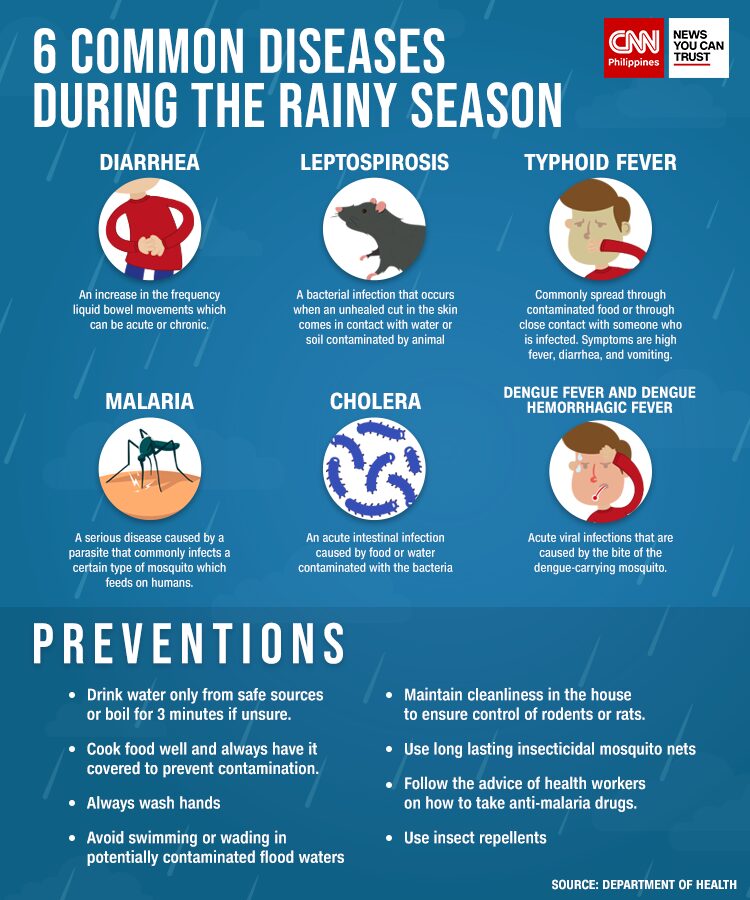
Rain and flooding significantly increase the risk of infectious diseases by overwhelming sewage systems, contaminating drinking water, and creating stagnant breeding grounds for mosquitoes. The most common health threats fall into these categories:
—Waterborne Diseases–
Contaminated floodwater often mixes with sewage, spreading pathogens.
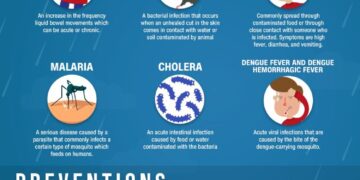
- Cholera: Caused by Vibrio cholerae, leading to severe, acute watery diarrhea and dehydration.
- Leptospirosis: A bacterial infection transmitted through contact with water or soil contaminated by the urine of infected animals (especially rodents). It is particularly common in urban flooded areas.
- Typhoid Fever: A systemic bacterial infection (Salmonella Typhi) spread by consuming food or water contaminated by feces.
- Hepatitis A and E: Viral infections that cause liver inflammation, leading to fever, nausea, and jaundice.
—Vector-Borne Diseases—
Stagnant water left behind after floods provides ideal breeding grounds for mosquitoes.
- Malaria: Transmitted by infected female Anopheles mosquitoes.
- Dengue Fever: Spread by the Aedes mosquito, which thrives in pooled water.
—Respiratory Infections—-
Displacement and overcrowding in temporary relief camps or damaged homes make it easier for respiratory viruses to spread.
- Influenza and Pneumonia: Viral and bacterial lung infections spread rapidly in confined, unsanitary spaces.
- Aspiration Pneumonia: Can occur from inhaling muddy floodwater if a person is submerged or trapped during the flood.
—Skin and Wound Infections—-
Prolonged contact with stagnant water and debris causes various physical health issues.
- Dermatitis and Fungal Infections: Constant moisture causes skin irritation, rashes, and fungal infections (like athlete’s foot).
- Tetanus: Can be contracted when cuts or deep wounds from flood debris (nails, glass, metal) become infected with Clostridium tetani bacteria
- Secondary Bacterial Infections: Minor cuts or lacerations sustained during cleanup efforts easily become infected by Staphylococcus aureus or Streptococcus pyogenes.
Prevention and Response
If you live in or are navigating a flood-prone area (like Lagos), the Nigeria Centre for Disease Control (NCDC) strongly advises taking the following precautions:
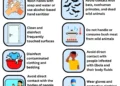
- Do not drink floodwater or use it for cooking, cleaning, or personal hygiene.
- Practice hand hygiene by washing frequently with soap and clean, safe water.
- Discard any food, medicines, or water that have been in direct contact with floodwaters.
- Prevent mosquito bites by sleeping under insecticide-treated nets and using indoor insect repellents.
- Avoid walking barefoot in floodwaters to protect your feet from cuts, infections, and leptospirosis.
Do you need advice on how to purify drinking water, treat minor cuts to prevent tetanus, or set up mosquito control in a specific flooded area?
Prevention Tips
- Eliminate Stagnant Water: Check your surroundings (e.g., flower pots, clogged drains) for standing water to prevent mosquito breeding.
- Drink Safe Water: Always drink boiled or filtered water, especially during outbreaks.
- Practice Good Hygiene: Wash your hands thoroughly, and avoid eating raw salads or uncovered food from street vendors.
- Protect Your Skin: Wear fully-sleeved clothes, use mosquito repellent, and avoid wading through floodwaters barefoot to prevent bacterial infections.
If you suspect you have contracted any of these illnesses, especially symptoms accompanied by a persistent fever, consult a healthcare provider immediately.