Allianz reports fewer incidents and total losses in 2025, but warns political risk is now a growing threat to maritime safety.
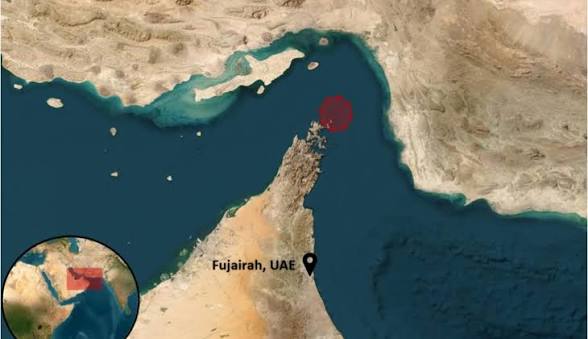
Allianz estimates that there were 1,150 cargo-carrying vessels trapped in the Arabian Gulf as of 15 June, with a combined value of vessels and cargo of around $125bn.
The figures were published in the insurer’s Safety and Shipping Review 2026, which showed a 16% decline in reported shipping incidents on vessels over 100 gt in 2025, from 3,353 in 2024 to 2,818 in 2025. Over half of reported incidents were machinery damage or failure, 260 were collisions, and 218 were fire/explosion.
Reporting of total losses can be delayed, but the current figures for 2025 showed a continuation of a trend suggesting improvements in maritime safety. There were 43 total losses reported for 2025, below the average of 70 per year between 2021 and the end of 2025. Between 2016 and the end of 2020, average total losses for vessels over 100 gt tallied 111 per year.
Despite the improving figures for 2025, the report was cognisant of the current crisis in the Arabian Gulf and Strait of Hormuz. “The relevance of political risk and conflict as a potential cause of maritime loss is increasing with heightened geopolitical tensions. Today, the industry appears to be more risk-exposed in this area than at any point in recent decades.”
Echoing the findings of the ICS Barometer Report, Allianz said: “Navigating the matrix of geopolitical issues – from tariffs to regional conflicts and regulation – is the number one issue for shipowners and cargo operators going forward. The increasingly volatile and disruption-prone nature of global shipping trade routes is reinforcing the need for greater operational resilience and companies are shifting from ‘just-in-time’ to ‘just-in-case’ supply chains, prioritising resilience over cost efficiency.”
Further, Allianz said the blockade of the Strait of Hormuz situation was one of several structural factors contributing to a ‘new equilibrium’ outlook for the industry marked by higher volatility and regionally fragmented trade growth driven by near-shoring and friend-shoring. With freight markets remaining sensitive to external shocks, operators with modern, fuel-efficient and flexible fleets may find greater earnings resilience.
For insurers, there may be indirect impacts on future marine insurance claims. Costs for repairs may rise further due to broader inflation and increases in repair times and repair costs as a result of supply chain disruption, skilled labour shortages, and higher energy costs. Vessels trapped in the Gulf will face specific risks associated with remaining stationary in shallow water for long periods of time, as well as the impact of interrupted maintenance schedules for onboard machinery and equipment.
“Insurance markets react quickly to crises, but the real challenge for companies is understanding how risks are interconnected. That’s why resilience and risk management are becoming just as important as insurance coverage,” said Justus Heinrich, global product leader marine hull at Allianz Commercial.
“The shipping industry is facing turbulent times, not only from geopolitical instability, but also from traditional hull and machinery risks, where we see claims costs continue to rise, as well as from decarbonisation and fleet renewal challenges. Our role as an insurer is to support our clients as both a risk carrier and a resilience partner to mitigate risks before they become a damaging loss event.”