
Origin
During the 19th century, cholera spread across the world from its original reservoir in the Ganges delta in India. Six subsequent pandemics killed millions of people across all continents. The current (seventh) pandemic started in South Asia in 1961, and reached Africa in 1971 and the Americas in 1991. Cholera is now endemic in many countries.
What is cholera?
Cholera is an acute, diarrheal illness caused by infection of the intestine with the bacterium Vibrio cholerae. The infection is often mild or without symptoms, but sometimes can be severe.
Cholera is an infection of the small bowel which can cause diarrhoea and vomiting. It’s mostly found in areas that don’t have safe drinking water, and where food hygiene and sewage disposal aren’t very good. It can be life-threatening if the symptoms are severe.
Risk factors and disease burden
Cholera transmission is closely linked to inadequate environmental management. Typical at-risk areas include peri-urban slums, where basic infrastructure is not available, as well as camps for internally displaced people or refugees, where minimum requirements of clean water and sanitation are not met.
The consequences of a disaster – such as disruption of water and sanitation systems, or the displacement of populations to inadequate and overcrowded camps – can increase the risk of cholera transmission should the bacteria be present or introduced. Epidemics have never arisen from dead bodies.
Cholera remains a global threat to public health and a key indicator of lack of social development. Recently, the re-emergence of cholera has been noted in parallel with the ever-increasing size of vulnerable populations living in unsanitary conditions.
The number of cholera cases reported to WHO continues to rise. From 2004 to 2008, cases increased by 24% compared with the period from 2000 to 2004. For 2008 alone, a total of 190 130 cases were notified from 56 countries, including 5143 deaths. Many more cases were unaccounted for due to limitations in surveillance systems and fear of trade and travel sanctions. The true burden of the disease is estimated to be 3–5 million cases and 100 000–120 000 deaths annually.
Symptoms of cholera
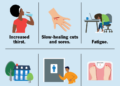
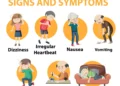
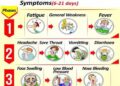
Cholera mainly affects your small bowel, causing watery diarrhoea and vomiting. If you have cholera, you may:
• have watery faeces with a mild, fishy smell and bits of mucus – this is sometimes called ‘rice water’ faeces because it looks like water in which rice has been washed
• feel sick and vomit
• have abdominal (tummy) cramps
• be dehydrated
• have a fever, but this is rare and usually only occurs in children
There is normally a delay of between a few hours and five days from when you become infected with cholera and when you start to get symptoms. This is known as the incubation period. Most people get symptoms after two to five days.
The symptoms of cholera can vary from mild to severe. About three-quarters of people who are infected don’t realise they have it, as they don’t become ill. Less commonly, cholera can cause severe diarrhoea. This can lead to extreme dehydration and can potentially be life-threatening.
Although not necessarily a result of cholera, if you have these symptoms and they are severe, you should seek urgent medical advice.
In severe cases, there is rapid loss of body fluids which leads to dehydration and shock. Without treatment, death can occur within hours.
How does a person get cholera?
A person may get cholera by drinking water or eating food contaminated with the cholera bacterium. In an epidemic, the source of the contamination is usually the feces (stool) of an infected person. The disease can spread rapidly in areas with inadequate treatment of sewage and drinking water.
The disease is not likely to spread directly from one person to another; therefore, casual contact with an infected person is not a risk for becoming ill.
What To Avoid
• All travellers to areas where cholera has occurred should observe the following recommendations:
• Drink only water that you have boiled or treated with chlorine or iodine. Other safe beverages include tea and coffee made with boiled water and carbonated bottled beverages with no ice.
• Eat only foods that have been thoroughly cooked and are still hot, or fruit that you have peeled yourself.
• Avoid undercooked or raw fish or shellfish, including ceviche.
• Make sure all vegetables are cooked, avoid salads.
• Avoid foods and beverages from street vendors.
Prevention of cholera
There are a number of precautions you can take to help reduce your risk of getting cholera if you are travelling to an affected area.
• Only drink bottled water (make sure the seal is intact) or tap water that has been boiled. You can drink water that has been treated with chlorine or iodine, but don’t have ice as the V. cholerae bacteria can survive the freezing process.
• Eat freshly prepared foods that have been cooked thoroughly and are still hot. Don’t eat raw vegetables such as green salads as they may have been washed in contaminated water. As a general rule, only eat raw vegetables and fruit that you can peel.
• Wash your hands after going to the toilet and always before preparing and eating food, or drinking water.
Can cholera be treated?
Cholera can be simply and successfully treated by immediate replacement of the fluid and salts lost through diarrhea. Patients can be treated with oral rehydration solution, a prepackaged mixture of sugar and salts to be mixed with water and drunk in large amounts. This solution is used throughout the world to treat diarrhea. Severe cases also require intravenous fluid replacement. With prompt rehydration, less than 1% of cholera patients die.



Discussion about this post